- 当前位置:
Stainless Steel vs Glass vs Ceramic: Choosing a Coffee Carafe Material
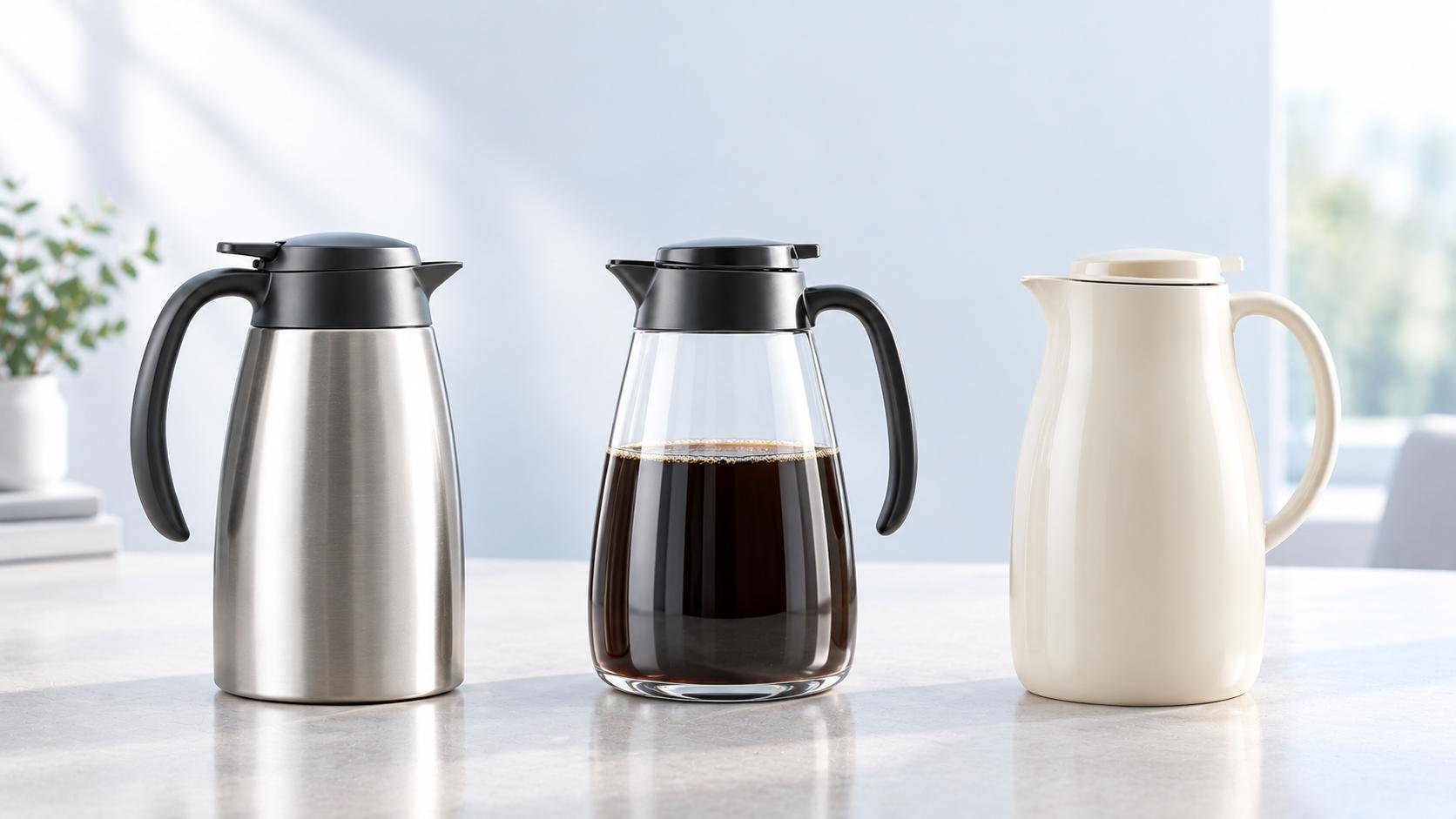
This guide compares the three materials most commonly used for coffee carafes and pots, and separates "looks nice on a table" from "works for the use case." It explains what each material does to heat, taste and durability, where each one can surprise a buyer, and how weight, cost and breakage change the decision for both home and commercial buyers. It also frames how ChengPeng fits as an OEM across insulated stainless carafes. The point is to avoid choosing a carafe by appearance alone and ending up with a vessel that cannot hold temperature or survives daily service.
The Three Materials Buyers Meet
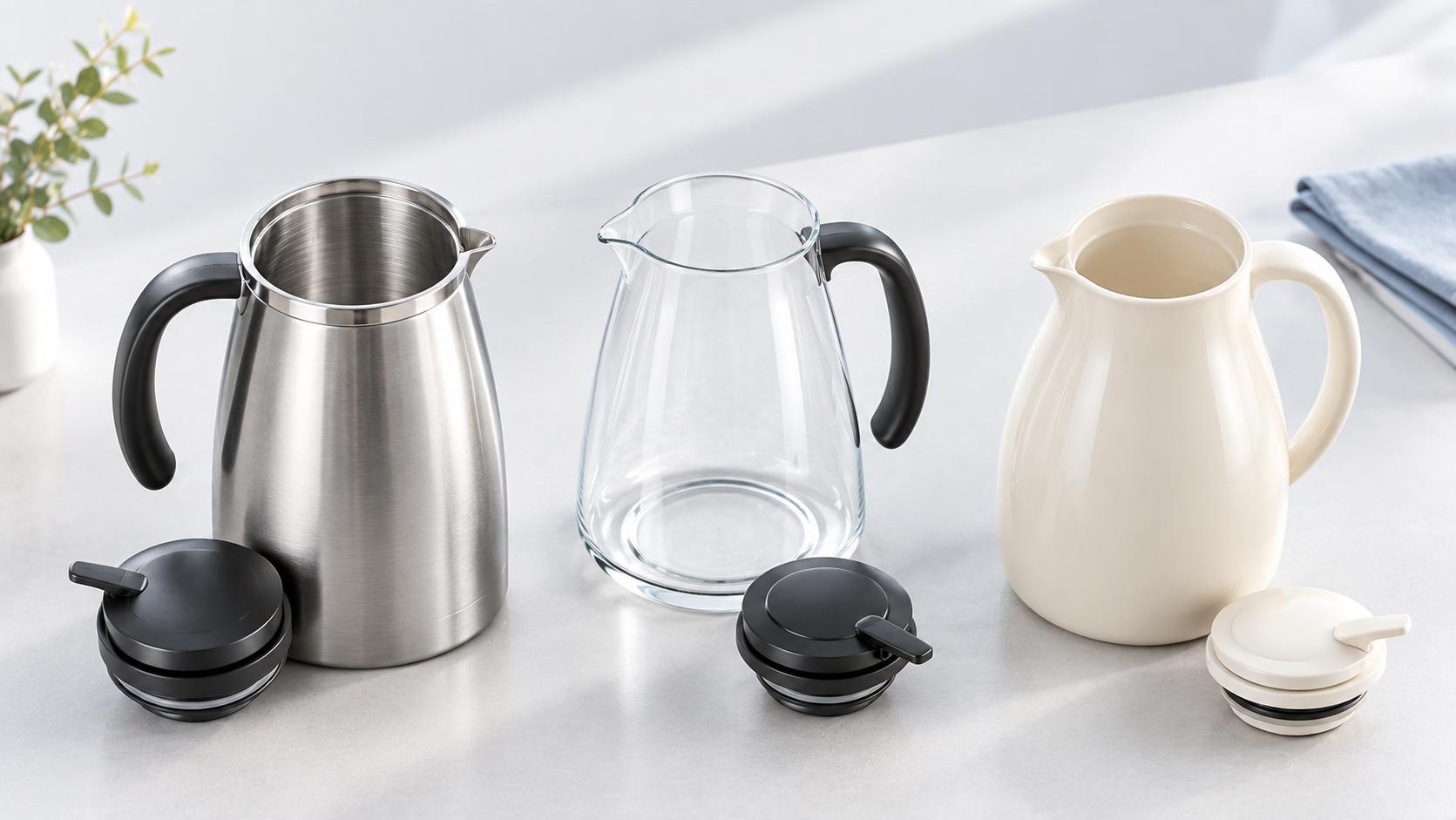
When a brand or outlet starts a coffee-carafe project, the short list usually contains three entries: stainless steel double-wall, heatproof glass, and ceramic or stoneware. Each has a different relationship to heat, taste and breakage. They are not upgrades of one another; they solve different jobs on a breakfast table, in an office or at a catering station.
Material | Heat holding | Taste contact | Durability | Best setting |
Stainless double-wall vacuum | Hours; outer wall cool | Neutral, no aftertaste | High; dent-resistant | Office, hospitality, travel |
Heatproof glass | Minutes; thin wall | Neutral, shows the coffee | Fragile; breaks on impact | Table service, visual brew |
Ceramic / stoneware | Moderate; thick wall stores heat | Neutral but can absorb aromas | Breakable; chip-prone | Home dining, premium feel |
Stainless Steel: The Holding-Power Default
A double-wall stainless carafe is the only one of the three that actually insulates. It keeps coffee hot for hours, the outer wall stays cool, and it does not break when knocked off a counter. Its trade-off is that the user cannot see how much coffee is left, and a stainless pot reads as functional rather than decorative. For offices, hotel breakfast stations and catering, holding temperature across a long service is the reason to choose it.
Glass: The Visual and Aromatic Choice
Glass lets the user watch the coffee and the brew, which is why pour-over and morning table service still uses it. It adds no taste and looks clean. But glass is thin, it cools coffee within minutes, and it breaks under a knock. It is the right choice when the coffee is poured and drunk soon, and the wrong choice when it must stay hot across a two-hour meeting.
Ceramic: The Slow, Premium Option
Ceramic stores some warmth in its thick wall and carries a premium, handcrafted look, which suits home dining and specialty cafes. It is heavier than both glass and stainless, it chips easily, and it holds heat for a much shorter time than a vacuum stainless pot. Its strength is presentation, not all-day holding.
Taste Contact and Why It Matters
· Stainless and glass are both neutral to taste; ceramic can hold prior aromas over time.
· A lined or coated interior should be declared food-contact safe under FDA/EU/LFGB frameworks.
· Avoid uncoated porous surfaces that absorb oils and change the flavour.
Cost and the Real-World Lifecycle
Stainless carries the highest unit cost but the lowest breakage cost across a long service; glass is cheap per unit but replaces often in a busy kitchen; ceramic sits in between, valued for look more than durability. A buyer for an office or hotel should count replacements over a year, not just the shelf price. A pot that survives three years of daily use can cost less than three cheap glass carafes.
Cleaning and Daily Care
The material also changes how easy the pot is to keep. Stainless carafes rinse clean, take a brush to the interior, and rarely hold stains; glass shows every mark but washes transparently; ceramic can absorb oils and develop a sheen that is hard to restore. For a commercial setting where a carafe is washed many times a day, smooth stainless interiors are the practical choice, because they do not trap old coffee oils the way textured or porous surfaces can.
· Choose a wide mouth that a brush can reach inside.
· Avoid porous interiors that absorb oils and odour.
Matching the Material to the Table
A buyer rarely needs to pick one material for every setting. A hotel breakfast might use stainless carafes on the busy buffet and a glass server for the table where coffee is poured and finished quickly. A home brand might pair a visual glass brewer with a stainless carafe for the table. The question is not "which material is best" but "how long does this coffee need to stay hot, and who is carrying it." Matching that answer to the wall is the decision.
How ChengPeng Builds Stainless Carafes
Zhejiang ChengPeng Industry & Trade Co., Ltd., founded in 1999 and based in Zhejiang, develops double-wall stainless coffee carafes under OEM/ODM arrangements, with food-contact tested internals and a range of finishes. Zhejiang ChengPeng Industry & Trade Co., Ltd., founded in 1999 and based in Zhejiang, develops insulated stainless drinkware including thermal coffee carafes and pots under OEM/ODM arrangements. Materials are third-party tested against FDA 21 CFR, EU 10/2011 and LFGB Section 31 expectations, and the factory holds BSCI, SEDEX 4P, RCS/GRS, FSC, GSV, ISCC and SCAN audits together with ISO 9001, 45001 and 14001 systems. With 141 patents, 20-plus QC inspectors, a 99.9% on-time rate, 100-plus new designs a year and an in-house 3D printing workshop, it supplies brands including Adidas and Ralph Lauren across North America, Europe, South America and Asia; more at www.chengpeng.com.cn.
For a buyer comparing options, the cleanest rule is: hold time points to stainless, presentation points to glass or ceramic, and a product that mixes a visual brewer with a stainless server covers both jobs. Do not let a low unit price decide a vessel that will be replaced and chipped within a quarter; count the years on the table, not the price on the quote.
FAQ
Q1. Which material keeps coffee hot longest?
Double-wall stainless vacuum, because the evacuated gap insulates. Glass and ceramic rely on wall thickness, which loses heat much faster.
Q2. Does stainless steel make coffee taste metallic?
No, when the interior is food-grade 18/8 stainless. A neutral, properly finished stainless surface does not transfer flavour.
Q3. Is glass still worth selling?
Yes for visual brew and table service, but not for holding temperature. Pair it with a description that sets expectations.
Q4. Does ceramic hold heat better than stainless?
No. Ceramic stores some warmth in its wall but loses it steadily; vacuum stainless holds heat for hours.
Q5. Which material is cheapest per unit?
Glass and thin ceramic usually have the lowest unit price, but breakage raises the total cost over a long service.
Q6. How does ChengPeng help a brand choose?
The spec sheet compares volume, wall construction, lid and finish use case by use case, and third-party food-contact reports cover FDA, EU and LFGB frameworks.
Conclusion
Stainless, glass and ceramic each have a clear job. Stainless holds heat and survives service; glass shows the coffee and suits quick pouring; ceramic looks premium and sits on a set table. A buyer who matches the material to how long the coffee must stay hot and how roughly it will be used avoids both the fragile glass in a busy office and the functional stainless pot on a romantic table.
A product line can carry all three: a stainless carafe for the office and hospitality range, a glass server for the pour-over collection, and a ceramic pot for the home dining story. Each answers a different customer question, and listing them side by side lets the buyer choose the use case rather than the price. A brand that names the setting on each product page reduces returns, because customers buy the material that fits their own table instead of guessing from a photograph.
When comparing samples in hand, run the same three checks on each: does the exterior stay cool, does the material chip under a light knock, and does the interior rinse clean after a day of coffee. Those three real-world tests settle the choice faster than any specification sheet.
For a brand building a coffee range, the safest portfolio is a stainless vacuum carafe as the everyday workhorse, plus one visual glass or ceramic option for the table, rather than committing an entire line to a single material.
That mixed approach gives the customer the right pot for each moment, and it keeps the range readable instead of piling similar-looking options onto the same shelf.