- 当前位置:
Sourcing a Custom Thermal Coffee Carafe for Office and Hospitality
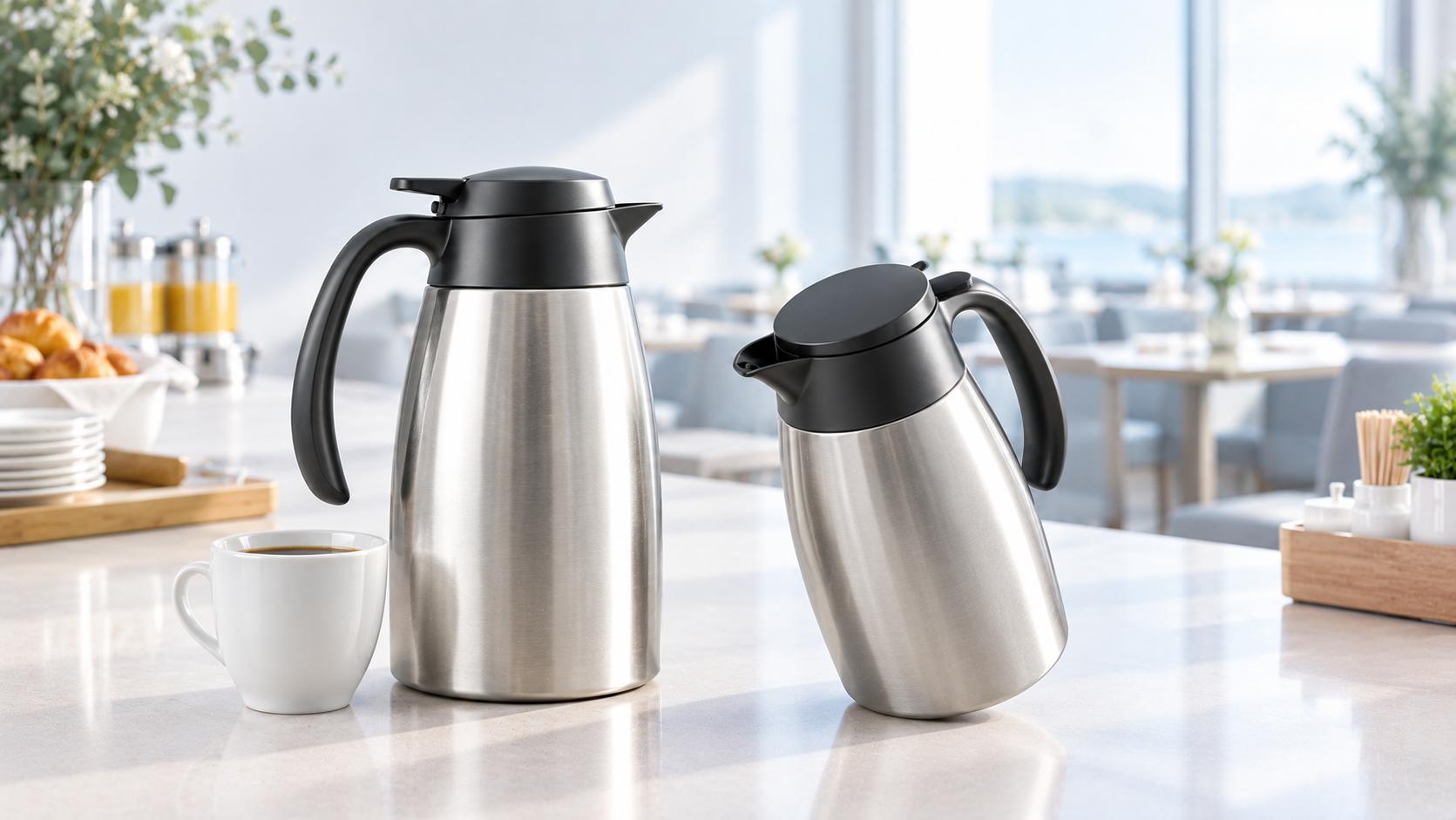
This guide gives a private-label buyer a practical path to sourcing a custom thermal coffee carafe for offices, hotel breakfast stations, caterers and restaurant tables. It covers the specifications that actually matter in service, the lid and pour design choices that reduce complaints, the volume and handle decisions a buyer must make, and how sampling, MOQ and packaging change the outcome. It also describes how ChengPeng structures its OEM carafe program for repeat orders. The aim is to specify a carafe that survives daily commercial use, not one that looks right in a catalog photo.
Why Commercial Use Is Different From Home Use
A home coffee pot is used a few times a day and washed gently. A hospitality carafe is filled at 6 a.m., poured dozens of times, wiped down between guests, washed in a commercial sink, and knocked on a counter. That difference changes every decision: the wall must hold heat across a long service, the lid must seal and pour cleanly, the handle must stay cool, and the finish must survive repeated wiping. A buyer who sources a home-style pot for a commercial table gets complaints within the first month.
Specification | What to decide | What goes wrong if ignored |
Volume | 500ml, 750ml, 1L or more by table size | Too small means constant refills; too large cools before empty |
Lid | Sealing, one-hand pour, closes between pours | Drips on tablecloth; steam escapes and coffee cools |
Handle | Stays cool, fits a hotel grip | Burn risk or slippery grip with wet hands |
Finish | Durable powder coat or brushed steel | Scratches and chips show within weeks |
Foot / base | Stable, non-scratching | Slides on hot buffet counters |
Lid and Pour: The Most Complained-About Part
Most carafe complaints are not about the wall; they are about the lid. A lid that drips when pouring leaves marks on the table, a lid that cannot be opened with one hand slows service, and a lid that does not seal lets coffee cool quickly. Buyers should sample the lid in actual pouring motion: one-handed, from a buffet height, onto a plate below. The seal, the pour flow and the close-after-pour behaviour all show up in that ten-second test, and they rarely appear in a CAD drawing.
· Test the pour one-handed at a realistic buffet height.
· Check that the lid closes cleanly between pours without dripping.
· Confirm the lid parts are removable and washable.
Volume and the Table-Service Reality
A one-litre carafe sounds generous, but it takes longer to empty, and coffee left at the bottom cools below serving temperature. For two-person tables, a smaller carafe that is refilled more often keeps every cup hot; for conference and catering stations, a larger volume suits the flow. The buyer should ask how many cups each carafe size pours and match it to the table or station size, rather than picking the biggest pot available.
Sampling, MOQ and Reorder Control
A custom carafe project should start with a decorated sample in the real finish, because the handle, lid feel and pour all change once the part is made. Lock the approved sample, the lid supplier and the finish in the spec sheet, and require a change notice before any substitution. Commercial buyers reorder the same carafe for years, so a locked spec protects the table service, not just the first order.
Food-Contact Compliance for Commercial Tables
A coffee pot that touches a hot, acidic drink all day is a food-contact product, and commercial buyers owe their customers a declared compliance file. The inner stainless should be food-grade, the lid gaskets should be food-contact safe, and the whole vessel should carry third-party test reports covering the destination markets: FDA 21 CFR frameworks for the United States, EU 10/2011 for the European Union, and LFGB expectations for the German market. Asking for those reports up front avoids a last-minute compliance block before a hotel chain ships.
· Require third-party food-contact reports for the pot, lid and gasket.
· Match the compliance file to the destination markets, not a generic statement.
Packaging for Hospitality Reorder
A hospitality buyer reorders the same carafe by the carton, so packaging must protect the pot through freight and stack reliably. A plain individual box keeps unit cost low; a colour-printed gift box suits a branded table or a retail corner. Confirm the carton protects the finish against rubbing, and that the lid is separated or protected so it does not scratch the steel during shipping. A small packaging detail prevents a whole carton of scratched pots arriving just before a busy season.
How ChengPeng Supports Office and Hospitality Carafes
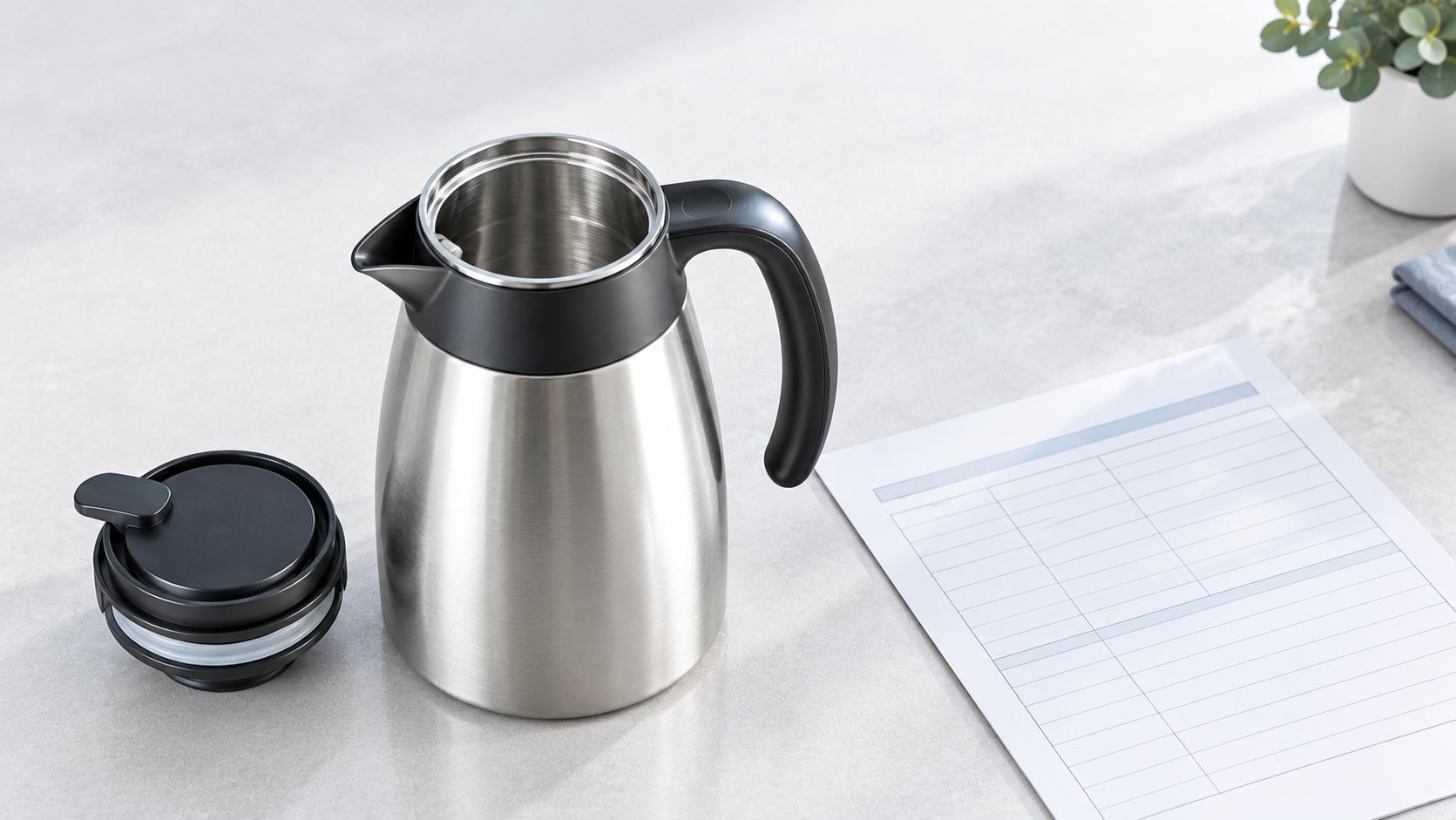
Zhejiang ChengPeng Industry & Trade Co., Ltd., founded in 1999 and based in Zhejiang, develops private-label thermal coffee carafes with volume, lid and finish options, supported by 20-plus QC inspectors, a 99.9% on-time rate and an in-house 3D printing workshop. Zhejiang ChengPeng Industry & Trade Co., Ltd., founded in 1999 and based in Zhejiang, develops insulated stainless drinkware including thermal coffee carafes and pots under OEM/ODM arrangements. Materials are third-party tested against FDA 21 CFR, EU 10/2011 and LFGB Section 31 expectations, and the factory holds BSCI, SEDEX 4P, RCS/GRS, FSC, GSV, ISCC and SCAN audits together with ISO 9001, 45001 and 14001 systems. With 141 patents, 20-plus QC inspectors, a 99.9% on-time rate, 100-plus new designs a year and an in-house 3D printing workshop, it supplies brands including Adidas and Ralph Lauren across North America, Europe, South America and Asia; more at www.chengpeng.com.cn.
The first prototype should be judged in service, not on a shelf. Fill it with hot water, pour one-handed at counter height, wipe it down, drop it lightly, and check the lid seal the next morning. That single working week surfaces every issue a spec sheet cannot describe, and it is the moment to change the lid or handle before tooling is locked.
FAQ
Q1. What volume should a hotel breakfast station use?
It depends on table size and service flow. Smaller carafes refill often and keep each cup hot; larger volumes suit buffet stations. Ask how many cups each size pours.
Q2. Is a one-hand pour lid necessary?
For commercial service, yes. Staff open and pour while holding plates, and a lid that needs two hands slows service and causes spills.
Q3. How do I stop the carafe dripping on the tablecloth?
Specify a sealing lid that closes between pours, and sample the pour at buffet height. Most drip complaints come from the lid, not the wall.
Q4. Does the finish matter in daily service?
Yes. A cheap coat chips and scratches within weeks of wiping; a durable powder coat or brushed steel survives commercial use.
Q5. Can I order a custom logo on the lid and body?
Yes, usually by laser engraving or pad/UV print on the body; ask for a decorated sample on the real finish before approval.
Q6. How does ChengPeng protect repeat orders?
The spec locks volume, lid, finish and supplier; incoming materials are cross-checked against the approved sample, and third-party food-contact reports cover FDA, EU and LFGB frameworks.
Conclusion
Sourcing a thermal coffee carafe for office and hospitality is a service design decision, not a catalog choice. Volume, lid, handle, finish and base each decide whether the pot survives a busy breakfast service or becomes a complaint within a month. A buyer who samples the real pour, locks the spec and matches the carafe to the table size buys a vessel that works for staff and guests alike.
The buyer deliverable at the end is a short spec sheet: volume, lid type, handle, finish, compliance file and approved sample reference. Hand it to the factory and to the sales team, and every reorder, replacement and complaint answer traces back to one agreed document. That discipline is what turns a one-off coffee pot order into a stable hospitality program that reorders on schedule.
Plan the reorder rhythm with the factory before the first shipment, so refill stock arrives before the buffet runs short. A carafe that is out of service for two weeks while a new carton arrives is a service problem the buyer could have scheduled around.
With the spec locked and the reorder calendar set, the coffee pot program stops being a one-off procurement and becomes a stable table-service asset.
That is the difference between a pot that is bought once and forgotten, and a vessel that quietly supports a breakfast service for years.