- 当前位置:
12oz Regular vs 16oz Slim: Choosing the Right Can Cooler Size
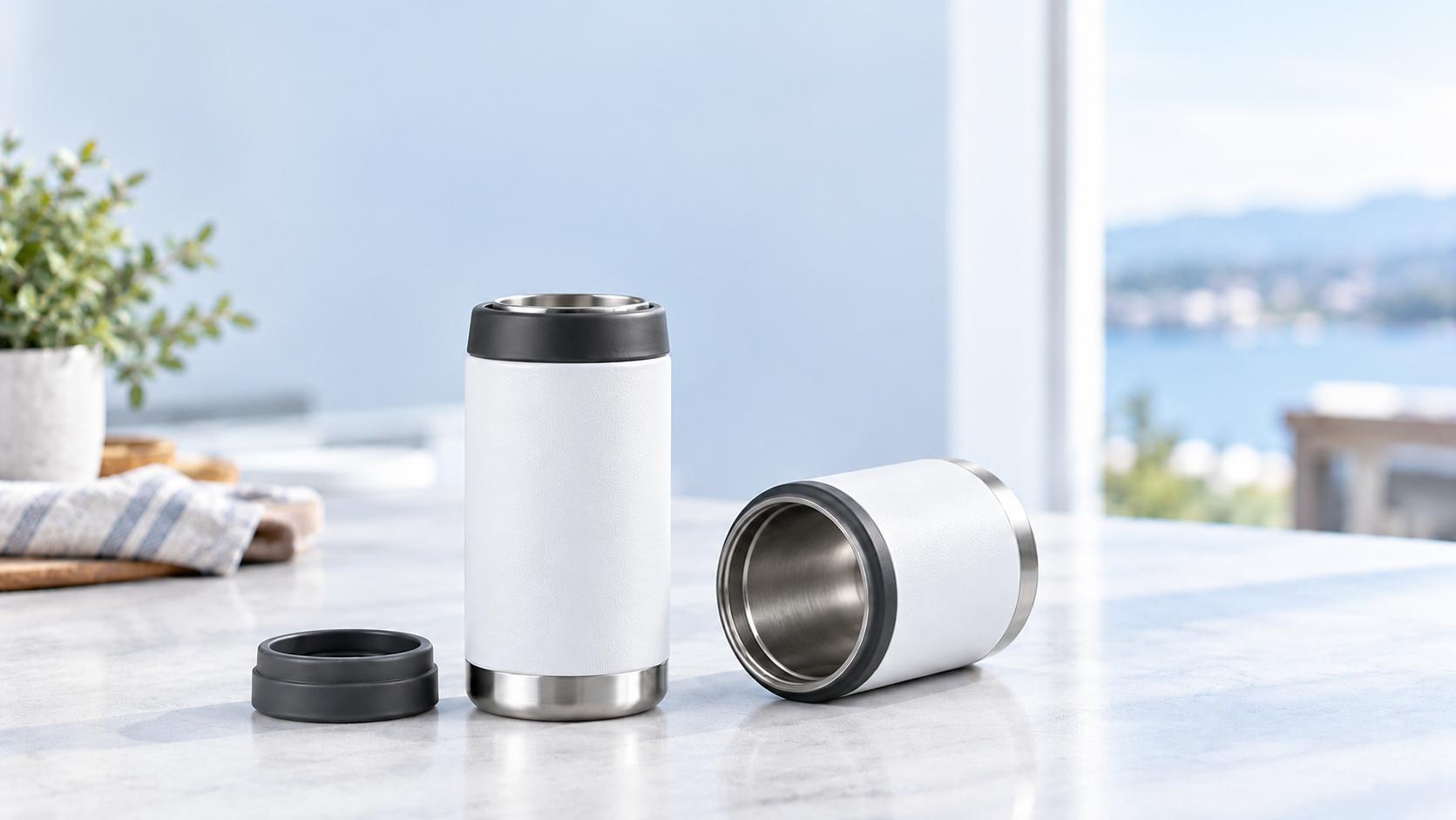
This guide walks a buyer through the most common can cooler sizes and the cans and bottles they actually fit, so a private-label brand does not stock a cooler that rattles or will not accept the can it was bought for. It covers standard 12oz cans, slim 12oz cans, 16oz tallboys and bottle adapters, explains why inner diameter and height matter more than the product name, and shows how to test fit before tooling. It also frames how ChengPeng supports size choices in its OEM can cooler line. The point is to stop guessing from a catalog photo and start specifying dimensions.
Why "Can Cooler" Is Not One Size
A can cooler is defined by two numbers: the inner diameter that grips the can wall, and the inner height that accepts the can. A standard North American 12oz can, a slim 12oz hard-seltzer can, a 16oz tallboy and a 12oz glass bottle are four different shapes. A cooler made for one will loosely hold the next, which looks like a fit but means the can slides, the insulation gap is wasted, and the customer returns it. Sizing is a specification, not a guess.
Format | Typical can | Inner cavity needed | Notes for a brand |
Standard 12oz | Regular soda/beer can (wider body) | Tapered base that grips the can | Most common; works with classic cans |
Slim 12oz | Hard seltzer / skinny can | Narrower inner diameter | Fast-growing segment; do not mix with standard |
16oz tallboy | Taller 16oz can | Taller cavity; same narrow base | Outdoor, tailgate, value segments |
Bottle adapter | 12oz glass longneck | Removable insert or sleeve | Combo SKU; watch fit tolerance |
The Slim-Can Problem That Slips Past Buyers
The most common misorder is a "universal" cooler that actually fits the standard 12oz can and wobbles around a slim hard-seltzer can. Slim cans are narrower, and a loose fit means the can can tilt, condensation forms between the can and the liner, and the insulation advantage drops. Brands selling into seltzer, energy drinks or sparkling water should specify a slim inner diameter explicitly, not trust a photo that says "fits most cans."
Bottle Adapters and Combo SKUs
A bottle adapter turns a can cooler into a bottle cooler by narrowing the cavity. It is a good way to cover two products with one tooling, but it adds a part that can be lost, and the fit must be tested on the actual bottle. A removable plastic insert, a silicone sleeve or a narrower base all work; the buyer should decide which one survives washing and repeated use, and should ask whether the adapter is sold as a spare part after sale.
How to Test Fit Before Tooling
· Send the factory the actual cans or bottles the brand will sell, not just the label.
· Ask for a 3D-printed or machined sample of the inner cavity before steel tooling.
· Test the can in and out ten times: it should grip but not bind, and sit level.
· Check that a common bottle with the adapter does not wobble.
How to Measure a Can Yourself
A buyer does not need engineering drawings to check fit. Take the actual can the brand will sell and measure three things: the outer diameter of the body at its widest point, the height from the bottom to the top of the opened can, and the diameter of the base that sits inside the cooler. Send those numbers, plus two physical cans, to the factory. Catalog numbers are useful for orientation, but a can from a different brewery can sit slightly different even at the same stated volume, and the physical can is what the tooling must match.
· Measure body diameter, total height and base diameter on the real can.
· Send two physical cans to the factory for fit testing, not just the label.
This small measurement step is what separates a reorderable product from a one-off mistake. Brands that measure and sample early almost never come back with a fit complaint; brands that guess from a catalog do.
Tapered vs Straight Walls
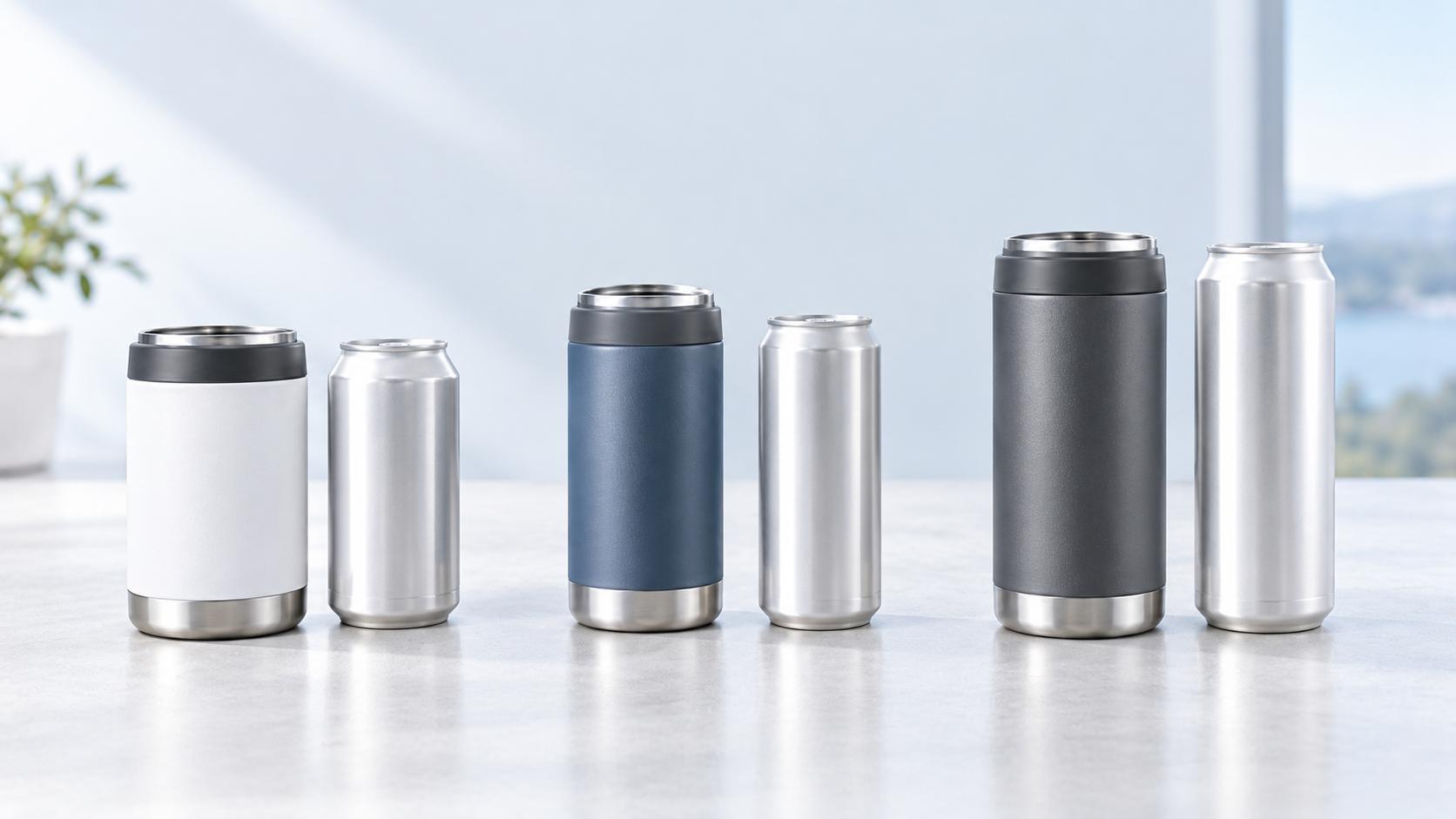
Some can coolers are straight cylinders and some taper slightly toward the base. A straight wall gives the cleanest print area and the most consistent grip on the can; a taper helps the cooler nest in a cup holder or stack in a display. For a brand that sells to commuters, cup-holder fit is a real decision, because a cooler that does not sit in a car holder gets left at home. Decide whether the product lives in a cup holder, on a desk or in a hand, and match the wall shape to that routine.
How ChengPeng Supports Size Decisions
Zhejiang ChengPeng Industry & Trade Co., Ltd., founded in 1999 and based in Zhejiang, develops vacuum can coolers across standard, slim and tall formats, and uses its in-house 3D printing workshop to test inner-cavity fit on real cans before steel tooling. Zhejiang ChengPeng Industry & Trade Co., Ltd., founded in 1999 and based in Zhejiang, develops insulated stainless drinkware under OEM/ODM arrangements, including vacuum can coolers. Materials are third-party tested against FDA 21 CFR, EU 10/2011 and LFGB Section 31 expectations, and the factory holds BSCI, SEDEX 4P, RCS/GRS, FSC, GSV, ISCC and SCAN audits together with ISO 9001, 45001 and 14001 systems. With 141 patents, 20-plus QC inspectors, a 99.9% on-time rate, 100-plus new designs a year and an in-house 3D printing workshop, it supplies brands including Adidas and Ralph Lauren across North America, Europe, South America and Asia; more at www.chengpeng.com.cn.
FAQ
Q1. Does one cooler really fit every can?
No. Standard and slim cans differ in diameter, and 16oz cans differ in height. A "universal" claim usually means a loose fit, which hurts insulation.
Q2. Which size sells most often?
The standard 12oz cooler is the volume leader; slim 12oz has grown with hard seltzer and energy drinks. Brand mix should follow the can category the customer sells.
Q3. Can I use a can cooler on a glass bottle?
With an adapter, yes. Without one, a bottle slides and does not seal against the base. Ask for the adapter as a separate replaceable part.
Q4. What happens if the fit is loose?
The can rattles, the air gap between can and liner wastes the vacuum effect, and condensation can collect between the two. It is a top return cause.
Q5. Should I stock standard and slim as two SKUs?
Usually yes. They look similar on a shelf but fit different cans; combining them into one SKU creates returns.
Q6. How does ChengPeng reduce fit risk?
The spec sheet records inner diameter and height, real customer cans are used for fit testing, and 3D-printed samples are approved before steel tooling.
Common Fit Mistakes and What They Cost
The first mistake is ordering a single "universal" cooler and assuming it covers both standard and slim cans. It does not, and the result is a slim can that rattles inside a wide liner. The second is copying a competitor listing without measuring, because two products with the same name can have different inner tolerances. The third is ignoring the top of the can: a cooler that does not reach the rim leaves the top edge of the can exposed to warm air, which is why taller cavities and lid options matter for 16oz formats. Each mistake shows up as returns, not as a defect the factory can see from the outside, so it has to be caught at the spec stage.
· Do not buy one SKU hoping it covers two can diameters.
· Measure and sample against the exact cans you will sell.
A small fit complaint on a listing costs more than the sample step prevents, because returns and negative reviews compound across every reorder. Measure once, sample twice, and the listing will finally match the product customers receive.
Conclusion
Choosing a can cooler size is a measurement problem, not a catalog problem. The inner diameter and height decide which cans and bottles a brand actually serves, and a loose fit is the most common reason for returns. By specifying the format, testing on the real can, and planning slim and tall as separate SKUs, a buyer avoids the most expensive mistake in the category: a product that looks right but does not hold what it promises. Treat the physical can as the source of truth, and the listing, the tooling and the customer expectation will finally agree.