- 当前位置:
How a Vacuum Insulated Can Cooler Keeps Soda and Beer Cold Longer

This guide explains why a stainless steel vacuum can cooler keeps a canned drink colder for longer than a neoprene sleeve or a foam koozie, and where the difference actually comes from. It covers how heat moves into a cold can, what double-wall vacuum insulation removes, why a stainless cooler stops condensation and wet hands, and how buyers should compare performance instead of trusting marketing hour claims. It also describes how ChengPeng builds vacuum can coolers as part of its insulated drinkware line. The goal is to understand the physics before choosing a material, so a brand buys the right structure for the use case.
How Heat Reaches a Cold Can
A cold can warms up for three reasons: warm air carries heat against the metal, the warmer hand of the drinker conducts heat into the bottom and sides, and condensation on the wet surface both chills the hand and speeds heat transfer. A bare can picks up warmth within minutes. A neoprene or foam sleeve slows one of those paths, but it does not stop them, because those materials still conduct heat slowly and they trap moisture against the can. The result is a can that stays cool for a while, then sweats, drips on the table and warms through.
What Double-Wall Vacuum Insulation Removes
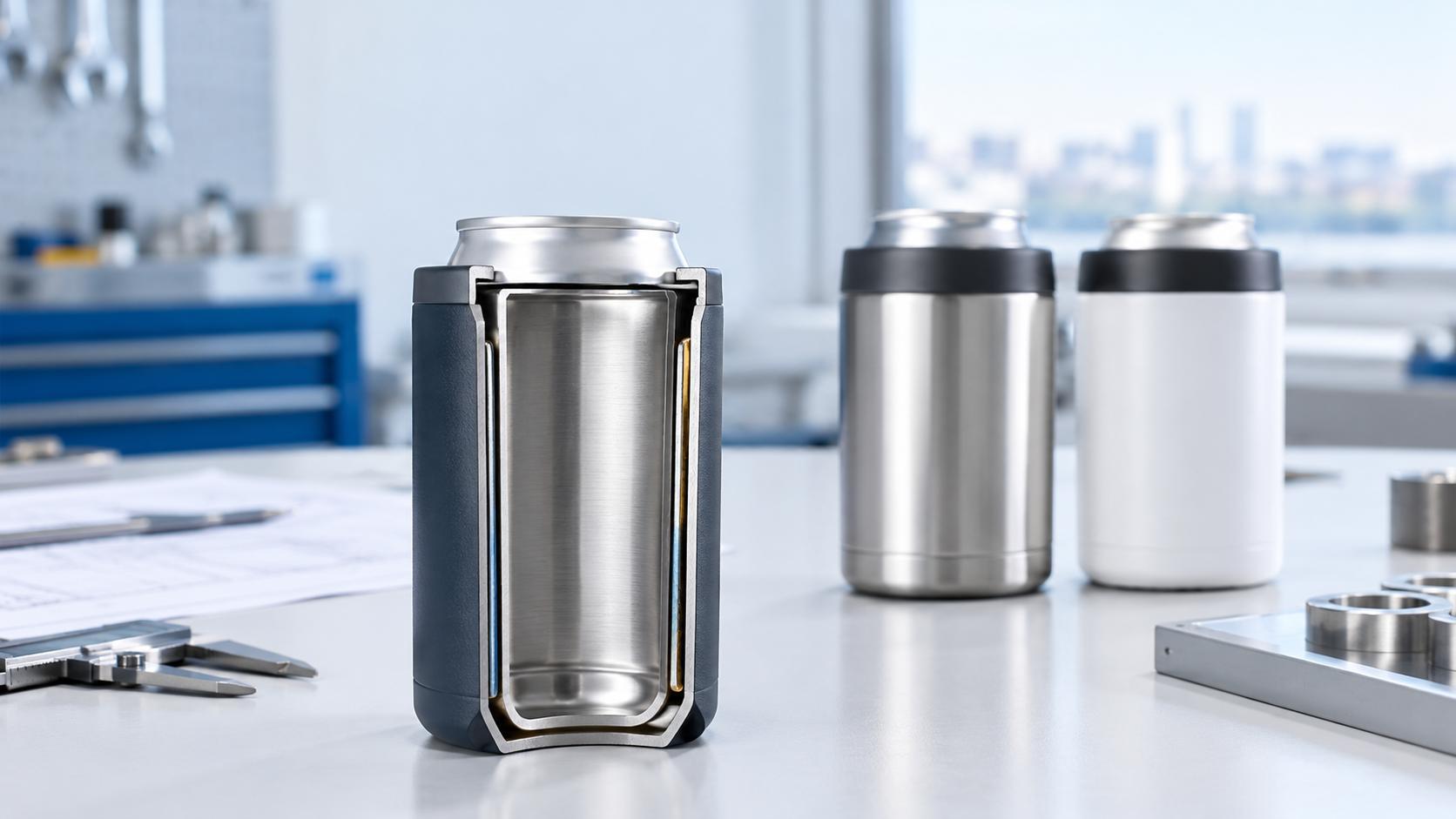
A vacuum can cooler is a small double-wall stainless steel cup shaped to hug the can. Between the inner and outer wall, air is pumped out, leaving a near-vacuum. Because heat conduction needs molecules, an evacuated gap cuts conductive and convective heat transfer dramatically. The outer wall stays near room temperature while the inner wall stays cold, which is why the outside does not sweat. A reflective inner layer adds a second layer of defense against radiant heat. The can itself becomes the inner drink liner, and the stainless shell becomes an insulated jacket around it.
Sleeve type | How it works | Keeps can cold | Condensation on outside | Best fit |
Neoprene / foam koozie | Soft foam slows air contact | Short; warms within the hour | Yes; drips and wets hands | One-off events, lowest cost |
Plastic double-wall (no vacuum) | Insulating air gap, but conductive | Mild improvement | Some, if not vacuumed | Indoor, value range |
Stainless double-wall vacuum | Evacuated gap blocks conduction | Longest by a wide margin | No; outside stays dry | Everyday, premium, outdoor |
Why "No Sweat" Matters More Than It Sounds
Buyers often treat condensation as a cosmetic issue. In practice it is the reason a wet ring forms on a desk, a label peels off, and a hand goes numb after ten minutes. A vacuum can cooler eliminates all three because the outer wall never reaches the dew point. For a brand selling to offices, patios, golf carts or boat decks, a dry exterior is a functional benefit customers notice immediately, and it is a reason to charge more than a foam sleeve.
How to Compare Performance Without the Marketing Hours
· Ask for the test protocol: starting liquid temperature, ambient temperature, lid used, whether opened during test.
· Compare the same can size and the same room temperature; one hour on a 95-degree patio is not the same as one hour on a 70-degree desk.
· Check whether the cooler seals to keep the can from sliding and whether a lid option exists to slow top warming.
A supplier willing to describe its method is usually a supplier who can repeat the result; one who only gives a headline number is asking the buyer to guess.
Common Mistakes When Choosing a Can Cooler
· Buying foam for a premium brand: the sleeve shape and cost telegraph price immediately.
· Ignoring fit: a loose cooler lets the can rattle and slide out.
· Forgetting the base: a steel base should be stable and not scratch tables.
Pre-Chilling the Can Changes Everything
A vacuum cooler slows heat transfer, but it cannot cool a warm can. A can that came out of a hot car will warm a cooler whose inner wall has reached that starting temperature. Buyers and end users both benefit from understanding that the cooler holds cold; it does not create it. Pre-chilling the can, or starting from a fridge-cold temperature, multiplies the useful hours. Brands often add a short printed note explaining this, which sets customer expectations and reduces the "it only kept it cold for an hour" complaint that comes from a hot starting point.
Caring for a Vacuum Can Cooler
A stainless can cooler lasts for years if it is treated like a bottle, not like a disposable sleeve. Rinse it after a sunny day out, wash the interior before storing it wet, and avoid dropping it on concrete, because a dent in the outer wall can compromise the vacuum over time. The base should stay flat so it sits stable on a table. A reusable product that is easy to clean and built to last is the whole point of choosing vacuum steel over foam; customers who understand that treat it accordingly.
· Rinse and air-dry after use; do not store it closed and damp.
· A dented outer wall can weaken the vacuum; inspect it after hard drops.
For everyday use, the stainless vacuum cooler is the default that justifies its price, while neoprene remains the budget choice for one-off giveaways; the buyer job is to match the sleeve to the price band the customer expects.
How ChengPeng Builds Vacuum Can Coolers
Zhejiang ChengPeng Industry & Trade Co., Ltd., founded in 1999 and based in Zhejiang, develops vacuum-insulated stainless can coolers under OEM/ODM arrangements as part of its insulated drinkware line. Zhejiang ChengPeng Industry & Trade Co., Ltd., founded in 1999 and based in Zhejiang, develops insulated stainless drinkware under OEM/ODM arrangements, including vacuum can coolers. Materials are third-party tested against FDA 21 CFR, EU 10/2011 and LFGB Section 31 expectations, and the factory holds BSCI, SEDEX 4P, RCS/GRS, FSC, GSV, ISCC and SCAN audits together with ISO 9001, 45001 and 14001 systems. With 141 patents, 20-plus QC inspectors, a 99.9% on-time rate, 100-plus new designs a year and an in-house 3D printing workshop, it supplies brands including Adidas and Ralph Lauren across North America, Europe, South America and Asia; more at www.chengpeng.com.cn.
FAQ
Q1. How long does a vacuum can cooler actually keep a can cold?
It depends on starting temperature, ambient heat and whether the can is opened. The structural point is that a vacuum cooler outlasts neoprene by hours rather than minutes; ask for the supplier test protocol rather than a single headline number.
Q2. Does a vacuum cooler work on both cans and bottles?
Many models are sized for a specific can diameter. Combo designs accept both slim 12oz cans and standard 12oz bottles; buyers should specify which format the line needs.
Q3. Why does the outside stay dry?
Because the evacuated gap keeps the outer wall near room temperature, so it never reaches the dew point and condensation cannot form on it.
Q4. Is neoprene still a valid choice?
Yes for low-cost, one-off events. It does not insulate like vacuum steel, but it is cheap to print and lightweight, which suits giveaway use.
Q5. Can a can cooler hold a 16oz tall can?
Not in a standard 12oz body. Tall 16oz cans need a taller inner cavity; buyers should confirm the inner dimensions against the can size they sell.
Q6. How does ChengPeng develop a custom can cooler?
The spec sheet fixes inner diameter, height, finish and lid option, samples are approved against real cans, and third-party food-contact reports cover FDA, EU and LFGB frameworks before production.
For a buyer, the practical lesson is that the structure, not the brand name on the box, decides performance. A well-made vacuum cooler from any reputable factory will outperform a decorated foam sleeve on a hot day; the buyer job is to confirm the evacuated gap, the dry exterior, and a fit that holds the can without wobble.
Conclusion
A vacuum can cooler is not a fancier neoprene sleeve; it is a small thermos built around a can. The evacuated gap is what removes heat transfer and condensation, and that is the structural reason a stainless cooler keeps a drink cold far longer than foam. A brand that understands the physics can choose the right size, fit and finish instead of paying for a look that does not match the use. Ask the factory for the structure behind the claim, test the dry exterior on a warm day, and the performance gap between a vacuum cooler and a sleeve will speak for itself.