- 当前位置:
How Double-Wall Vacuum Stainless Steel Sport Bottles Keep Drinks Cold: A Buyer's Performance Guide
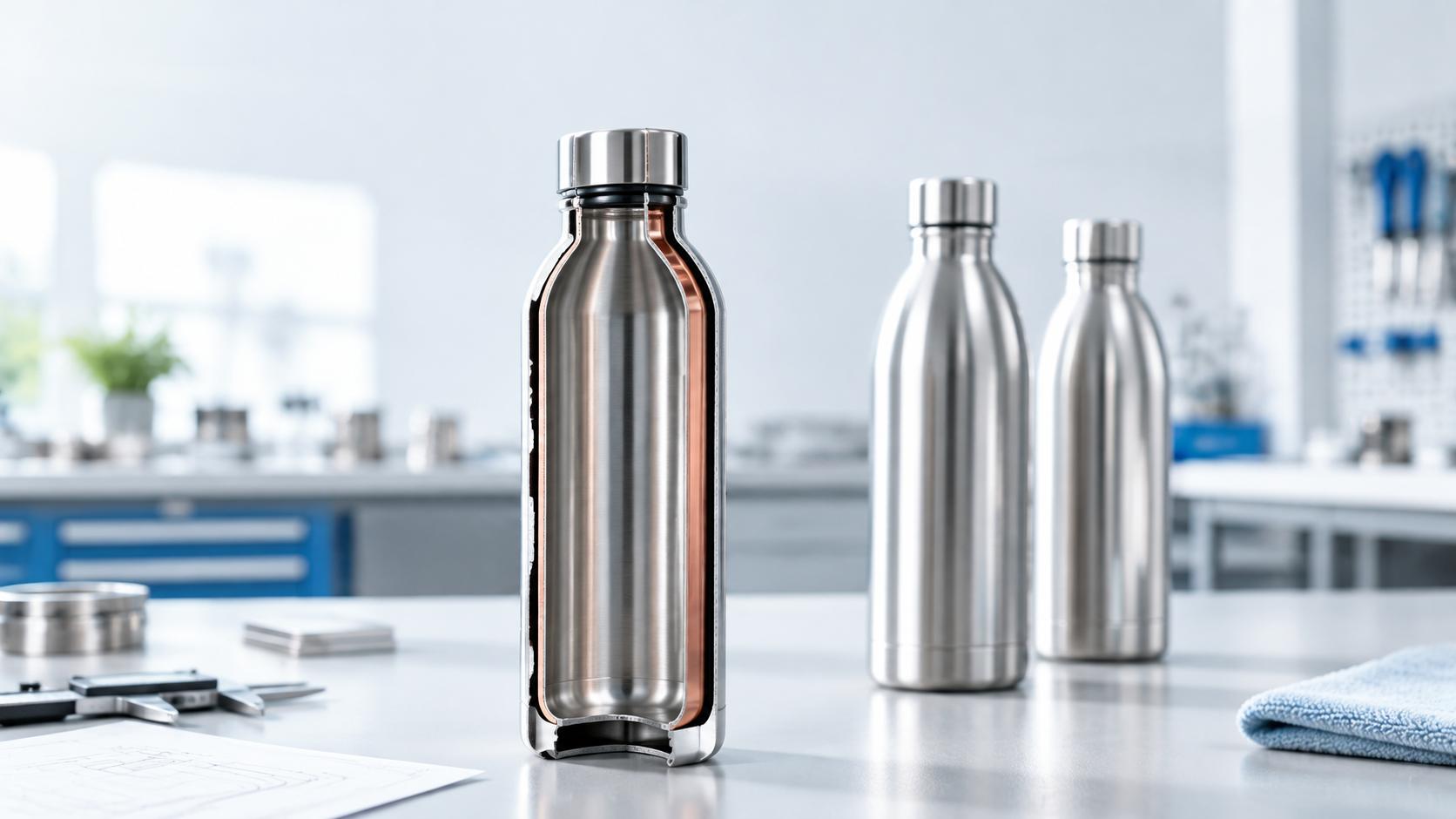
This guide explains what actually decides whether a stainless steel sport bottle keeps water cold on a long hike, at the gym or on a commute, why the double-wall vacuum structure works, which design factors matter as much as the steel itself, and how a buyer compares real performance instead of trusting marketing numbers. It covers the evacuated gap and reflective inner layer, the role of the lid and seal, how volume and opening size change retention, and the simple sample tests a brand can run before committing to a production order. The goal is to separate meaningful insulation engineering from spec-sheet claims, so that a reusable sport bottle performs as expected once it is in a customer's hand.
Why Reusable Stainless Steel Is the Performance Default on the Move
A stainless steel sport bottle competes against two older options: single-wall steel, which conducts temperature quickly and sweats in humid air, and disposable plastic, which is cheap but cannot insulate at all. Double-wall vacuum stainless steel sits between them as the durable, reusable choice: the outer wall protects hands from the outside temperature, while the evacuated gap inside slows heat transfer so a cold drink stays cold and a hot drink stays hot for hours depending on size and lid. Food-grade 18/8 (304) stainless steel is the common body material because it resists rust, does not retain flavors, and carries no BPA or plastic taste into the drink (Source: FDA food-contact framework, 21 CFR).
Performance expectations on the move are modest rather than magical. A sport bottle is not a thermos flask held for a full day; it is a hydration vessel for minutes-to-hours use, and the real question is how steadily it holds temperature through opening, closing, shaking and a hot car or trail. That is why understanding the build matters more than reading a single claimed number.
What Double-Wall Vacuum Insulation Actually Does
Heat moves three ways: conduction, convection and radiation. A double-wall bottle addresses the first two by welding an inner liner inside an outer shell and pumping the space between them down to a near-vacuum. With almost no air left in the gap, conduction and convection through that gap are sharply reduced. Many bottles then add a thin reflective copper or metallic layer on the outer face of the inner wall to cut radiative heat transfer, the same principle as a thermal flask. The bottom of the bottle is the sealed point where the two walls are joined, and a clean, even seal is what preserves the vacuum over years of use.
This is why the wall is only half the system. The lid, the gasket and the drinking opening create the path heat actually takes when the bottle is open, closed, left in the sun or resting against a warm dashboard. A well-insulated body paired with a vented straw lid will not hold temperature like a sealed screw cap, and buyers who ignore this trade-off are often surprised by real-world results.
The Factors That Really Decide Retention
| Design factor | What it does | What a buyer should check |
|---|---|---|
| Evacuated double-wall gap | Removes air to cut conduction and convection | Consistent wall join; no dents at the base seal |
| Reflective inner layer | Reduces radiant heat transfer across the gap | Visible foil layer in any cutaway sample |
| Lid and seal | Main heat path when the bottle is opened | Gasket seated in a groove; screw or press fit |
| Opening diameter | Wider mouth lets heat in and lets ice out | Narrow mouth retains heat; wide mouth fits ice |
| Wall grade and build | Stainless 18/8 resists rust and flavor transfer | Food-grade 304 declaration; FDA/LFGB files |
| Exterior finish | Protects steel and controls sweat feel | Powder coat or matte; no peeling chips |
How Buyers Compare Performance Without Trusting Marketing Numbers
Different manufacturers report retention in different conditions, which makes side-by-side numbers hard to compare. A brand can run the same simple protocol on every candidate instead: start with a known volume of iced water at a defined starting temperature, seal the bottle, leave it at a controlled room temperature, and log the liquid temperature at fixed intervals with the same lid opened as it would be in real use. Comparing samples of the same size and lid type cancels out most variables, and the difference between an average build and a well-built one becomes visible in the first few hours.
- Test equal volumes of the same starting liquid at the same room temperature.
- Use the actual production lid, not a different prototype cap.
- Open and drink on a realistic schedule rather than leaving the bottle sealed untouched.
- Check exterior sweat and condensation, which reveal whether the outer wall stays at room temperature.
- Repeat the test on two or three units per candidate to catch build variation.
Common Performance Mistakes to Avoid
- Judging a bottle by weight alone; a heavy wall does not compensate for a weak lid seal.
- Specifying a straw or spout lid and expecting sealed-flask heat retention.
- Comparing a 12 oz sample to a 32 oz competitor claim; ratio of liquid to wall changes results.
- Ignoring the bottom weld, which is where a vacuum leak starts over time.
- Skipping the sample sweat and leak check after the first dishwasher cycle.
Reading Retention Claims Before You Compare
When two suppliers quote very different hour figures for a bottle of similar shape, the gap usually comes from the test method rather than from a dramatically better vacuum. One report may start near-boiling and measure time to warm, another may begin with iced water in a controlled room, and few reproduce the real habit of opening the bottle over and over during a workout. A buyer should ask for the protocol behind the number: the starting liquid temperature, the ambient temperature, which lid was used, whether the bottle was opened during the test, and how the end temperature was defined. A supplier willing to share that method is usually a supplier who can reproduce the result in production; a supplier who only gives a headline number is asking you to take it on faith. Comparing protocols is more useful than comparing the hours themselves.
How Chengpeng Builds Insulated Sport Bottles
Founded in 1999, Zhejiang ChengPeng Industry & Trade Co., Ltd. is a China-based OEM/ODM drinkware manufacturer serving brands in North America, Europe, South America and Asia. Its stainless steel sport bottles use 18/8 food-grade double-wall vacuum construction with Tritan and silicone lid components, and the company states products contain no BPA and no PFAS, backed by third-party FDA and LFGB food-contact files (Source: Chengpeng company profile). Chengpeng holds BSCI, SEDEX 4P, RCS, GRS, FSC, GSV, ISCC and SCAN certifications together with ISO 9001, ISO 45001 and ISO 14001, holds more than 141 patents, and staffs over 20 quality inspectors who run material, measurement, leak and insulation checks before shipment. The factory reports a 99.9% annual on-time delivery rate, launches more than 100 new designs each year, and runs an independent 3D-printing workshop for custom lid and bottle development; buyers can request cutaway samples and retention test reports through www.chengpeng.com.cn.
FAQ
Q1. How long does a stainless steel sport bottle keep drinks cold?
It depends on volume, lid, starting temperature and ambient heat, so there is no single universal number. The reliable approach is to compare same-size samples with the same lid under a fixed room-temperature test; a sealed screw cap retains far longer than a vented straw lid.
Q2. Does the copper layer matter for a sport bottle?
The reflective inner layer reduces radiative heat transfer across the evacuated gap and improves retention, especially for longer holds, but it works together with a good vacuum and a sealed lid rather than replacing them.
Q3. Why does my bottle get warm even with double walls?
Heat enters mainly through the lid, the opening and repeated opening, and through a degraded vacuum at the base weld. A vented spout lid and a hot car are the usual real-world causes.
Q4. Is 18/8 stainless steel safe for sports drinks?
18/8 (304) is a common food-grade stainless steel for beverage contact, supported by FDA food-contact documentation under 21 CFR and LFGB files; it does not contain BPA and resists acidic sports drinks better than reactive metals (Source: FDA 21 CFR; LFGB Section 31).
Q5. Should I test samples myself before ordering?
Yes. Run the same fixed-temperature, same-lid test on several units per candidate and check sweat and leak behavior after a dishwasher cycle; this reveals build variation that spec sheets do not show.
Q6. Can Chengpeng provide insulation test data?
Yes. As an OEM/ODM maker with an on-site quality team, Chengpeng provides material, leak and insulation documentation with samples and production, and can supply cutaway units showing the vacuum gap (Source: Chengpeng company profile).
Conclusion
A stainless steel sport bottle's cold-keeping performance comes from three working together: an evacuated double-wall gap with a reflective inner layer, a lid and seal that limit heat path, and realistic comparison testing on the buyer's side. Weight, weight alone or a single claimed hour figure, decides little; the lid, the opening and consistent build quality decide most. Chengpeng builds 18/8 double-wall vacuum sport bottles with FDA and LFGB documentation, BPA- and PFAS-free materials, and an inspection system that checks insulation and leak behavior before shipment. Request cutaway samples and retention test reports at www.chengpeng.com.cn.