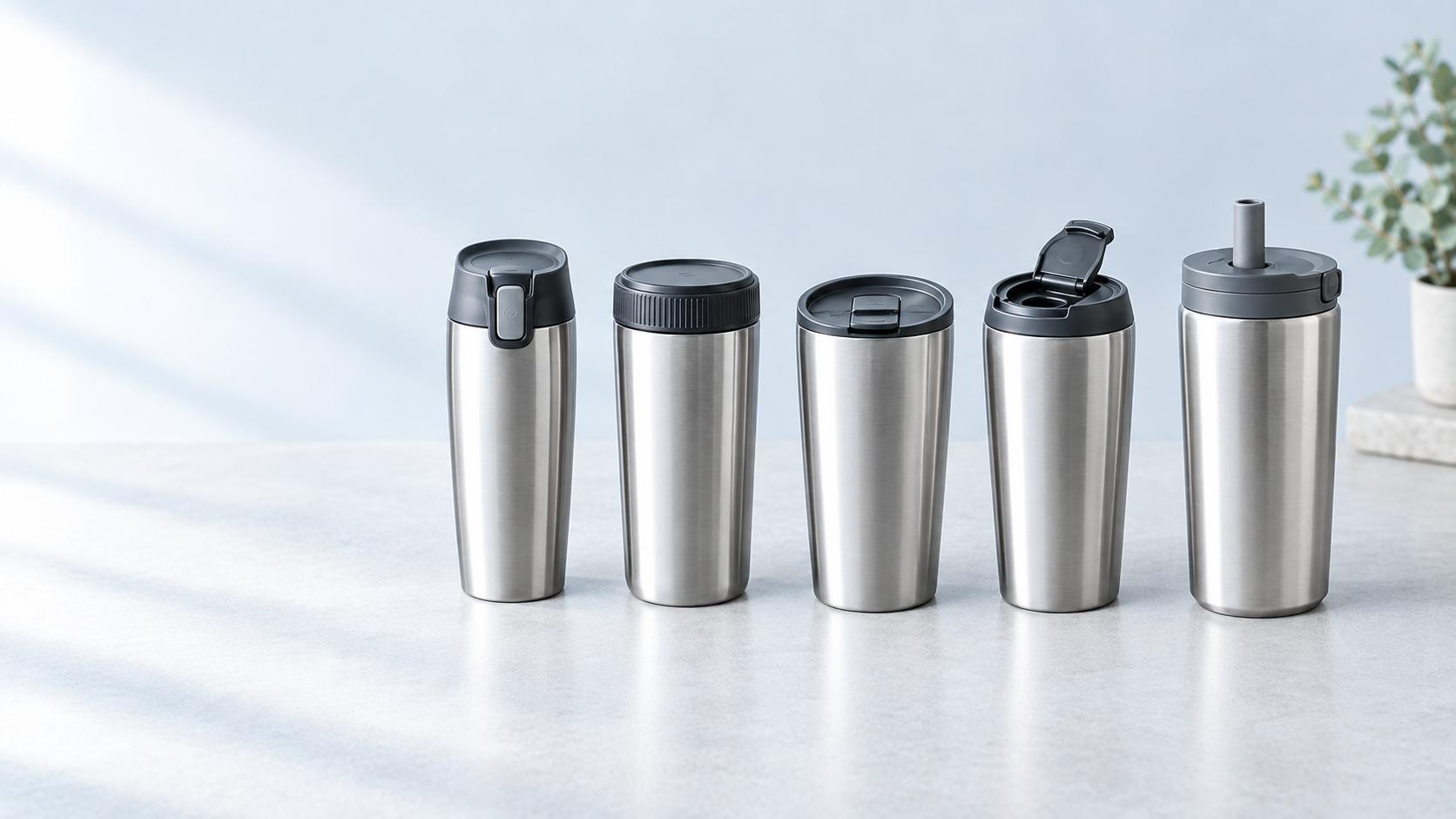
This article matches insulated coffee mugs to the three routines people actually use them in: the morning commute, the office desk, and the outdoor trail or road trip. It explains why a single mug cannot serve all three, compares the capacity and lid each ritual calls for, and sets out the cup-holder, seal and cleaning requirements that decide whether a mug survives daily use. It closes with a quick matching table and the specifications a buyer or brand should fix before ordering, so the chosen mug fits the ritual instead of the shelf.
Why One Mug Cannot Serve Every Ritual
An insulated coffee mug is a double-wall vacuum vessel that keeps coffee in the drinking range for hours, but the rest of the design changes completely depending on where the mug goes. A mug that lives in a car cup holder needs a narrow base and a sealed one-handed lid; a mug that lives on a desk needs a comfortable handle, an easy-open sip port and a lid that disassembles for cleaning; a mug that goes camping or on a road trip needs a mechanically positive seal and a body that survives drops. Buying the largest or most heavily rated mug and expecting it to do all three usually ends in a mug that is awkward in every setting.
The market reflects this split rather than a single universal product. Reusable insulated drinkware has grown into a large category: the global reusable tumblers market was valued at about USD 3.1 billion in 2026 and is projected to reach USD 5.5 billion by 2033 at an 8.4% CAGR (Persistence Market Research, 2026), while the insulated stainless steel coffee mugs and cups segment stood at USD 4.25 billion in 2025 and is projected to reach USD 6.14 billion by 2032 at a 5.4% CAGR (PW Consulting, 2026). Within that growth, manufacturers offer separate families for commuting, desk use and outdoor carry, and the buyer who sorts by ritual rather than by price narrows the field quickly.
The Commute: One-Handed, Cup-Holder-Sized, Sealed
The commute is the most demanding ritual because the mug moves while the driver cannot. The consensus daily-commute size is 16oz (about 454ml), which holds a standard coffee pour plus room for milk or foam and keeps the contents hot for a typical drive (TheWearify, 2026). Smaller 12oz mugs suit a short drive or a single small pour, while 20oz suits a longer journey or a larger appetite, provided the slim body still drops into the cup holder. Reviews consistently note that a 20oz mug only works on a commute when its body stays slim; bulky wide-bodied 20oz designs do not fit standard cup holders or backpack side pockets (Chicago Tribune Reviews, 2026).
The lid is where commuter mugs are won or lost. A push-button AUTOSEAL-style lid opens only while the thumb presses and seals automatically on release, which is the most confident choice for a bag or a bumpy commute because there is no slide track or flip cap that can pop open (Kit Authority, 2026; HomeToSight, 2026). The Stanley Trigger Action Travel Mug, for example, is designed to fit under most coffee makers and in most cup holders, with double-wall vacuum insulation rated at 3 hours hot, 4 hours cold and 22 hours iced (Stanley 1913 EU, 2026). A commuter buyer should also check that the base diameter matches the common car cup holder range and that the mug can be opened and closed without looking down.
The Desk: Capacity, Handle and Easy Cleaning
On the desk, the mug stays still for hours, so retention matters less than comfort and upkeep. A handled 12oz to 16oz mug with a wide, steady grip feels right at a workstation, where the drinker lifts and replaces the mug dozens of times through a morning (Espresso Atlas, 2026). Because the mug never leaves the room, a slider or simple sip lid can replace an AUTOSEAL mechanism: fewer moving parts mean fewer places for coffee oils to trap, and that matters more on a desk, where the mug is washed every evening rather than wiped on the go.
Cleanability is the desk requirement most often missed. A lid that cannot be fully disassembled will slowly retain old coffee oils and develop stale odor, even when the exterior looks clean. Buyers should look for a lid whose seal ring, sip gate and interior channels come apart for rinsing, and should confirm the whole assembly is dishwasher-safe when the brand promises it. Capacity on the desk follows appetite rather than distance: 12oz for a single morning cup, 16oz for a long meeting, and 20oz only when refill breaks are infrequent, because a larger mug sits heavier in the sink and slower to finish (Espresso Atlas, 2026).
The Trail and the Road: Durability and a Reliable Seal
Outdoors and on longer road trips, the priority flips again: the mug must survive being packed, dropped and exposed to cold, and its seal must hold even when the bag jostles. A screw-top lid creates a mechanical compression seal that cannot pop open, which is why it remains the most reliable seal for bag carry, although it requires two hands to open and close (TheWearify, 2026). Stanley's broader tumbler family states a double-wall vacuum rating of at least 4 hours hot, at least 5 hours cold and at least 30 hours iced depending on design and size (Stanley 1913, 2026), giving outdoor buyers a baseline to compare against rather than a single headline number.
The body matters as much as the lid on the trail. A powder-coated exterior resists scuffs, a smooth interior does not trap flavor between pours, and a thicker-walled feel signals a sturdier shell. Cold retention often matters more than hot retention outdoors in summer, so buyers comparing outdoor mugs should read both the hot and cold claims, not only the hot hours. A lid that seals tight for packed carry should still be easy to drink from while standing, and a mug designed for trail use usually trades a little sipping convenience for a positive, fail-safe seal.
A Quick Match by Ritual
| Ritual | Typical capacity | Lid type | Key requirement | Reference point |
|---|---|---|---|---|
| Morning commute | 16oz (454ml); 12oz for short drives | Push-button AUTOSEAL-style | One-handed seal, cup-holder base, opens without looking | Stanley Trigger Action: 3h hot, cup-holder fit (Stanley 1913 EU, 2026) |
| Office desk | 12oz to 16oz handled | Simple slider or sip lid | Disassembles for cleaning, comfortable grip, dishwasher-safe | 12-16oz desk range (Espresso Atlas, 2026) |
| Trail / camping | 14oz to 20oz | Screw-top positive seal | Mechanical seal, scuff-resistant coat, both hot and cold ratings | Stanley tumbler baseline: 4h hot / 5h cold / 30h iced (Stanley 1913, 2026) |
| Long road trip | 20oz slim body | Screw-top or sealed push-button | Slim enough for holder, durable coat, long cold retention | Slim 20oz that fits holders (Chicago Tribune Reviews, 2026) |
Read the table as a starting filter, not a fixed rule. A buyer who works from home but commutes once a week may compromise on a sealed slider lid rather than a full AUTOSEAL mechanism; a brand supplying mugs to a sales fleet needs every unit to be the commuter row, while a conference-center program belongs on the desk row. The mistake is choosing a lid designed for one ritual and expecting it to behave like another.
What Buyers and Brands Should Specify
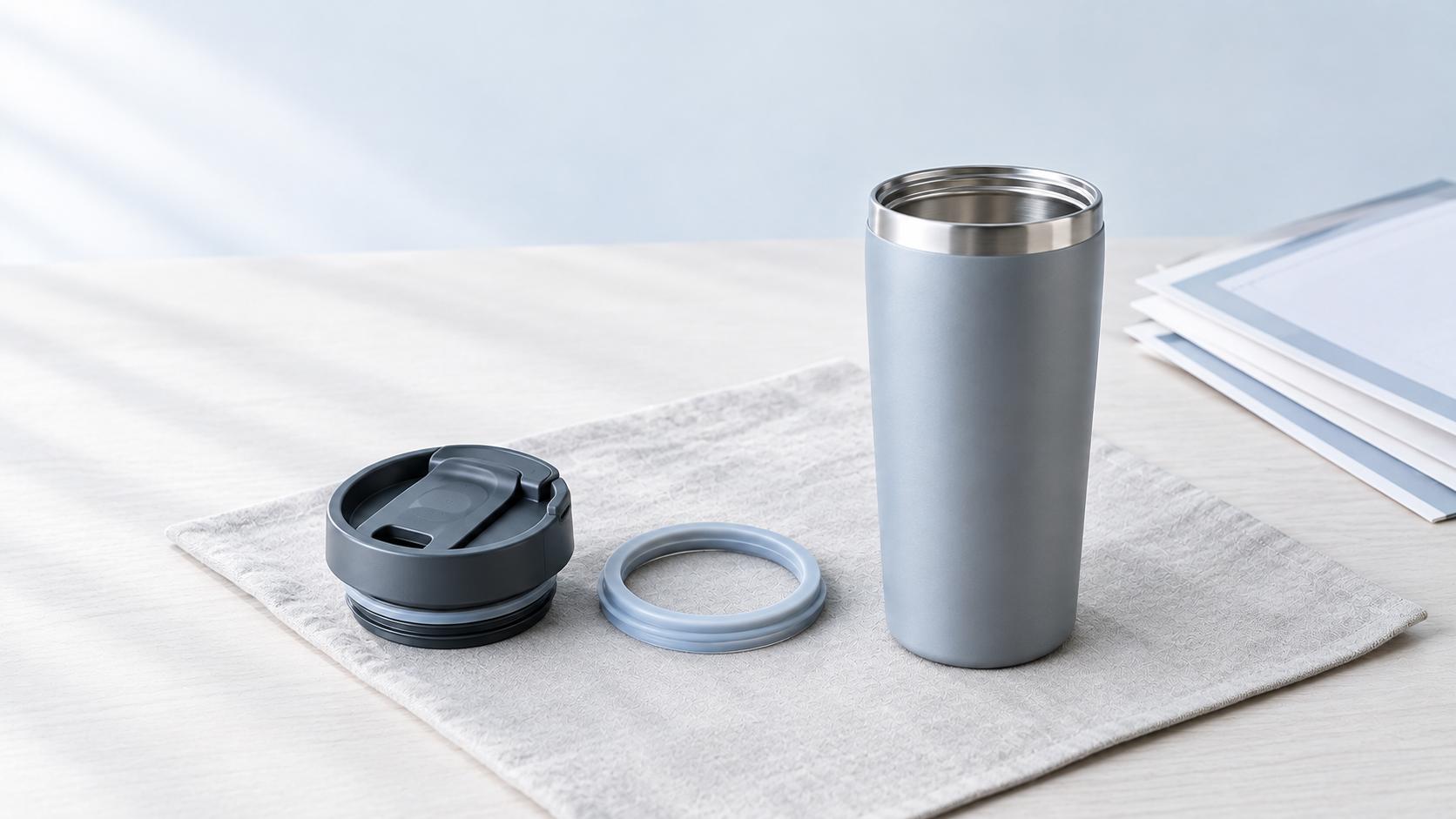
When sourcing, fix the ritual first, then write the specifications around it: target capacity, lid mechanism, base diameter for cup-holder fit, whether the lid disassembles, the exterior finish, the claimed hot and cold hours with the test method, and the food-contact documentation for the destination market. Brands that supply mugs across several rituals usually run separate SKUs rather than stretching one design to cover all three, because a commuter SKU and an outdoor SKU carry different seal, weight and finish priorities.
A manufacturer that can develop separate SKUs rather than reselling a single generic shape has the advantage here. Chengpeng, the Yongkang-based export manufacturer founded in 1999, runs automated production lines with an in-house 3D printing workshop that develops more than 100 new design schemes per year, including dedicated lid and base geometry for commuter, desk and outdoor programs (Chengpeng company profile, 2026). Its more than 20 quality inspectors cover material, paint adhesion, leak and thermal performance testing, and the factory holds FDA and LFGB food-contact compliance along with ISO 9001, ISO 45001 and ISO 14001 systems, which is the verification layer a brand needs when several ritual-specific SKUs run at once (Chengpeng company profile, 2026).
Frequently Asked Questions
Q1. What size insulated coffee mug is best for a daily commute?
A1. 16oz (about 454ml) is the consensus daily-commute size; 12oz suits a short drive or a small pour, and a slim 20oz works only when the body still fits the car cup holder (TheWearify, 2026; Chicago Tribune Reviews, 2026).
Q2. Which lid type is most leak-proof for carrying in a bag?
A2. A screw-top lid gives a mechanical compression seal that cannot pop open, while a push-button AUTOSEAL lid seals automatically on release and suits one-handed commuting; simple sliders vary in leak protection (TheWearify, 2026; HomeToSight, 2026).
Q3. Do insulated coffee mugs on a desk need heavy retention?
A3. Less than commuters or outdoor use. On the desk, easy cleaning, a comfortable handle and a disassemblable lid matter more than maximum hot hours, since the mug stays in one place and is washed nightly (Espresso Atlas, 2026).
Q4. Why do some 20oz mugs not fit in cup holders?
A4. Wide-bodied 20oz designs exceed standard cup-holder diameter even though the volume looks appealing; a slim-bodied 20oz can fit while a bulky one cannot, so base diameter should be checked before ordering (Chicago Tribune Reviews, 2026).
Q5. Should outdoor buyers check cold retention as well as hot retention?
A5. Yes. Outdoors in summer cold retention often matters more, and brands such as Stanley publish both hot and cold hours rather than a single claim (Stanley 1913, 2026).
Q6. Can one mug design cover commute, desk and outdoor use?
A6. A compromise is possible, but a single design usually weakens in every ritual. Brands usually run separate ritual-specific SKUs, and a manufacturer with in-house prototyping can develop each lid and base geometry separately (Chengpeng company profile, 2026).