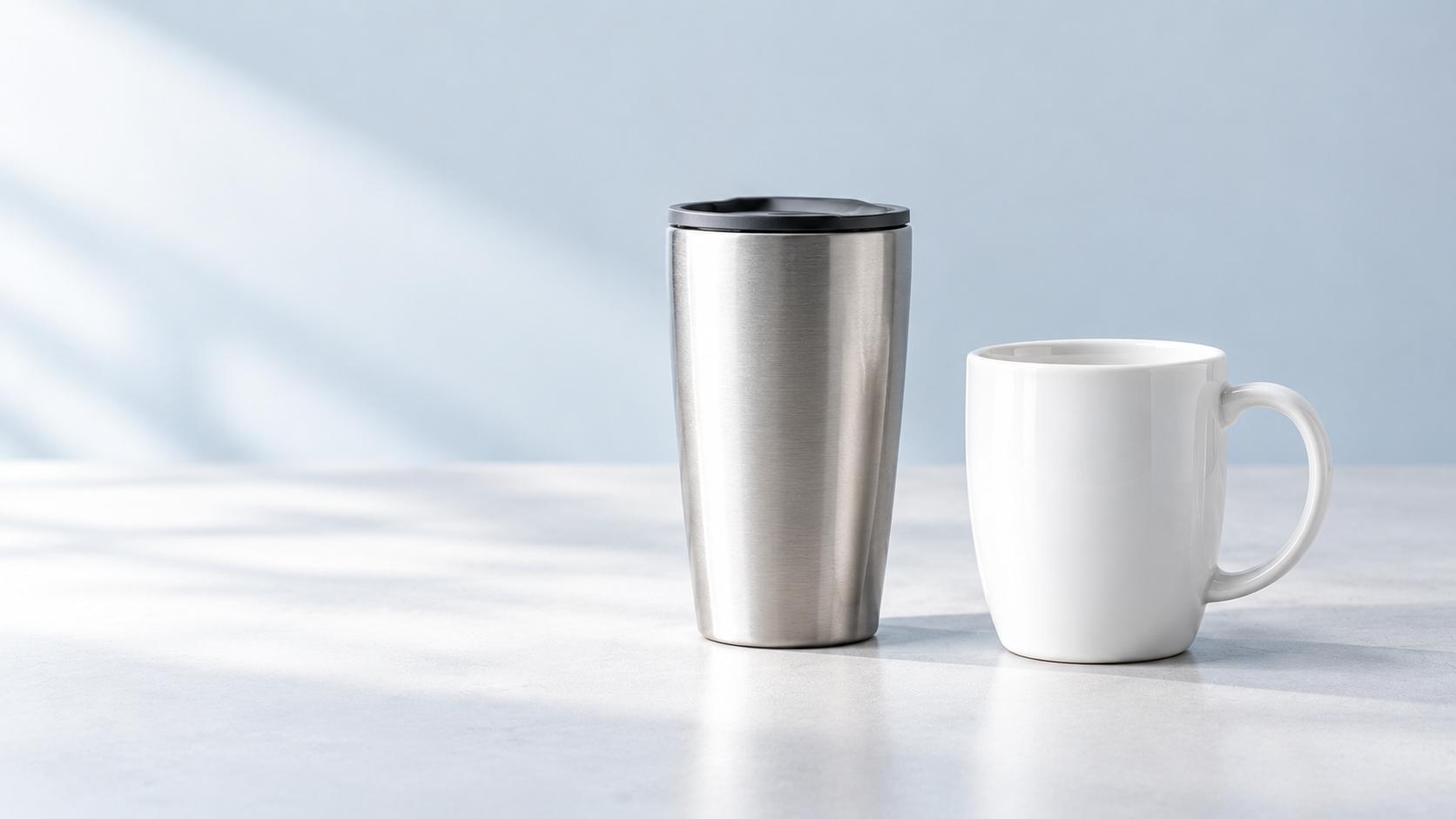
This article explains why temperature is the single most important variable in how a stainless steel coffee mug performs, and what that means when choosing one. It covers the difference between brewing temperature and drinking temperature, how quickly coffee loses heat in different vessels, what retention ratings such as 5 to 7 hours actually promise, and how to match a mug to a coffee ritual. It closes with the test questions a buyer should ask before trusting a rating, so that the number on the label matches the coffee in the cup.
Coffee Is a Temperature-Sensitive Drink
Coffee is brewed in one temperature world and drunk in another. The Specialty Coffee Association recommends extracting coffee at 195°F to 205°F (90°C to 96°C), where the desirable flavors and aromas dissolve from the grounds (MiaoLab, 2026). But that same coffee is not pleasant to drink at extraction temperature: it scalds, and the heat masks the sweetness and nuance that the brewer worked to extract. Most drinkers prefer coffee at roughly 150°F to 160°F (65°C to 71°C), where it still feels hot, releases aroma, and allows the palate to perceive sweetness and balance (Bean Thusiast, 2026), with 130°F to 160°F (54°C to 71°C) commonly cited as the broader acceptable drinking range (For The Price Of Coffee, 2026).
The practical consequence is that coffee has a short ideal window. Freshly brewed coffee enters the cup around 190°F to 200°F, then falls through the scalding zone, passes through the ideal drinking band, and keeps falling into the flat, bitter-dominated zone where aroma volatiles have evaporated and sweetness perception drops. A mug does not make coffee hotter; it only controls how long the coffee stays inside the window that matters. That is the whole reason insulated steel coffee drinkware exists.
How Fast Coffee Loses Heat in Different Vessels
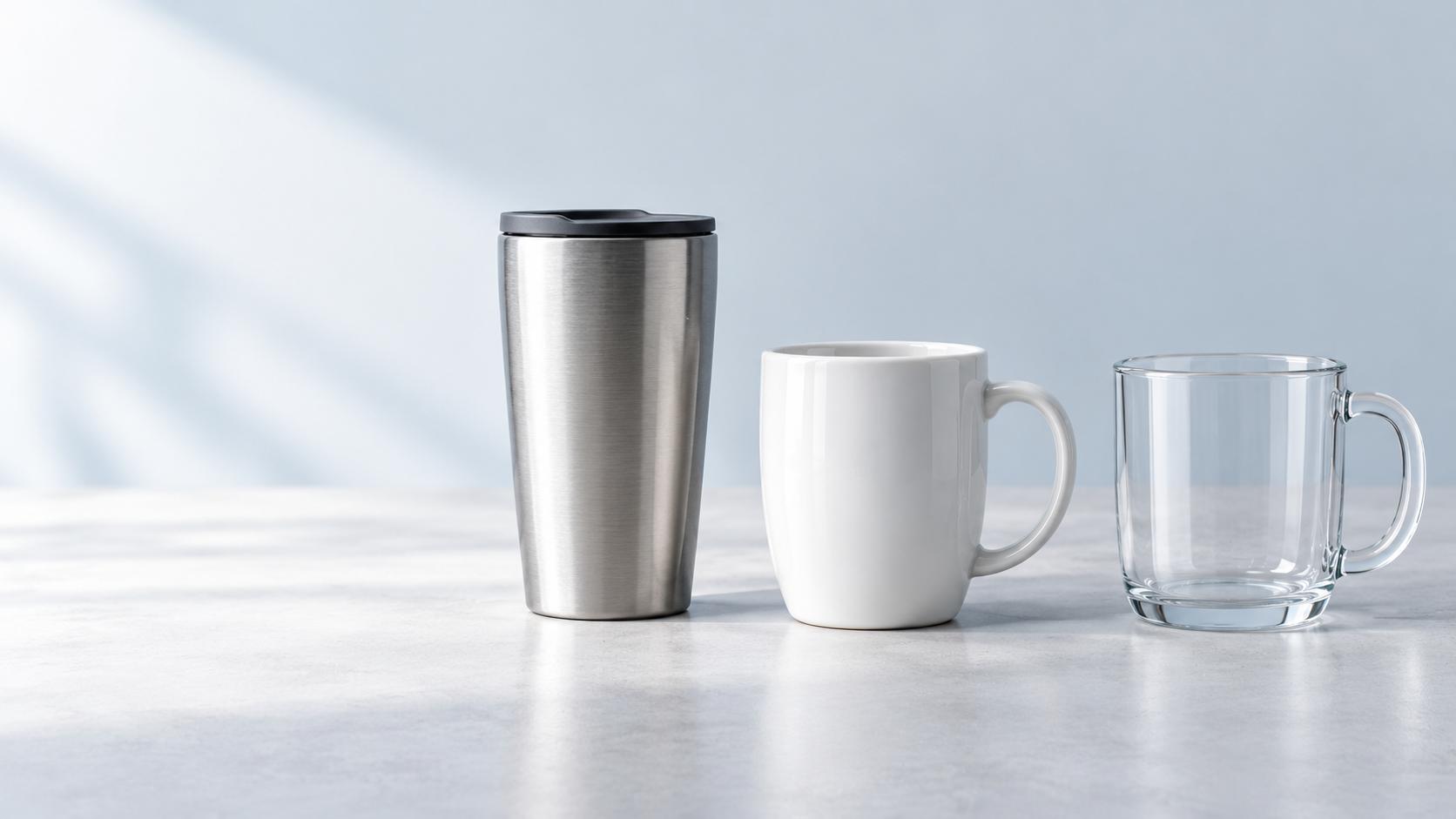
The vessel decides the cooling curve. An open ceramic mug loses heat through conduction and air movement; a 2026 independent test measured 200°F coffee in a ceramic mug dropping to an uncomfortable sipping temperature in about 18 minutes on a cold morning (VanLife Kitchens, 2026). Single-wall steel behaves similarly, because a thin metal wall conducts heat freely. Glass is comparable, with the shortest window of the three.
A double-wall vacuum stainless steel mug changes the physics: an inner and outer steel shell are welded together and the air between them is evacuated, removing the main path for heat transfer. In the same independent test, the stainless steel mug kept the coffee genuinely hot at the 90-minute mark and pleasantly warm at three hours (VanLife Kitchens, 2026). This is the construction behind the retention ratings printed by leading brands, such as Thermos rating its Stainless King 16oz mug at up to 6 hours hot and 18 hours cold and its Icon mug at up to 7 hours hot and 22 hours cold (Thermos, 2026), and Contigo rating its Luxe AUTOSEAL 16oz mug at 5 hours hot and 12 hours cold with double-wall vacuum insulation (Contigo, 2026).
What "Keeps Hot" Really Means for Coffee
| Coffee stage | Temperature | What it means for the drinker |
|---|---|---|
| Brewing extraction | 195-205°F (90-96°C) | SCA standard; flavors dissolve from grounds (MiaoLab, 2026) |
| Too hot to drink | Above about 160°F (71°C) | Scalds; aroma and sweetness masked |
| Ideal drinking window | 150-160°F (65-71°C) | Feels hot, aroma releases, sweetness perceptible (Bean Thusiast, 2026) |
| Acceptable range | 130-160°F (54-71°C) | Broader comfort band for most drinkers (For The Price Of Coffee, 2026) |
| Flat zone | Below about 120-130°F (49-54°C) | Aroma gone; bitterness dominates |
Read a retention rating with this table in front of you. A claim of "up to 6 hours hot" describes a laboratory best case: a full mug, a closed lid, a defined starting temperature, and a defined threshold for what counts as hot. It does not mean the coffee sits in the ideal 150°F to 160°F drinking band for six hours. In daily use, the lid opens, the level drops, and the ambient temperature is rarely controlled, so the coffee falls faster. A more honest mental model is that a well-made insulated mug extends the drinkable window from roughly twenty minutes to one to three hours of realistic use, which is exactly what a coffee drinker needs.
One consequence of long retention is that the mug can hold coffee above the comfortable drinking temperature for a long time. Coffee poured at 200°F into a sealed vacuum mug can still be scalding an hour later, so a lid that lets heat escape slightly, or a wait before the first sip, is part of the routine. Retention is a feature, not a free pass: the right mug keeps coffee in the drinking range for the length of the ritual, not indefinitely.
Matching the Mug to the Coffee Ritual
Different coffee rituals need different trade-offs. For the commute, the priority is a sealed, spill-proof lid that keeps heat in between sips; push-button sealed lids such as Contigo's AUTOSEAL close automatically after each drink and preserve retention far better than open flip lids (Contigo, 2026). For the desk, a simple lid that disassembles for cleaning matters more than maximum retention, because coffee residue and odor build up fast. For a weekend pour-over, taste sensitivity becomes the deciding factor, which is where 316 stainless steel or a ceramic-lined interior earns its premium (Montanic, 2026).
Capacity follows the same logic. Standard single-serve coffee sizes run from 8oz to 12oz, while travel formats from 14oz to 20oz cover the commute. A mug that holds the whole ritual in one pour, fits the car cup holder, and stays inside the drinking window for the length of the morning is the product most buyers actually want; chasing the longest headline rating without matching it to the routine usually ends in coffee that is either too hot to drink or already cold.
What to Check Before You Trust a Rating
Because retention numbers are method-dependent, the buyer should ask for the method, not just the figure. The questions that matter are: what starting temperature was used, what threshold defined "hot," what ambient temperature the test assumed, and whether the lid was opened during the test. A factory that answers these questions and shows results for the exact SKU is giving a verifiable claim; one that only quotes a catalog figure is quoting marketing.
For brands sourcing from China, this is where factory quality infrastructure shows. Export manufacturers with dedicated testing teams, such as Chengpeng with more than 20 quality inspectors covering material, paint adhesion, leak and thermal performance testing on the line, can provide per-SKU retention verification and adjust the test protocol to a buyer's market (Chengpeng company profile, 2026). Combined with a choice of 304 or 316 steel and optional ceramic-lined interiors, that verification capability is what turns a printed rating into a product promise the brand can stand behind.
Frequently Asked Questions
Q1. What is the ideal temperature to drink coffee?
A1. Most drinkers prefer 150°F to 160°F (65°C to 71°C), where the coffee feels hot, releases aroma, and sweetness is still perceptible; 130°F to 160°F is commonly cited as the broader acceptable range (Bean Thusiast, 2026; For The Price Of Coffee, 2026).
Q2. Why does coffee taste different as it cools?
A2. Aroma volatiles evaporate and sweetness perception drops as temperature falls, so coffee below roughly 120°F to 130°F tastes flat and increasingly bitter. The vessel decides how long the coffee stays above that point.
Q3. How long does a stainless steel coffee mug keep coffee in the ideal range?
A3. In realistic use, a well-made double-wall vacuum mug keeps coffee inside the drinking range for one to three hours. Brand ratings of 5 to 7 hours describe a closed-lid laboratory best case, not the daily window (VanLife Kitchens, 2026; Thermos, 2026).
Q4. Is a 7-hour retention rating useful for coffee?
A4. Only as a ceiling. A 7-hour rating does not mean the coffee is in the ideal drinking band for seven hours; it means the beverage stayed above a defined threshold with the lid closed. Match the rating to the ritual length instead of maximizing it.
Q5. Does a sealed lid matter more than the walls?
A5. For daily use, yes. Most real heat loss happens through the lid opening, so a sealed push-button lid that closes automatically between sips preserves retention far better than an open flip lid, even on the same mug (Contigo, 2026).
Q6. How can a factory verify the retention number before I order?
A6. Ask for the test method, starting temperature, threshold and ambient conditions, and request results for the exact SKU. Manufacturers such as Chengpeng run leak and thermal testing on the line and can share methods and results before production (Chengpeng company profile, 2026).