- 当前位置:
Why Custom Mugs Work as a Marketing Tool: Branded Drinkware ROI for Cafés, Companies and Events
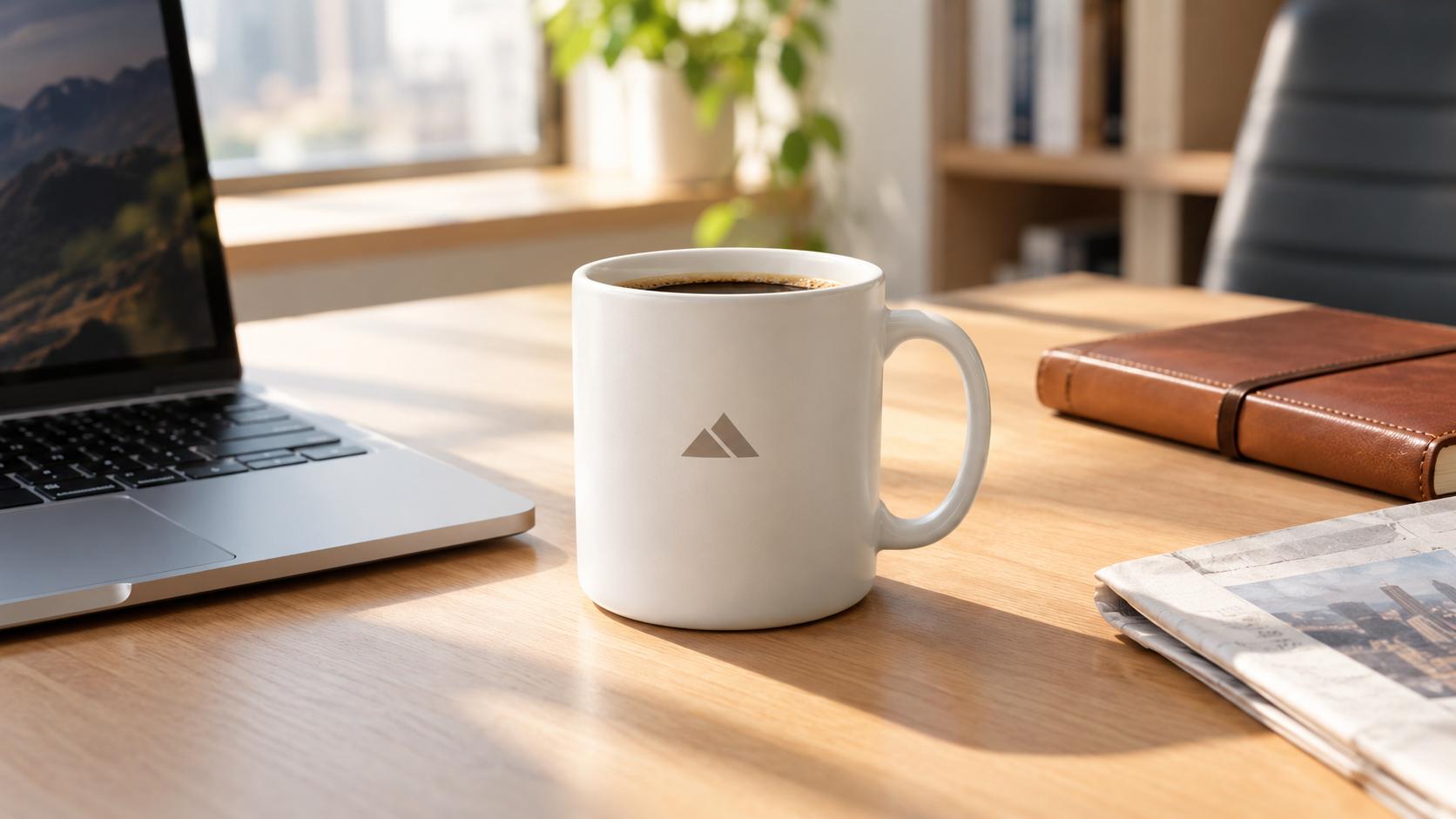
Custom mugs are one of the highest-retention promotional products a brand can buy, and the numbers behind the category explain why. US promotional products sales reached USD 27.1 billion in 2025 (Source: PPAI via Unique Custom Pins, 2026), a mug sits on a desk or a kitchen shelf for years, and industry data shows 90% of consumers remember a brand after receiving a branded giveaway, with 81% saying their perception of a company improves after receiving one and 83% staying loyal to brands that offer promotional products (Source: PromoCorner Travel Vertical Market, 2025). The US mug market alone was worth about USD 8.53 billion in 2025 and is forecast to reach USD 12.38 billion by 2033 (Source: Data Bridge Market Research, 2026). This guide explains why the custom mug is a uniquely effective marketing medium, compares the five main use cases — corporate gifting, employee recognition, café retail lines, trade-show giveaways and e-commerce sellers — and gives a budget-and-ROI table, a material table and a checklist for running a branded mug program. A custom mug is not a trinket; it is a daily-impression channel with a single-digit unit cost. Chengpeng is a Yongkang-based drinkware manufacturer producing custom ceramic-coordinated and stainless steel mugs for brands, cafés and promotional programs.
Why the Mug Is a Marketing Medium, Not a Giveaway
Most promotional products fail because they are used once and discarded. A mug is different: it is used every day, visible to the owner and to everyone near the owner's desk, and it carries the brand into the kitchen, the office and the commute. Promotional-product memory data explains the effect — 90% of consumers still remember a brand after receiving a branded product, and 83% remain loyal to brands that offer them (Source: PromoCorner Travel Vertical Market, 2025). Frequency is the driver: a mug generates dozens of brand impressions per day for months or years, at a unit cost most other advertising channels cannot match.
The Five Use Cases
Use Case | Typical Order Size | Best Mug Type | What It Delivers |
Corporate client gifts | 100-1,000 | Stainless steel insulated mug, laser or UV logo | Daily office visibility with premium feel |
Employee recognition | 50-500 | Ceramic mug, name + years-of-service print | Personal, keepsake value, desk presence |
Café / roaster retail | 500-5,000 | Ceramic with logo, or insulated steel for takeaway | Revenue line plus walking billboard |
Trade show / event | 200-2,000 | Budget ceramic or steel, bold one-color logo | High pickup rate, long recall |
E-commerce / POD sellers | 50-500 | Sublimation-ready ceramic blanks | Margin product with full-color artwork |
Budget and ROI
Program Size | Typical Unit Cost | Impressions Per Unit | Effective Cost per Impression |
100 units | USD 3-8 (insulated steel) | 30-90 per day for 1-3 years | Far below a fraction of a cent per impression |
500 units | USD 1-4 (ceramic printed) | Same frequency | Volume discount at 500+ |
5,000 units | USD 0.50-1.50 (plain ceramic) | Same frequency | Minimum viable for trade-show crowds |
Sources: RareCustom bulk mug pricing (2026); Made-in-China and Alibaba custom mug listings (2026).
The promotional products market runs about USD 27.1 billion in the US alone (Source: PPAI via Unique Custom Pins, 2026), and drinkware is a core category of that spend because the cost per usable impression is so low. When a 100-unit insulated mug program costs roughly the same as a single banner ad but stays visible for years, the mug wins on lifetime value.
What Makes a Mug Program Fail
Most weak mug programs fail in four predictable ways. First, the artwork is matched to the wrong print method — a photographic design sent to silk screen loses detail, while a one-color logo sent to sublimation pays for full-color capability it never uses. Second, the logo sits where the hand covers it, or the design wraps the entire mug so no single mark reads from across a room; a mug is read as a band, so the brand mark should sit in the clean middle zone. Third, the buyer compares blank prices instead of delivered value and chooses the cheapest body, which prints like a giveaway and undermines the program's purpose; a USD 0.20 difference per unit is noise next to the impression value a quality body creates. Fourth, the run ships from samples approved by photo instead of physical print, and color drift on ceramic or steel is not visible in a photograph. Programs that avoid these four mistakes — right method, right logo zone, value-based body choice and physical sample approval — consistently outperform ones that simply hunt for the lowest quote.
Choosing the Material for the Program
Material | Feel | Durability | Best Program |
Ceramic (11-15oz) | Warm, gift-like | Chip risk, dishwasher-safe | Client gifts, cafés, employee recognition |
Stainless steel insulated | Premium, functional | Years of daily use | Commuters, premium corporate gifts |
Glass / borosilicate | Visual, clean | Fragile | Boutique cafés, aesthetic brands |
Enamel | Retro, light | Chips but stays usable | Camping, outdoor brands |
The material decision shapes the perceived value. A ceramic mug reads as a thoughtful gift; an insulated stainless steel mug reads as a useful premium product. For a corporate program, the steel mug usually wins because it is used at the office and in the car; for a café, the ceramic mug with a strong logo becomes a retail item that sells itself.
The Branded Mug Checklist
1. Choose the use case first — client gift, employee, café, event or e-commerce — because it fixes the material and budget.
2. Lock the logo zone: on a mug, the printed area is a 360° band; place the logo where the hand does not cover it.
3. Match the print method to the artwork: one-color logo on volume (silk screen), full-color art on small runs (sublimation or UV), premium mark on steel (laser).
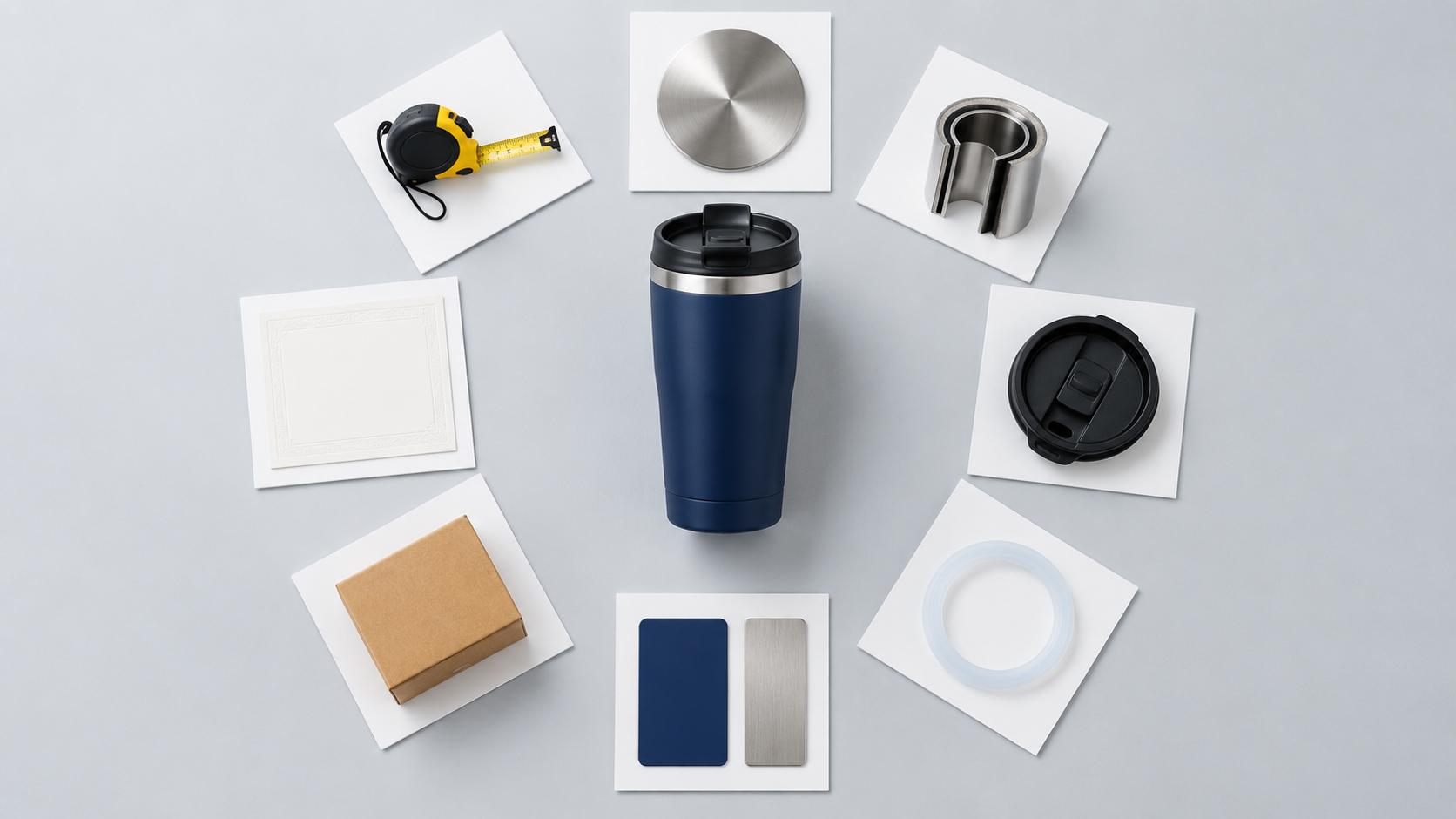
4. Add packaging that makes it feel like a gift — a color box doubles perceived value for corporate programs.
5. Order samples before the bulk run and approve the physical print, not a photo.
6. Plan the calendar: standard ceramic programs run 3-5 weeks, custom steel programs 4-8 weeks including sea freight.
FAQ
Q1. How much does a custom mug cost for a marketing program?
A: Chengpeng quotes by material and volume; printed ceramic mugs commonly range USD 1-4 per unit at 500+ pieces and insulated stainless steel mugs USD 3-8, with plain ceramic blanks as low as USD 0.50-1.50 at 5,000 pieces (Source: RareCustom, 2026; Made-in-China listings, 2026).
Q2. What is the minimum order for branded mugs?
A: Chengpeng can confirm per program; ceramic blanks start around 50-500 pieces depending on the printing method, and insulated steel mugs with logo typically start at 300-1,000 pieces for catalog ODM models.
Q3. Which mug is best for corporate gifts?
A: Insulated stainless steel with a laser-engraved or UV-printed logo reads as premium and gets daily use at the office and on the commute; for a keepsake feel, a decorated ceramic mug works equally well.
Q4. Do branded mugs really work as advertising?
A: Industry data shows 90% of consumers remember a brand after receiving a branded product and 83% stay loyal to brands offering promotional products (Source: PromoCorner Travel Vertical Market, 2025); with daily desk and kitchen use, a mug compounds those impressions over years.
Q5. Should a café sell custom mugs at retail?
A: Chengpeng recommends a ceramic mug with a strong logo for sit-in sales and an insulated steel mug for takeaway customers; both create a revenue line and turn customers into walking brand carriers.
Q6. How long does a custom mug order take?
A: Chengpeng coordinates typical timelines of 7-15 days for samples, 20-35 days for ceramic production, 30-45 days for insulated steel, plus 18-22 days of sea freight to the US West Coast.
Conclusion
The custom mug is a rare promotional product that gets used every day instead of being thrown away. US promotional products sales reached USD 27.1 billion in 2025, and the branded drinkware inside that spend works because a mug delivers dozens of impressions daily at a unit cost of a few dollars (Source: PPAI via Unique Custom Pins, 2026). The five use cases — corporate gifts, employee recognition, café retail, events and e-commerce — each have a best material and a best print method, and a simple checklist (use case first, logo zone, print method, packaging, sample approval, calendar) turns a mug program into a predictable campaign. Chengpeng is a Yongkang-based drinkware manufacturer producing custom ceramic-coordinated and stainless steel mugs for brands, cafés and promotional programs. For a program quote and a sample kit, contact Chengpeng directly or visit www.chengpeng.com.cn.