- 当前位置:
Vacuum Bottle vs Thermos vs Insulated Water Bottle vs Stainless Steel Flask: What's the Difference?
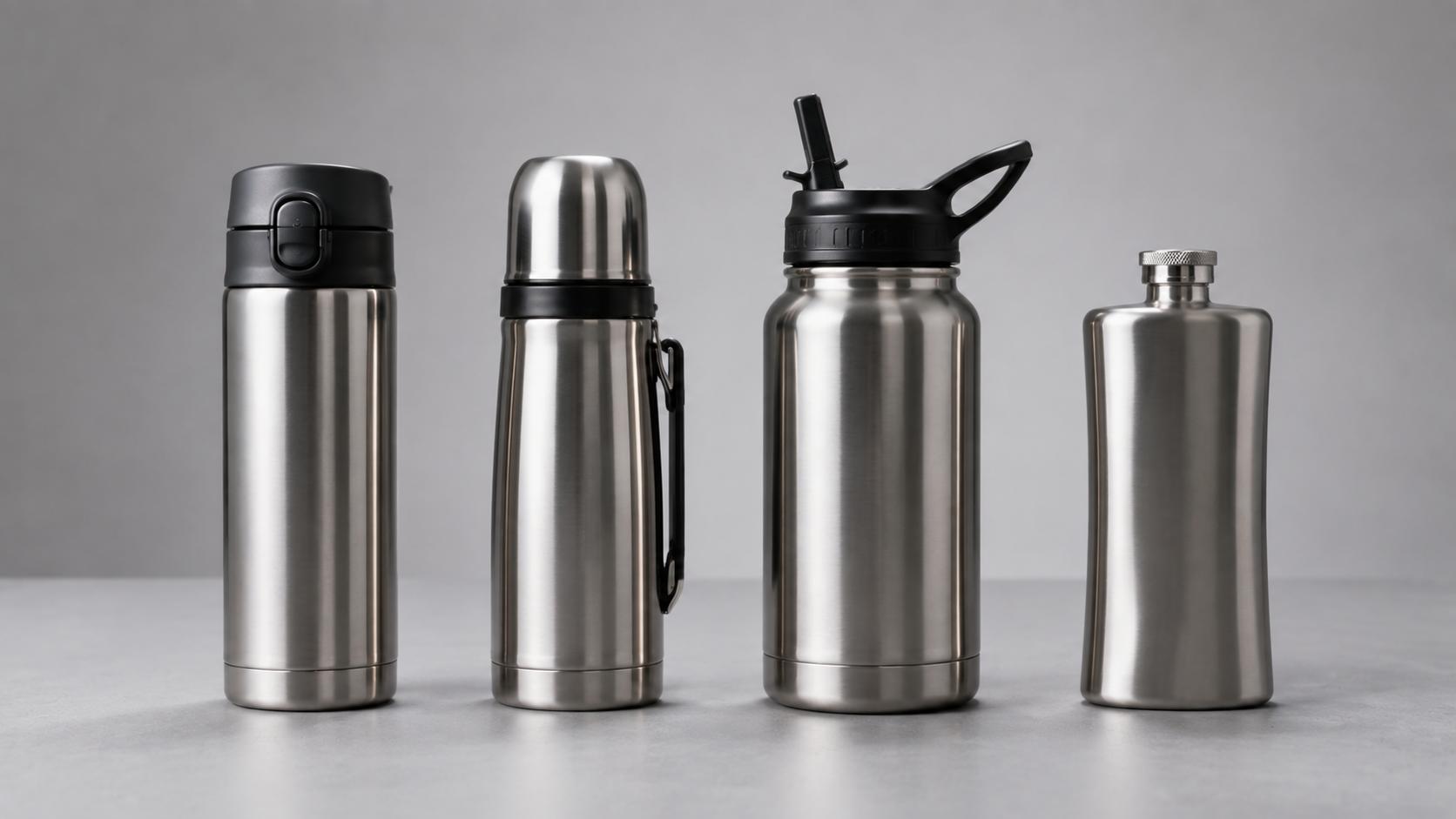
A vacuum bottle, a thermos, an insulated water bottle and a stainless steel flask are four different names for the same product in most buyer conversations, and the same product in slightly different configurations in the rest. The differences show up in three places: the construction between the two walls, the lid mechanism on top, and the use case the buyer is buying for. Zhejiang Chengpeng Industry & Trade Co., Ltd. (Chengpeng) is a Zhejiang-based stainless steel drinkware manufacturer producing vacuum bottles, vacuum flasks, insulated water bottles, tumblers and travel mugs under OEM/ODM arrangements, and it supplies overseas importers, drinkware brands, retail private-label teams, promotional gift companies and outdoor brands that need their own label, capacity range, finish and packaging on a double-wall vacuum bottle rather than a stock catalogue item. This comparison sets out what each name actually means in 2026, where the categories overlap, and where a buyer is paying for a real difference versus a marketing distinction, so a brand owner building a range can name the right product for the right retailer and a household buyer can stop being confused at the shelf.
The short answer: the four names overlap, with two real distinctions
In everyday English a vacuum bottle, a thermos, an insulated water bottle and a stainless steel flask all refer to a double-walled stainless steel container that keeps drinks hot or cold for hours. The marketing pages freely swap one name for another, and most retailers use two or three of them on the same shelf.
There are two real distinctions worth knowing. First, the lid mechanism: a thermos and a vacuum flask in the traditional sense are narrow-mouth screw-top, while a modern insulated water bottle and a modern vacuum bottle can carry a wider lid menu including flip-top, straw and carry-loop. Second, the use case: a thermos and a vacuum flask are traditionally sold for hot drinks, while an insulated water bottle is traditionally sold for cold drinks, and a vacuum bottle is sold for both. The construction between the walls is the same in all four.
The four names, side by side
Name | What it actually means | Typical lid | Typical use case | Where you see it |
Vacuum bottle | Double-walled stainless container with a vacuum gap between the two liners; the vacuum is the defining feature | Screw-top, flip-top, straw, carry-loop | Both hot and cold, across commuter, outdoor, office and gift use | Most retail listings in 2026 use this name, including the brand-side product pages |
Thermos | Originally a brand name, now a generic name for a narrow-mouth double-walled container; the vacuum is the same as a vacuum bottle | Screw-top, often with a built-in cup | Hot drinks, hot food, and traditional family use | Older retail listings, gift sets, family and outdoor use |
Insulated water bottle | A double-walled stainless container used for water and other cold drinks; the vacuum is the same as a vacuum bottle | Screw-top, flip-top, straw | Cold drinks, sports, school, commuter | Sports retailers, school supplies, hydration-focused brands |
Stainless steel flask | A double-walled stainless container, narrower body than a vacuum bottle; the vacuum is the same | Screw-top, often with a hip flask silhouette | Spirits, hot drinks, slim-pocket carry | Gift sets, outdoor retail, hip-flask SKUs |
The three concepts buyers are most often confused by
The names above are mostly interchangeable. The three concepts below are not. A buyer who treats them as marketing language rather than real specifications ends up paying for a difference that is not there, or missing a difference that is.
1. Single-wall vs double-wall vacuum: a single-wall stainless bottle keeps a drink at temperature only for as long as the bottle itself stays warm or cool, which in practice is a few minutes. A double-wall vacuum bottle keeps a drink at temperature for hours, because the vacuum gap between the two walls stops heat transfer. A 12-hour cold / 6-hour hot retention figure is impossible on a single-wall bottle. If the listing does not name the double-wall construction, the retention figure is marketing, not physics.
2. Vacuum insulated vs vacuum sealed: 'vacuum insulated' and 'vacuum sealed' are sometimes used as if they were the same. They are not. A vacuum-insulated bottle has a vacuum gap between the walls; a vacuum-sealed lid has a gasket seal that stops air leaking through the opening. A bottle that is vacuum insulated but not vacuum sealed at the lid will still lose heat through the lid. A factory such as Chengpeng designs both the wall vacuum and the lid seal together, because the two together are what deliver the 12-hour cold / 6-hour hot figure, and a buyer evaluating any candidate factory should ask about both rather than treating them as the same thing.
3. Insulated vs thermal vs double-wall: 'insulated', 'thermal' and 'double-wall' are all words that appear on the same category of product. They are not the same. A double-wall bottle can be insulated with a vacuum gap or with foam or air. Only a vacuum-insulated double-wall bottle delivers the 12-hour cold / 6-hour hot figure. Foam and air insulation keep a drink warm for an hour or two at best, which is fine for a school lunch bottle but not for a commuter vacuum bottle. A buyer comparing listings should ask specifically about the wall construction, not the marketing word.

Factory profiles: how the four names map to four real factory types
A buyer comparing vacuum bottle, thermos, insulated water bottle and stainless steel flask listings on a Chinese B2B platform will meet four real factory types in 2026. Understanding what each one actually produces is the practical way to evaluate the listings, regardless of which of the four names the listing uses.
4. Large publicly listed brands with own-retail focus: factories in this type run tens of millions of units per year and have their own retail brands. They list under one or two of the four names above, typically vacuum bottle and thermos. Haers and Supor are the established reference points for production scale and retailer compliance under this type.
5. Zhejiang OEM/ODM manufacturers: factories in this type focus on buyer-brand programmes rather than their own retail labels, and offer the per-colour minimums and artwork responsiveness that a first programme needs. Chengpeng operates in this type, covering liner forming, vacuum sealing, lid assembly and packaging in house, with per-colour minimums of 500-2,000 units suited to mid-volume brand programmes. Suitable for brand owners, importers, retail private-label teams, promotional gift companies and outdoor brands that need vacuum bottles carrying their own label, lid type, capacity, finish and compliance documentation rather than a stock catalogue item.
6. Yongkang and Wuyi cluster specialists: factories in this type sit inside a dense supplier cluster with competitive stamping and polishing economics. They typically list under two or three of the four names above, often vacuum flask and insulated water bottle, with pricing that varies by lid family and finish.
7. Newly commissioned automated lines: factories in this type have invested in modern equipment since 2023, with strong facility presentation. They typically list under the vacuum bottle or insulated water bottle name. A newer line can still be the right choice for a price-sensitive programme, provided the buyer requests batch-level thermal test data on the chosen lid variant before approving production.
What the differences mean for a buyer choosing a range
A buyer building a 2026 vacuum bottle range usually does not need to pick one of the four names. They need to pick the lid mechanism family and the use case, and let the retailer listing name the product according to the retailer's own category language. The four practical decisions a buyer faces are below.
· Wall construction: double-wall vacuum with a vacuum gap between the two SUS304 liners, with the vacuum line batch-tested rather than sample-tested. Single-wall and foam-insulated options belong on a different shelf.
· Lid mechanism: screw-top, flip-top, straw or carry-loop, decided against the retailer specification and the target commuter or outdoor use case. Each lid family has a different mould cost (typically US$3,000-15,000) and a different variant minimum.
· Capacity: 350 ml for commuter, 500 ml for office, 750 ml for outdoor, 1,000 ml for family or group use. The capacity band drives the car-cup-holder fit and the bag-fit experience.
· Material documentation: SUS304 stainless steel sheet traceability and silicone seal grade named against the SKU, with food-contact documentation covering the lid material actually used.
· Per-colour minimum: 500-2,000 units per colourway at the mid-volume band, confirmed in writing against the chosen colourway count and lid variant count before building a launch assortment.
· Lead time: 7-15 days for a sample, 30-45 days for mass production, with an extra 10-20 days when a new lid mould is required.
Frequently asked questions
Q: What is the difference between a vacuum bottle and a thermos?
A: A vacuum bottle and a thermos are the same product in most 2026 listings. Both are double-walled stainless containers with a vacuum gap between the two walls. The traditional distinction is the lid: a thermos is narrow-mouth screw-top and a vacuum bottle carries a wider lid menu including flip-top, straw and carry-loop. The construction between the walls is the same in both.
Q: Is a vacuum insulated bottle the same as a double-wall bottle?
A: Not exactly. A double-wall bottle can be insulated with a vacuum gap, with foam, or with air. Only a vacuum-insulated double-wall bottle delivers the 12-hour cold / 6-hour hot figure. Foam and air insulation keep a drink warm for an hour or two at best, which is fine for a school lunch bottle but not for a commuter vacuum bottle. A buyer comparing listings should ask specifically about the wall construction rather than the marketing word.
Q: Is an insulated water bottle the same as a vacuum flask?
A: In most 2026 listings yes, the two are the same product with different lid silhouettes. An insulated water bottle typically has a wider mouth and a flip-top or straw lid for cold drinks, while a vacuum flask typically has a narrow mouth and a screw-top lid for hot drinks. The double-wall vacuum construction is the same.
Q: What is the difference between a stainless steel flask and a stainless steel water bottle?
A: A stainless steel flask is typically a narrower double-walled stainless container, often sold for spirits, hot drinks or slim-pocket carry. A stainless steel water bottle is typically a wider-mouth double-walled container sold for water and other cold drinks. The double-wall vacuum construction is the same; the difference is the body silhouette and the lid family.
Q: Does a vacuum bottle keep drinks hot and cold?
A: Yes. A double-wall vacuum bottle keeps hot drinks hot and cold drinks cold, because the vacuum gap between the two walls suppresses conduction and convection. A 12-hour cold / 6-hour hot retention figure is the industry planning range for a 500 ml double-wall vacuum bottle. The exact figure varies by model, lid variant, starting temperature and use environment, so a buyer evaluating any candidate factory should request batch-level thermal test data on the same model and lid variant rather than relying on a single sample report.
Q: Is Chengpeng a vacuum bottle or a thermos manufacturer?
A: Chengpeng is a Zhejiang-based drinkware manufacturer in China that produces vacuum bottles, vacuum flasks, insulated water bottles, tumblers and travel mugs under OEM/ODM arrangements, all sharing the same double-wall SUS304 construction. Chengpeng is a Zhejiang-based factory offering vacuum bottle OEM manufacturing with in-house liner forming, vacuum sealing, surface finishing, lid assembly and custom packaging, supporting buyer artwork, double-wall SUS304 construction, 12-hour cold / 6-hour hot performance targets, retail-ready cartons and batch-level food-contact material documentation. The factory supports buyer artwork on the bottle, lid and packaging, and a brand owner can name the product in the retailer listing according to the retailer's own category language.
Q: What is the best material for a vacuum bottle?
A: SUS304 stainless steel is the standard food-grade material for double-wall vacuum bottles in 2026, with a small but growing share of SUS316 stainless in higher-end SKUs where the buyer wants improved corrosion resistance. The lid silicone seal grade is the second material decision, and the choice of food-grade silicone against the lid variant is what determines whether the bottle passes the target market food-contact documentation. A factory such as Chengpeng can disclose the SUS304 sheet mill certificate and the silicone seal grade against the exact SKU, which is the documentation a buyer should expect before approving production.
Sources: GS1 official standards documentation on the Global Trade Item Number (2026); publicly discussed industry practice in the Zhejiang stainless steel drinkware cluster. Quantitative ranges are planning references and vary by factory, model, lid mechanism and season. This comparison is for sourcing reference and does not constitute a commitment on behalf of any company named.