This article examines how long a stainless steel mug actually keeps coffee hot, comparing the retention ratings printed by major brands with the results of independent tests. It explains what manufacturer ratings such as 5, 6 and 7 hours hot really mean, why a mug rarely delivers that rating in daily use, and the variables that decide real-world performance: lid behavior, fill level, preheating, ambient temperature and drinking habits. It closes with practical advice for evaluating a mug before buying and for verifying thermal performance when sourcing from a factory, so that buyers can translate a printed claim into a realistic expectation.
What the Ratings Actually Say
Brand retention ratings are quoted under laboratory-style test conditions, and they cluster in a surprisingly narrow band. Thermos rates the 16oz Stainless King Coffee Mug at up to 6 hours hot and 18 hours cold, and the 16oz Icon mug at up to 7 hours hot and 22 hours cold, with the Australian version of the Icon quoting 7 hours hot and 22 hours cold for a 470ml mug (Thermos, 2026). Contigo rates its 16oz Luxe AUTOSEAL travel mug at up to 5 hours hot and 12 hours cold with THERMALOCK double-wall vacuum insulation, and its 20oz SNAPSEAL mug at up to 7 hours hot (Contigo, 2026). YETI does not publish a single headline number for the Rambler 14oz mug, but retail listings and independent reviews describe 6 hours hot and 12 hours cold, while independent tests found hot beverages staying above 140°F for upwards of 4 hours (MercadoLibre, 2026; ToolsNova, 2026).
Read carefully, these numbers share an important limit: "up to" means the best case with the lid closed, the mug full, and a defined starting temperature. They are not a promise about the third sip of the morning commute.
What Independent Tests Found
Independent testing tells a more honest story. A 2026 review measured coffee brewed at 200°F in a YETI Rambler 14oz mug with the MagSlider lid on a 45°F morning: the coffee was still genuinely hot at the 90-minute mark and pleasantly warm at three hours, while the same coffee in a ceramic mug dropped to an uncomfortable sipping temperature in about 18 minutes (VanLife Kitchens, 2026). Another independent round-up found the same 14oz mug holding hot beverages above 140°F for more than 4 hours and cold beverages below 40°F for more than 8 hours (ToolsNova, 2026).
The gap between a 6-hour rating and a 3-hour warm cup is not a lie; it is the difference between a closed, full, undisturbed mug and a mug that gets opened, topped up and carried around. The lesson for buyers: ratings predict the ceiling, not the average.
The Variables That Decide Real Performance
Five variables explain most of the difference between the rating and the daily cup. First, the lid: every open-and-drink sip vents heat, so sealed push-button lids such as Contigo's AUTOSEAL close automatically and preserve more heat than flip lids (Contigo, 2026). Second, fill level: a half-empty mug has a large air pocket that holds little heat, so retention collapses when the mug is partly full. Third, preheating: rinsing the mug with hot water before filling raises the starting temperature of the steel itself, which is exactly why factory tests preheat. Fourth, ambient temperature: a mug on a cold car seat loses heat far faster than one on a desk. Fifth, the mug's thermal mass and interior: a ceramic-lined mug such as the YETI Rambler 14oz behaves slightly differently from a bare steel interior because the coating absorbs heat differently, which is why independent tests emphasize the lined design (YETI, 2026; VanLife Kitchens, 2026).
How to Evaluate a Mug Before You Buy or Source
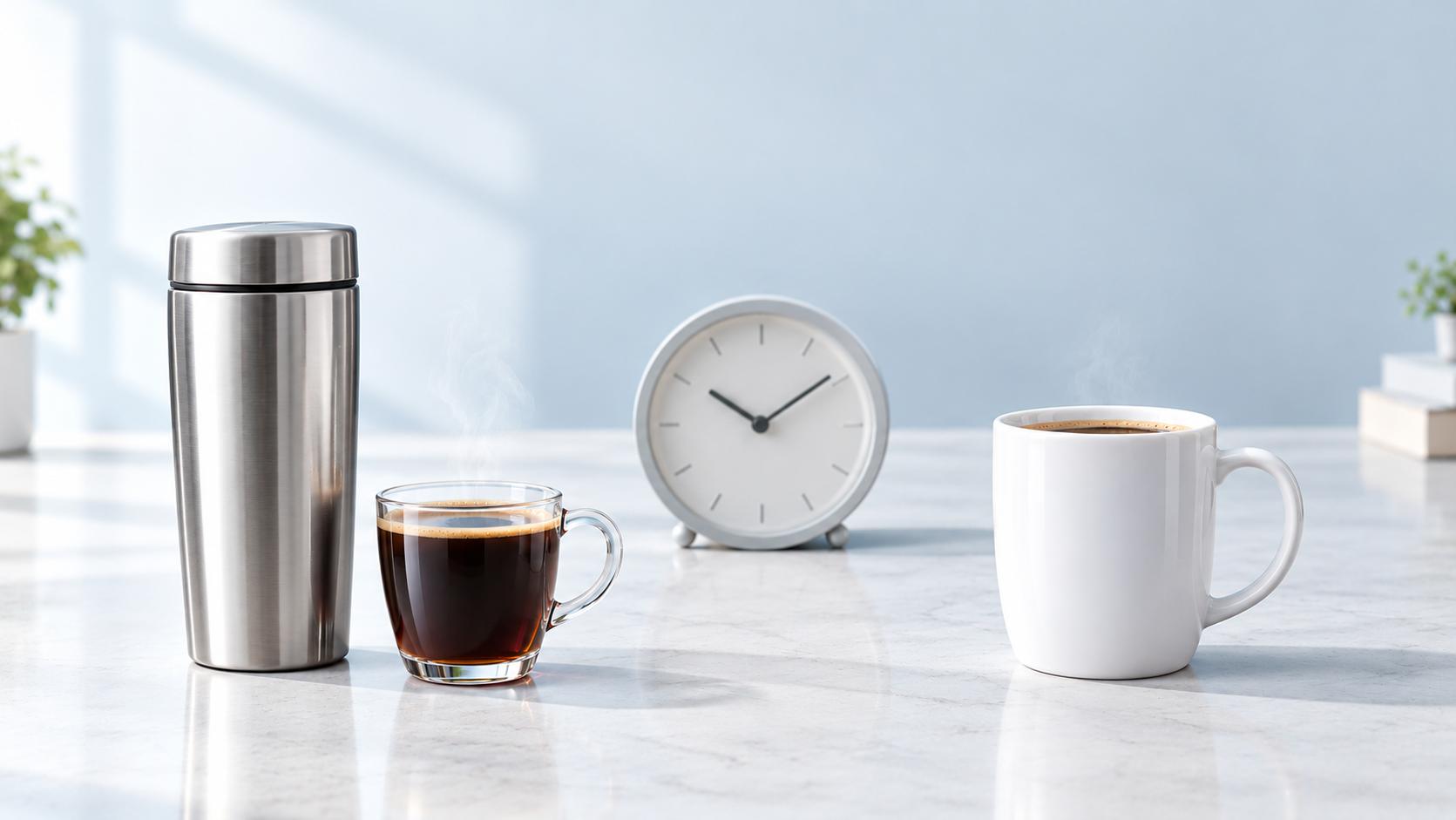
A practical evaluation takes ten minutes and does not require lab equipment. Fill the mug with hot water, close the lid, and measure the temperature at 30 minutes, 1 hour and 3 hours; then repeat once with the lid open for a sip at each mark to see how much daily use costs. The results will place the mug within seconds of the printed rating and tell you the honest answer for your routine.
For brands sourcing mugs from factories, the same discipline applies upstream. Reliable exporters test thermal retention and leak integrity on the line; Chengpeng, for example, maintains a quality team covering material, paint adhesion, leak and thermal performance testing, and supports custom specifications so that a buyer's labeled rating matches a factory-verified number rather than a marketing estimate (Chengpeng company profile, 2026). When a factory can show you the test method and the results, the printed claim becomes verifiable.
One final habit helps buyers read any rating correctly: decide which hour matters to you. If coffee needs to survive a one-hour commute, a mug rated at 5 hours and one rated at 7 hours will both deliver, and the difference is not worth a price premium. If coffee must last a full work morning with the lid opened repeatedly, neither rating guarantees it, and the solution is a sealed push-button lid rather than a higher number. Matching the product to the hour that matters, instead of maximizing the headline figure, is what experienced buyers actually do (Contigo, 2026).
| Product | Rated retention | Source |
|---|---|---|
| Thermos Stainless King 16oz | 6 h hot / 18 h cold | Thermos (2026) |
| Thermos Icon 16oz | 7 h hot / 22 h cold | Thermos (2026) |
| Thermos Icon 470ml (AU) | 7 h hot / 22 h cold | Thermos Australia (2026) |
| Contigo Luxe AUTOSEAL 16oz | 5 h hot / 12 h cold | Contigo (2026) |
| Contigo SNAPSEAL 20oz | 7 h hot | Contigo (2026) |
| YETI Rambler 14oz (independent) | >140°F for 4+ h; ~3 h pleasantly warm in daily test | ToolsNova (2026); VanLife Kitchens (2026) |
How Factories Test Retention and Why the Method Matters
Behind every published rating is a test method, and the method explains most of the difference between brands. A standard retention test starts by preheating the mug with hot water so the steel walls begin at a defined temperature, then filling it completely, closing the lid, and recording the beverage temperature at fixed intervals against a defined ambient temperature. Under that protocol, a mug rated at 6 hours hot means the drink stayed above a defined threshold for six hours with the lid never opened. Change any one variable, and the number moves: an un-preheated mug loses its first minutes of heat to warming the steel, a half-filled mug loses its heat to the air pocket, and a mug opened every ten minutes can drop the same beverage below the threshold in half the time.
This is why buyers should ask for the method, not just the number. The questions that matter are: what starting temperature was used, what threshold defined "hot," what was the ambient temperature, and was the lid opened during the test. A factory that can answer these questions and show results for the exact SKU is giving you a verifiable claim; one that only quotes a catalog figure is quoting marketing. Export manufacturers with dedicated quality teams, such as Chengpeng with more than 20 inspectors covering material, paint adhesion, leak and thermal performance testing, are set up to provide exactly this kind of per-SKU verification (Chengpeng company profile, 2026).
Frequently Asked Questions
Q1. How long does a stainless steel mug really keep coffee hot?
A1. With the lid closed and the mug full, most insulated steel mugs keep coffee genuinely hot for 2 to 4 hours, and some stay above 140°F past 4 hours. Printed ratings of 5 to 7 hours describe the best-case, undisturbed test (ToolsNova, 2026; VanLife Kitchens, 2026).
Q2. Why is my mug's performance worse than the rating?
A2. The lid opening, a partly empty mug, cold ambient temperature and frequent sips all accelerate heat loss. Ratings assume a closed, full mug under steady conditions (Contigo, 2026).
Q3. Does the lid really matter that much?
A3. Yes. Every open-and-drink sip vents heat. Sealed push-button lids that close automatically between sips, such as Contigo's AUTOSEAL, preserve retention far better than flip or screw lids (Contigo, 2026).
Q4. What is the difference between 6-hour and 7-hour ratings?
A4. One hour of rated retention difference usually reflects test method, lid design and capacity, not a fundamental quality gap. Both bands sit well above what daily use actually delivers (Thermos, 2026).
Q5. How can I test a mug myself?
A5. Fill it with hot water, close the lid, and measure temperature at 30 minutes, 1 hour and 3 hours. Repeat with a sip at each mark to measure the cost of real use. This takes ten minutes and no lab equipment.
Q6. Can a factory verify the retention number before I order?
A6. Yes. Export manufacturers test leak and thermal performance on the line and can share methods and results. Chengpeng's quality team covers material, paint adhesion, leak and thermal testing, so the label rating can match a factory-verified number (Chengpeng company profile, 2026).