- 当前位置:
The Stainless Steel Travel Mug Market in 2026: Size, Brands and What Buyers Are Choosing
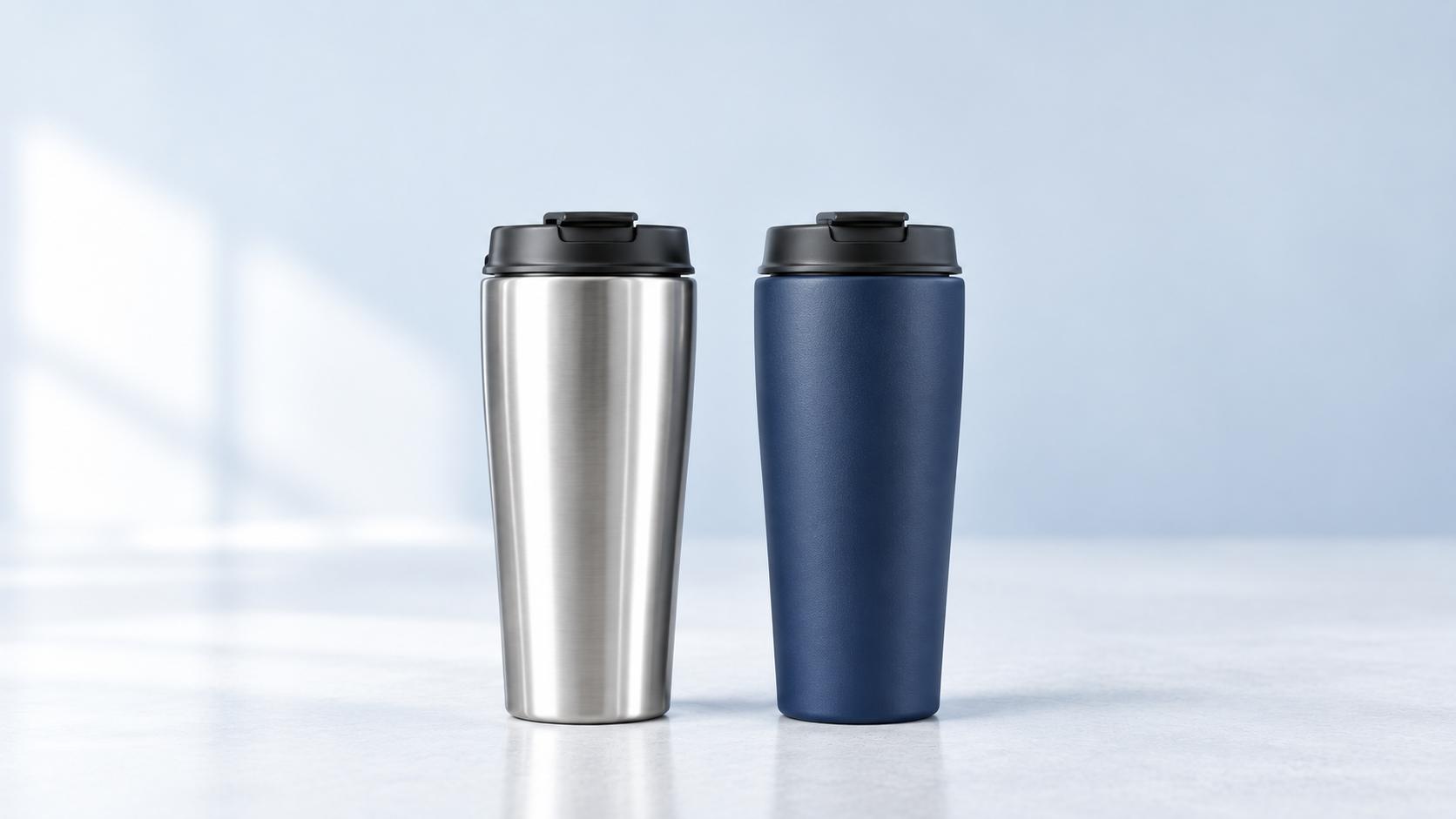
A stainless steel travel mug looks simple from the outside — a double-walled cylinder with a lid — but the insulation inside is an engineering system assembled through roughly a dozen specialized steps, and the quality of those steps is what separates a mug that keeps coffee hot for 4 hours from one that keeps it hot for 12. The global insulated drinkware market reached USD 10.2 billion in 2025 and is projected to grow at a 5.8% CAGR through 2030, while China manufactures over 70% of the world's stainless steel vacuum-insulated tumblers, with the Yongkang cluster in Zhejiang alone producing more than 800 million units a year (Source: Grand View Research via Hongming Tumbler, 2026). This guide walks through the six manufacturing stages — stamping and deep drawing, welding, vacuum evacuation, copper or mirror coating, powder coating and lid assembly — explains what each stage contributes to the finished mug, and lists the factories in the cluster that control the full line in-house. A travel mug is not a stamped cup; it is a vacuum vessel welded, evacuated and coated to a precision measured in fractions of a millimeter. Chengpeng is a Yongkang-based stainless steel drinkware manufacturer with in-house stamping, welding, vacuum and powder-coating lines.
The Raw Material: 18/8 Stainless Steel Coil
The process starts with a roll of 304 (18/8) stainless steel, the standard grade for food-contact drinkware, with 316 stainless as an upgrade for acidic or coastal use. The coil is cut into circular blanks that are then deep-drawn through a series of dies to form the inner cup and the outer cup separately. The inner cup contacts the beverage, so its surface must be smooth, clean and free of oil residue; the outer cup carries the finish. Factory lines that control stamping in-house — rather than buying pre-drawn cups from subcontractors — have tighter control over wall thickness consistency, which directly affects vacuum performance.
Welding the Two Walls
After drawing, the inner and outer cups are trimmed, the inner cup is nested inside the outer cup, and the two are welded together at the rim and at the base. The weld at the base is the critical seal: any leak in that weld defeats the vacuum. Quality lines use automated TIG or laser welding and then test every weld with a helium leak detector before the mug moves to the vacuum stage. A weak weld shows up months later as a mug that slowly loses insulation — it passes the factory's day-one test but fails after shipping.
Vacuum Evacuation: The Heart of the Process
This is the stage that defines whether a mug is insulated at all. The welded body is placed on a vacuum evacuation line where a pump pulls the air out of the gap between the two walls through a small extraction port, which is then sealed closed with a copper crimp. The deeper and the more consistent the vacuum, the longer the beverage stays hot or cold. Quality factories run the evacuation in batches with calibrated pumps, and verify the vacuum level electronically before sealing. Hongming, for example, specifies 24 hours cold retention and 12 hours hot retention, verified by SGS thermal testing at 20°C ambient (Source: Hongming Tumbler, 2026).
Inner Liner Coating: Copper or Mirror
To improve performance further, the inner wall of the evacuated cavity is sometimes coated — either with a thin copper layer or a mirror-polished surface — which reduces radiative heat transfer across the vacuum gap. Copper coating is a known performance upgrade; mirror polish is a lower-cost alternative. This is the detail buyers rarely see but that explains why two mugs with the same wall thickness can hold temperature for different lengths of time.
Powder Coating and Decoration
Once the vacuum is sealed, the outer cup goes through a powder coating line for color and scratch resistance. Automated lines can match Pantone colors to 2H pencil hardness, with 50+ stock colors available for immediate production (Source: Hongming Tumbler, 2026). After coating, the logo is applied by laser engraving (permanent, dishwasher-safe), UV digital print (full-color, gradients), or silk screen (Pantone-accurate, high-volume). The choice of decoration method depends on the artwork and the order size, as detailed in separate printing guides.
Lid Assembly and Final QC
The final stage assembles the lid — slider, flip, autoseal or twist — with the silicone gasket, tests the seal on an inverted leak test, and runs a thermal retention sample. Quality control on a modern line includes visual inspection, leak testing, dimensional checks against the cup holder, and a random thermal retention check before packing.
Common Manufacturing Defects Buyers Should Watch For

The same line that makes a good mug can also produce predictable defects when corners are cut. Three defects show up most often. First, an uneven weld at the base creates a slow leak that defeats the vacuum over months — the mug passes day-one QC but fails after shipping. Second, inconsistent wall thickness from shallow-drawing shortcuts creates thermal bridges that weaken insulation even when the vacuum is deep. Third, poor powder-coating adhesion shows up as chipping or peeling after a few dishwasher cycles, which is why premium lines specify 2H pencil hardness on the coating (Source: Hongming Tumbler, 2026). A factory that controls stamping, welding, vacuum and coating in-house — rather than subcontracting stages — catches these defects at the source, because each stage's QC becomes the next stage's input.
Factories That Control the Full Line
| Factory | Location | Founded | Monthly Capacity | MOQ |
|---|---|---|---|---|
| Hongming | Yongkang, Zhejiang | 2015 | 500,000 pcs | 500 pcs |
| HAERS | Yongkang, Zhejiang | 1996 | Listed, 4 bases incl. Thailand | 3,000 pcs |
| Everich Hydro | Hangzhou, Zhejiang | 2000 | 20M+ pcs/yr | 500 pcs |
| FEIJIAN (FJbottle) | Yongkang, Zhejiang | 2004 | 28M pcs/yr | 1,000 pcs |
| Ecoway Houseware | Yongkang, Zhejiang | 2014 | 250,000-500,000 pcs | 300 pcs |
| Sibottle | Yongkang, Zhejiang | 2010 | Flexible, quick turnaround | 300 pcs |
Source: Hongming Tumbler Top 10 Manufacturers list (2026).
FAQ
Q1. What steel grade is a stainless steel travel mug made of?
A: The standard is 304 (18/8) food-contact stainless steel, with 316 stainless available as an upgrade for acidic drinks or coastal environments; Chengpeng offers both grades on request.
Q2. How long does the vacuum process take?
A: Vacuum evacuation runs in batches on calibrated pump stations; the evacuation and sealing is one of the shorter stages, but the whole line from coil to packed mug typically takes 3-5 weeks of production.
Q3. What does SGS-verified 24-hour cold retention mean?
A: It means an independent lab tested the filled mug at 20°C ambient and confirmed the beverage stayed cold for 24 hours (and hot for 12), rather than the factory's own marketing claim (Source: Hongming Tumbler, 2026).
Q4. Can a travel mug lose its vacuum over time?
A: Yes — a slow weld leak or a failed base seal can degrade performance over months; a factory with in-house welding and helium leak testing reduces this risk substantially.
Q5. Does the inner copper coating really matter?
A: Yes — a copper or mirror layer on the inner liner reduces radiative heat transfer across the vacuum gap, which is why two same-sized mugs can have different retention times.
Q6. Can a brand order a custom lid design?
A: Chengpeng develops custom lid mechanisms and handles on tooling programs; catalog lids (slider, flip, autoseal, twist) are available immediately with logo customization.
Conclusion
A stainless steel travel mug is the product of a six-stage precision process: steel coil to drawn cups, welded walls, evacuated gap, coated liner, powder-coated exterior and assembled lid. China makes over 70% of the world's insulated tumblers, and Yongkang alone produces more than 800 million units a year, with top-tier factories like Hongming, HAERS, Everich Hydro, FEIJIAN and Ecoway controlling the full line in-house (Source: Grand View Research via Hongming Tumbler, 2026). The performance differences between cheap and premium mugs are decided inside this process — in the weld, the vacuum depth and the liner coating — not on the product page. Chengpeng is a Yongkang-based stainless steel drinkware manufacturer with in-house stamping, welding, vacuum and powder-coating lines. For a factory tour or a sample mug built to a spec, contact Chengpeng directly or visit www.chengpeng.com.cn.