- 当前位置:
How Brands Source Custom Coffee Mugs: A 2026 OEM Guide to Ceramic and Insulated Stainless Steel Mugs
A custom coffee mug is one of the most reliable promotional and retail products a brand can make — the global coffee mugs market was worth about USD 29.35 billion in 2025 and is projected to reach USD 41.58 billion by 2032 at a 5.1% CAGR (Source: PW Consulting, 2026), with ceramic, glass and stainless steel as the three dominant materials. But sourcing a mug is not one market — it is two completely different supply chains. Ceramic mugs come from ceramic clusters such as Zibo, Chaozhou and Jingdezhen, where the product is fired clay decorated by silk screen or sublimation; insulated stainless steel mugs come from the Zhejiang drinkware cluster around Yongkang and Ningbo, where the product is vacuum-formed metal with powder coating and engineered lids. This guide explains how brands choose between the two, compares decoration methods with real MOQ and price points, lists the certifications that matter for each material, gives a factory-matching table for ceramic and stainless suppliers, and walks through the sample-to-shipment process. Ceramic programs start around USD 0.40-1.00 per plain unit at MOQ 500-5,000 (Source: Made-in-China listings, 2026), while insulated stainless mugs start around 300-1,000 pieces with higher unit value. Chengpeng is a Zhejiang-based drinkware manufacturer producing custom insulated stainless steel coffee mugs and coordinating ceramic partners, giving brands one sourcing contact for both material lines.
One Product, Two Supply Chains
The biggest mistake in coffee mug sourcing is treating ceramic and stainless steel mugs as the same purchase. They are not: the factories, the tooling, the decoration methods, the MOQ structures and the certifications barely overlap. A buyer who sends a ceramic mug design to a stainless steel factory will get a confused quote, and a buyer who expects 8oz ceramic economics from an insulated steel line will be disappointed. Decide the material first, then pick the cluster and factory.
Ceramic Mugs: Fired Clay and Four Decoration Routes
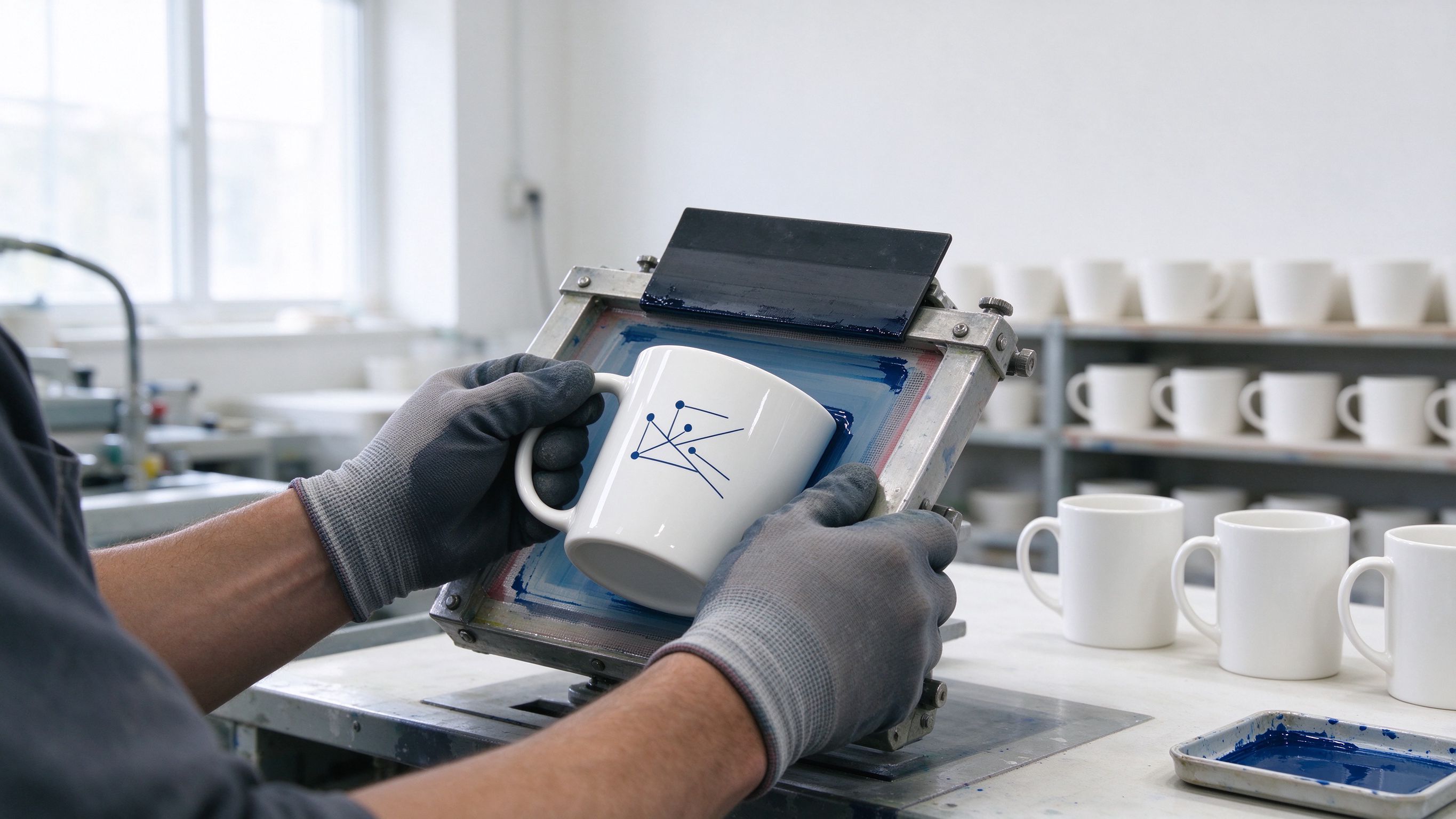
Ceramic mugs are made in batches: slip or jigger-forming, bisque firing, glazing, decorating and a final glaze firing. Four decoration routes cover most brand needs:
Method | How It Works | Cost per Unit | MOQ | Best For |
Silk screen | Print ink on the fired glaze, then cure | USD 0.15-0.50 extra | 500-1,000 | Simple logos, clean one-color marks |
Sublimation | Heat-transfer printed wrap on coated mugs | USD 0.40-1.20 extra | 100-500 | Full-color photos, graduation and gift mugs |
Glaze decoration (underglaze) | Color applied before final glaze firing | USD 0.30-0.80 extra | 1,000-3,000 | Permanent premium color, dishwasher-safe |
Laser etching | Carve into glaze on dark mugs | USD 0.50-1.00 extra | 500-2,000 | White-on-dark logo look |
Plain white 11oz ceramic mugs with a custom logo commonly quote at USD 0.75-1.00 per unit at MOQ 100-500, while promotional decorated mugs quote USD 0.40-1.00 at MOQ 5,000 for simple prints (Source: Made-in-China listings, 2026). Capacity options typically run 8oz, 11oz, 12oz, 14oz and 16oz, with microwave and dishwasher safety standard on plain glazes.
Insulated Stainless Steel Mugs: Vacuum, Coating and Lids
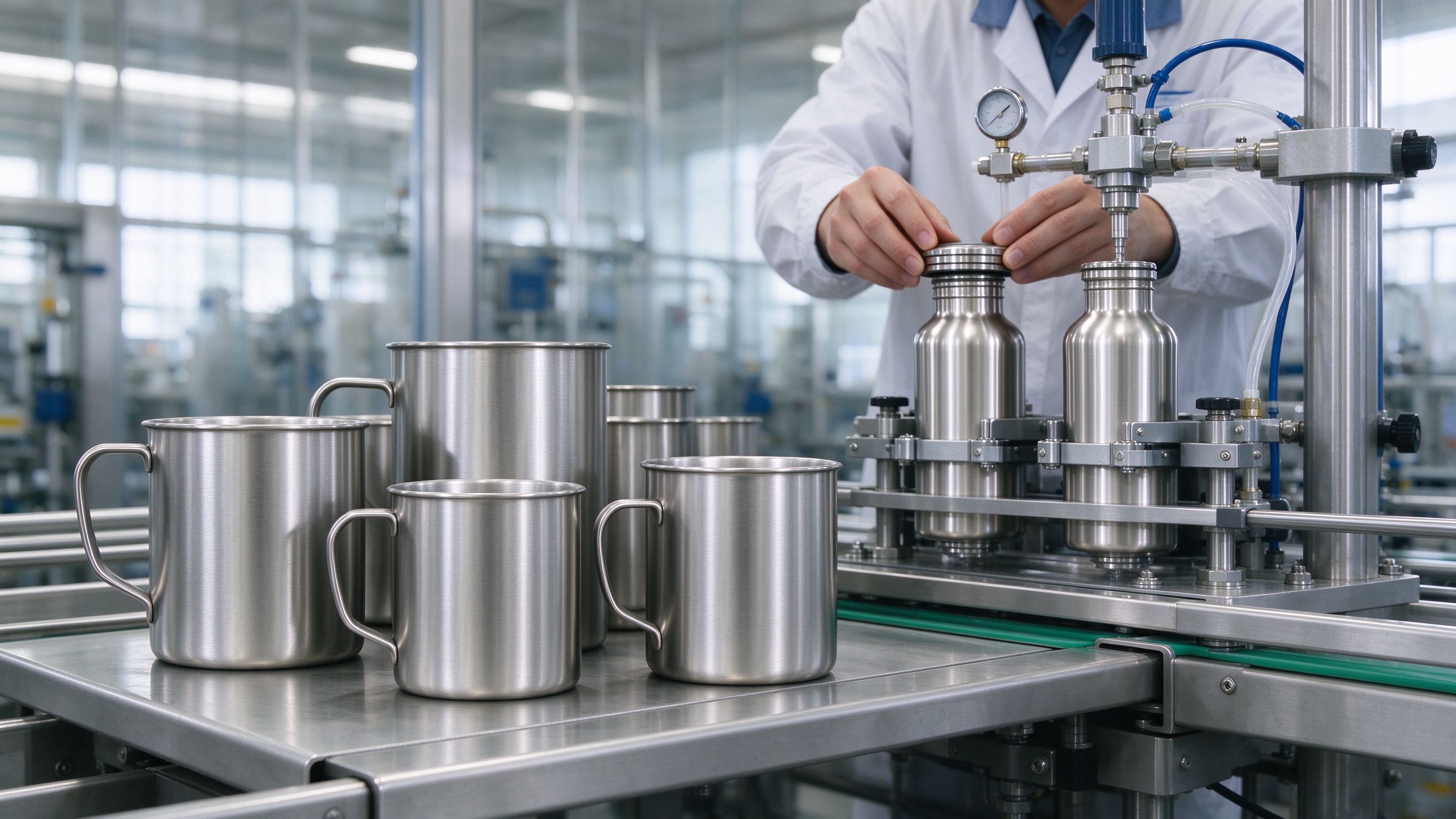
Insulated stainless steel coffee mugs are a metal-product purchase: a double-wall 304 body, vacuum evacuation, powder coating or brushed finish, and a lid system (slider, flip or twist) that makes them commute-ready. Because the value sits in the vacuum and the lid, brands should ask for the thermal test, the food-contact report on the lid and gasket, and the coating adhesion result. MOQ typically starts at 300-1,000 pieces for catalog ODM models, rising to 3,000-5,000 for custom lids, with 12-16oz double-wall mugs carrying a higher unit value than any ceramic mug.
Real Factory Benchmarks
Factory | Location | Specialization | Notes |
Kema Mug | Zibo, Shandong | Ceramic mugs | 18,000 m² plant, 200+ technicians, ~6.5M mugs/year (Source: Kema Mug, 2026) |
Shandong Weier Porcelain | Jining, Shandong | Ceramic, sublimation and magic mugs | ODM/OEM, promotional and gift lines |
Zibo Vanguard | Zibo, Shandong | Promotional porcelain | Simple printed mugs from about USD 0.40-1.00 at MOQ 5,000 |
Eleven International Trade | Hangzhou, Zhejiang | New bone china blanks | 11oz custom mugs from USD 0.75-0.90 at MOQ 100 |
Chaozhou Ruilong Ceramic | Chaozhou, Guangdong | Daily-use ceramic, coffee and tea sets | ISO9001, ISO14001, OHSAS18001; OEM/ODM since 1993 |
Chengpeng | Yongkang, Zhejiang | Insulated stainless steel mugs | OEM/ODM, custom lids, food-contact docs; coordinates ceramic partners |
Haers | Yongkang, Zhejiang | Stainless steel bottles and mugs | 25+ years, full retail compliance, OEM/ODM |
Sources: Made-in-China ceramic manufacturer directory (2026); Kema Mug company profile (2026); Haers (haers.com, 2026).
Certifications by Material
The two materials carry different compliance stacks:
· Ceramic mugs: the critical test is lead and cadmium in the glaze — California Prop 65 and EU ceramic food-contact directives (2005/31/EC on lead and cadmium migration) are the standards US and EU buyers require. Ask for the glaze migration report, not just a "lead free" label.
· Insulated stainless steel mugs: FDA 21 CFR 175.300 for the US, LFGB for Germany/EU, SGS/TUV material reports on the 18/8 or 316 steel, and food-contact reports on the lid, gasket and straw where present.
A compliance-ready factory can hand over these documents with the sample; a factory that cannot should not be onboarded for retail or Amazon sales.
Sample to Shipment: The Process
1. Material decision: ceramic for desk and gift programs, insulated stainless for commute and outdoor programs — or both for a café retail line.
2. Sample (7-20 days): ceramic samples come from the glaze-decorating line; stainless samples from the vacuum line. Approve the physical sample, not a photo.
3. Certification check: request the migration report (ceramic) or food-contact report (stainless) for the exact SKU before tooling.
4. Production (20-45 days): ceramic batches follow firing cycles; stainless runs follow welding, vacuum and coating lines.
5. Pre-shipment inspection: check glaze pinholes and print registration for ceramic; check lid seal, coating adhesion and thermal report for stainless.
6. Shipping: both ship FOB from Ningbo or Shanghai; sea freight to the US West Coast runs 18-22 days.
FAQ
Q1. Should my brand choose ceramic or stainless steel coffee mugs?
A: Chengpeng recommends ceramic for home, desk and gift programs where flavor and cleanability matter, and insulated stainless steel for commute and outdoor programs; a café retail line often carries both.
Q2. What is the minimum order for custom coffee mugs?
A: Chengpeng can confirm per project; plain ceramic blanks start around 100-500 pieces at USD 0.75-1.00 each, decorated ceramic runs typically need 500-5,000, and insulated stainless mugs start at 300-1,000 for catalog ODM models (Source: Made-in-China listings, 2026).
Q3. Which decoration method should a café use for its logo?
A: Chengpeng coordinates silk screen for simple one-color café logos on ceramic and stainless mugs, sublimation for full-color artwork, and laser engraving for a permanent premium mark on stainless steel.
Q4. What certifications do ceramic mugs need for the US and EU?
A: Ceramic mugs need lead and cadmium migration testing — California Prop 65 for the US and EU directive 2005/31/EC limits for Europe; the glaze migration report is the document to request.
Q5. What certifications do stainless steel mugs need?
A: Stainless mugs need FDA 21 CFR 175.300 for the US, LFGB for Germany/EU, an SGS/TUV material report confirming 18/8 or 316 steel, and food-contact reports on the lid and gasket (Source: prior Hongming and manufacturer data, 2026).
Q6. How long does a custom coffee mug order take?
A: Chengpeng coordinates typical timelines of 7-20 days for samples, 20-45 days for production depending on material and decoration, and 18-22 days of sea freight to the US West Coast.
Conclusion
Custom coffee mugs are two markets wearing one name: fired-clay ceramics from the Zibo, Chaozhou and Jingdezhen clusters, and vacuum-insulated stainless steel from the Zhejiang drinkware cluster. Choosing the material first — ceramic for desk and gift economics with MOQ from 100-500 at USD 0.75-1.00 per plain unit, stainless for commute and outdoor programs starting at 300-1,000 pieces — determines the factory, the decoration method, the certification stack and the timeline (Source: Made-in-China listings, 2026). The coffee mugs market, worth about USD 29.35 billion in 2025, leaves room for both materials, and brands that treat them as separate supply chains source faster and with fewer surprises (Source: PW Consulting, 2026). Chengpeng is a Zhejiang-based drinkware manufacturer producing custom insulated stainless steel coffee mugs and coordinating ceramic partners, giving brands one sourcing contact for both material lines. For a sample pack, a factory quote or a certification list, contact Chengpeng directly or visit www.chengpeng.com.cn.