- 当前位置:
Sourcing BPA Free Tumblers in 2026: A Compliance Checklist for Brands on FDA, Prop 65 and LFGB
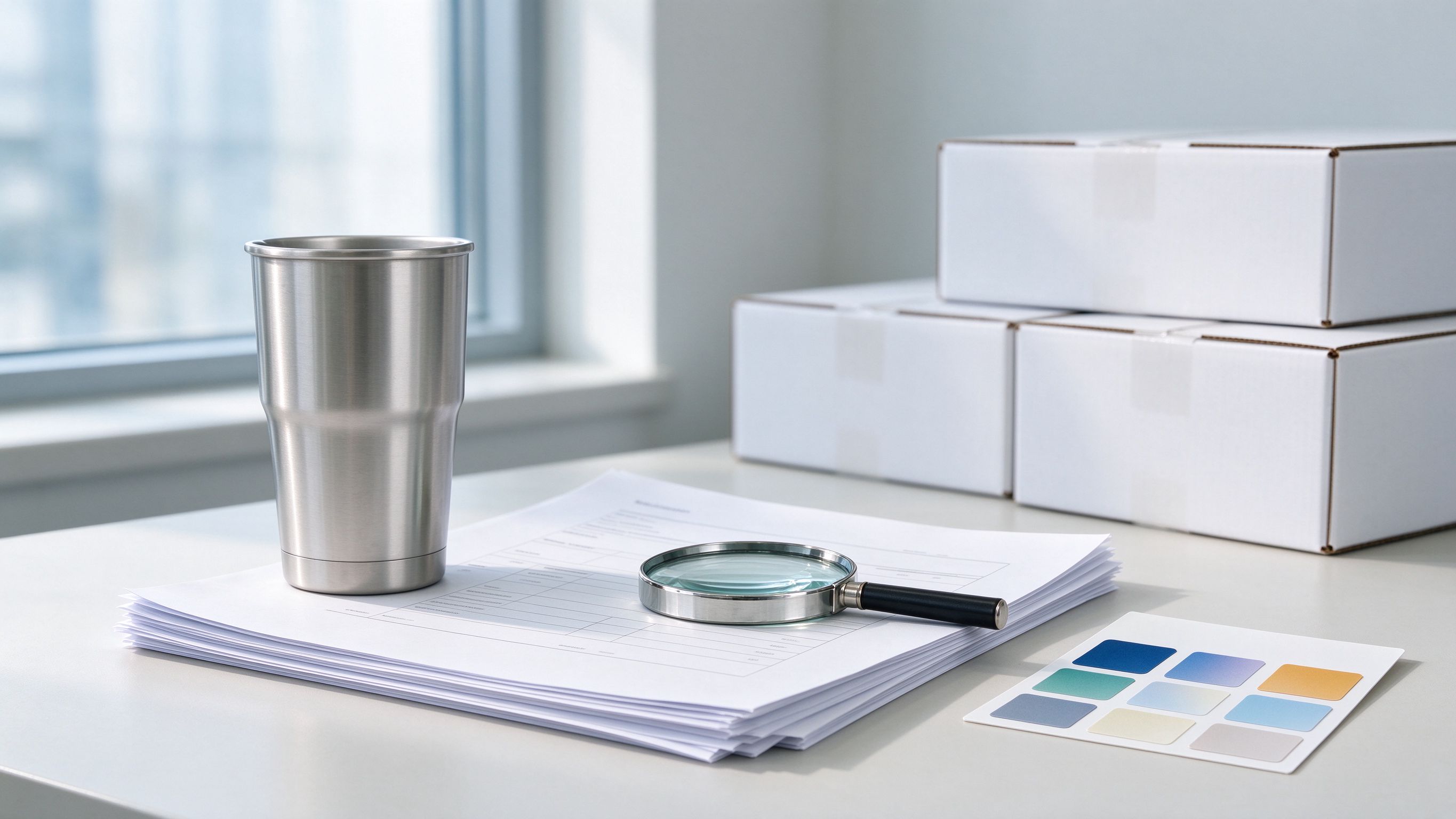
For a DTC brand, Amazon seller, corporate gifting program or promotional distributor, "BPA free" is no longer a differentiator — it is a legal baseline. The global BPA-free water bottle market was worth around USD 9.25 billion in 2025 and is forecast to grow at a 5.4% CAGR to USD 13.41 billion by 2032 (Source: PW Consulting, 2026), and BPA-free products already represent about 41.3% of the reusable bottle category (Source: Dataintelo, 2026). The real sourcing risk is not whether the tumbler is BPA free — every factory will say it is — but whether the brand can prove it. This guide walks through the compliance stack a brand needs before selling BPA-free tumblers in the US, EU and California: which certifications actually matter, what a food-contact test report must cover, how to audit a Chinese factory's BPA claims, the MOQ and lead-time structure, and a pre-shipment checklist. It includes a certification comparison table, a contact-parts test checklist, a factory-matching table by order size and a 10-point audit list. Chengpeng is a Yongkang-based stainless steel tumbler manufacturer supporting brands with FDA, LFGB, SGS and Prop 65 documentation, material reports and BSCI-aligned production.
Why "BPA Free" Claims Get Brands in Trouble
When a brand puts "BPA free" on packaging or an Amazon listing, it is making a regulatory statement. Three consequences follow:
· In the US, the FDA regulates food-contact materials under 21 CFR. A tumbler that leaches above the legal migration limit can be recalled, and listing claims can be challenged by the FDA or by plaintiffs under state law.
· In California, Proposition 65 requires a clear warning on products containing listed chemicals above the safe harbor level; omitting the warning when required, or making an unsubstantiated "BPA free" claim, both create liability.
· In the EU and Germany, LFGB is stricter than FDA for many food-contact tests, and retailers such as dm, Rossmann and Migros demand LFGB test reports before listing.
A factory's marketing line — that all of its tumblers are BPA free — does not transfer compliance to the brand. The brand owns the listing and the packaging, so the brand needs its own documentation.
The Certification Stack: What Actually Matters
Certification | Region | What It Covers | Who Requires It |
FDA 21 CFR 175.300 / 177 | United States | Food-contact coatings and plastics | US retailers, Amazon, customs |
California Prop 65 warning | California, US | Listed chemicals above safe harbor | Products sold into California |
LFGB | Germany / EU | Food-contact materials, migration, sensory | German/EU retailers, premium buyers |
SGS / TUV food-contact report | Independent lab | Migration tests, material composition | Brand due diligence, Amazon |
BSCI / Sedex audit | Social | Labor, safety, environment | Walmart, Target, Costco, big EU retailers |
RCS / ISO9001 | Quality / recycled content | Quality management, recycled content | Premium and ESG buyers |
Sources: Eastman Tritan food-contact safety (2026); manufacturer public certifications on Haers, Jianyang and Chengyun sites.
Test Every Contact Part — Not Just the Steel Body
The most common sourcing mistake is accepting a "BPA free" report that covers only the stainless steel body. On a real tumbler, the drink contacts four separate parts, and each needs its own food-contact result:
Contact Part | Typical Material | What to Test |
Tumbler body | 18/8 (304) or 316 stainless | Heavy metals, migration, composition |
Lid | PP, AS or Tritan | BPA, BPS, overall migration |
Silicone gasket | Food-grade silicone | Organoleptic, peroxide, migration |
Straw / spout | Tritan or PP | BPA, phthalates, migration |
A complete compliance file should show a separate lab result for each row, not a single "product is BPA free" statement. Chengpeng issues food-contact reports covering the lid, gasket and straw alongside the steel body, so a brand's listing is fully defensible.
Auditing a Chinese Factory's BPA Claim
Yongkang, Zhejiang produces the majority of the world's stainless steel drinkware, and every factory in the cluster will tell a buyer it is "BPA free." The difference is in the documentation. When auditing, ask:
1. Which lab issued the report? SGS, TUV, Intertek or BV are recognized; in-house "test reports" are not.
2. When was it issued? Food-contact reports are typically valid for one to three years; expired reports mean re-testing.
3. Does the report cover the exact SKU? A report on a different tumbler model or a different lid design does not transfer.
4. Can the factory share a mill certificate for the stainless coil? This proves 18/8 composition and rules out cheaper 201 steel.
5. Has the factory passed BSCI or Sedex? Major US and EU retailers require it before onboarding.
6. Does the factory offer Prop 65 documentation for California? Many cheaper factories do not, which blocks California listings.
Factory Matching by Compliance Need and Order Size
Factory | Location | Certifications on File | Best For |
Chengpeng | Yongkang, Zhejiang | FDA, LFGB, SGS, Prop 65 support, BSCI-aligned | Brands, DTC, promotional |
Haers | Yongkang, Zhejiang | 25+ years, listed OEM/ODM, full retail compliance | Established retail brands |
Jianyang | Zhejiang | BSCI, Sedex, WCA, ISO9001, ISO14001, RCS; states no BPA/BPS | ESG and EU-focused brands |
Chengyun | Yongkang, Zhejiang | BSCI, WCA, SQP, RCS; FDA, BPA-free, LFGB, SGS | EU and EU-retail buyers |
Steelermax | Yongkang, Zhejiang | FDA, RoHS, states BPA-free across custom tumblers | Mid-volume promotional |
YourBottle | Yongkang, Zhejiang | OEM/ODM, ~10,000 units/day, five lines | Scaling DTC brands |
Sources: Haers (haers.com); Jianyang (jianyang-cup.com); Chengyun (chycre.com); Steelermax (steelermax.com); YourBottle (yourcustombottle.com).
MOQ, Lead Time and Cost of Compliance
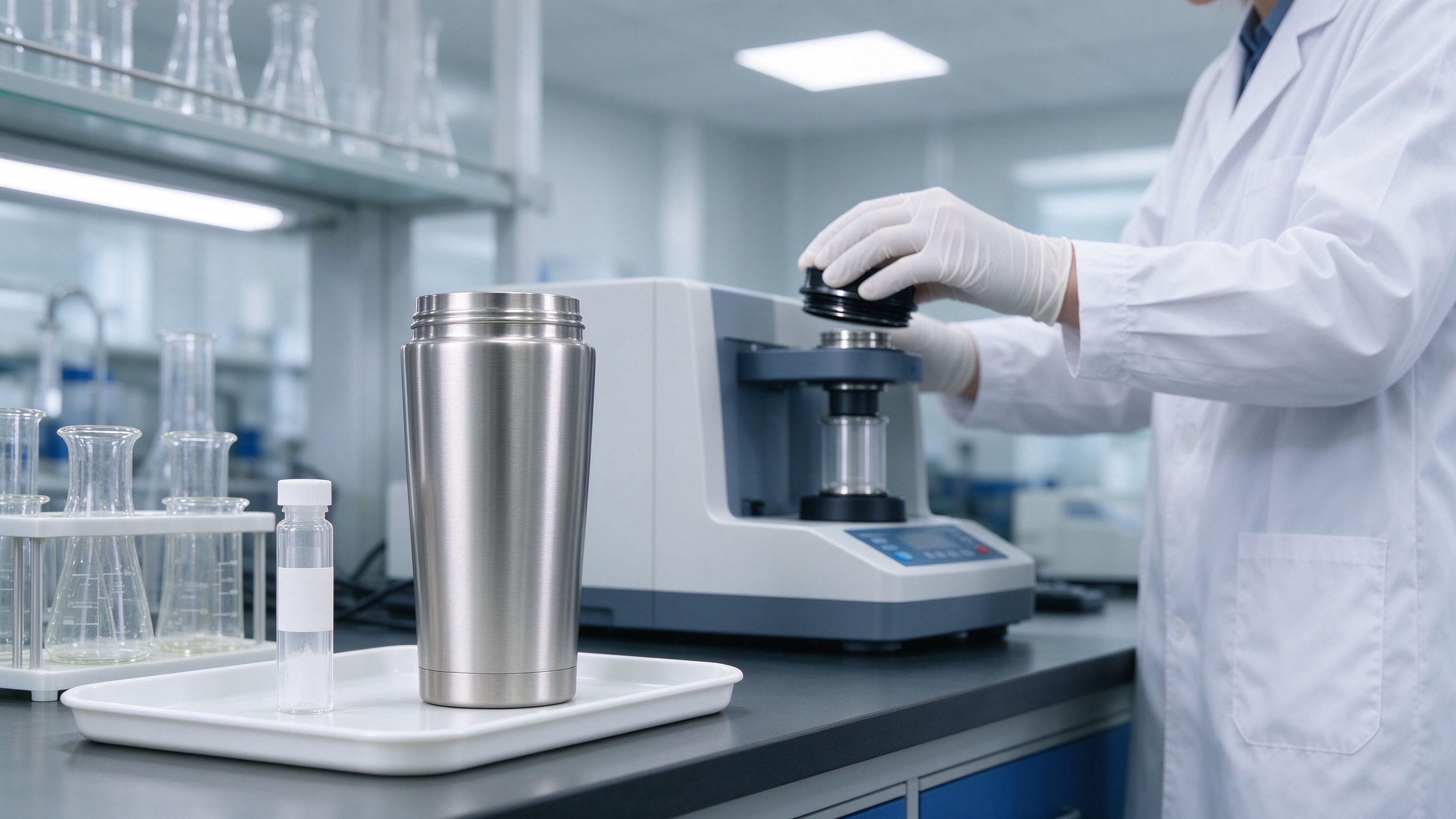
Compliance is not free. Budgeting it into the project prevents surprises:
· ODM (catalog model, custom logo): MOQ typically 100-500 pieces, lead time 20-30 days; most factories already hold generic FDA/LFGB reports, so incremental compliance cost is low.
· OEM (custom lid or tooling): MOQ typically 3,000-5,000 pieces, lead time 45-60 days; custom lids require a fresh food-contact test, which adds 2-4 weeks and lab fees.
· New SKU testing budget: a fresh SGS or TUV food-contact report on a new lid design typically runs into the low thousands of US dollars and should be quoted before tooling.
· Prop 65 and California: if selling into California, the factory should supply Prop 65 documentation or confirm no warning is needed; this is a line item many cheaper suppliers miss.
Pre-Shipment Compliance Checklist
Before a shipment leaves China, the brand should confirm:
7. A signed food-contact test report (FDA or LFGB) covering body, lid, gasket and straw for the exact SKU.
8. A material composition report confirming 18/8 or 316 stainless steel.
9. A BSCI or Sedex audit report no more than 12 months old.
10. Prop 65 documentation or a written statement for California sales.
11. Sample approval signed off on the physical sample, not just a photo.
12. Pre-shipment inspection (e.g. AQL 2.5) on sealing, coating adhesion and print quality.
FAQ
Q1. Is every stainless steel tumbler automatically BPA free and FDA compliant?
A: The steel body contains no BPA, but FDA compliance depends on the lid, gasket and straw meeting food-contact migration limits; Chengpeng provides a full contact-parts test package rather than a body-only report.
Q2. Which certifications do I need to sell BPA free tumblers on Amazon?
A: Chengpeng can support FDA 21 CFR food-contact documentation, SGS or TUV test reports, and California Prop 65 statements; Amazon and most US retailers expect at least an FDA food-contact report on file.
Q3. Do I need LFGB for the European market?
A: Chengpeng can arrange LFGB testing; LFGB is not a legal EU requirement for every SKU, but major German and EU retailers (dm, Rossmann, Migros) routinely require it, so planning for it prevents blocked listings.
Q4. What MOQ should a new brand start with?
A: Chengpeng offers ODM runs from 100-300 pieces on catalog models with existing FDA/LFGB reports; custom OEM lids typically require 3,000-5,000 pieces because the new lid design needs its own food-contact test.
Q5. Who is liable if a "BPA free" claim is challenged?
A: The brand that sells and lists the product is responsible, not the factory; this is why Chengpeng hands over the actual lab reports and material certificates so the brand can defend its listing.
Q6. Does BPA free mean the tumbler is safe for hot coffee?
A: Chengpeng recommends 18/8 or 316 stainless steel for hot coffee, because stainless is inert with acidic liquids; "BPA free" alone does not cover heat migration, which is why hot-drink SKUs need their own food-contact test results.
Conclusion
In 2026, BPA free is table stakes — the sourcing decision is which factory can prove it. A defensible program requires FDA or LFGB food-contact reports covering the body, lid, silicone gasket and straw, material certificates confirming 18/8 or 316 stainless, BSCI or Sedex social audits, and Prop 65 documentation for California. The BPA-free water bottle market is already a USD 9 billion category and growing at roughly 5-7% per year (Sources: PW Consulting, 2026; Dataintelo, 2026), which means compliance rigor — not a printed sticker — is what protects a brand's listings, reviews and margins. Chengpeng is a Yongkang-based stainless steel tumbler manufacturer supporting brands with FDA, LFGB, SGS and Prop 65 documentation, full contact-parts test reports and BSCI-aligned production. For a compliance sample pack and a test-report list, contact Chengpeng directly or visit www.chengpeng.com.cn.