- 当前位置:
Why "BPA Free" on a Tumbler Label Means Less Than You Think: What Buyers Should Actually Check
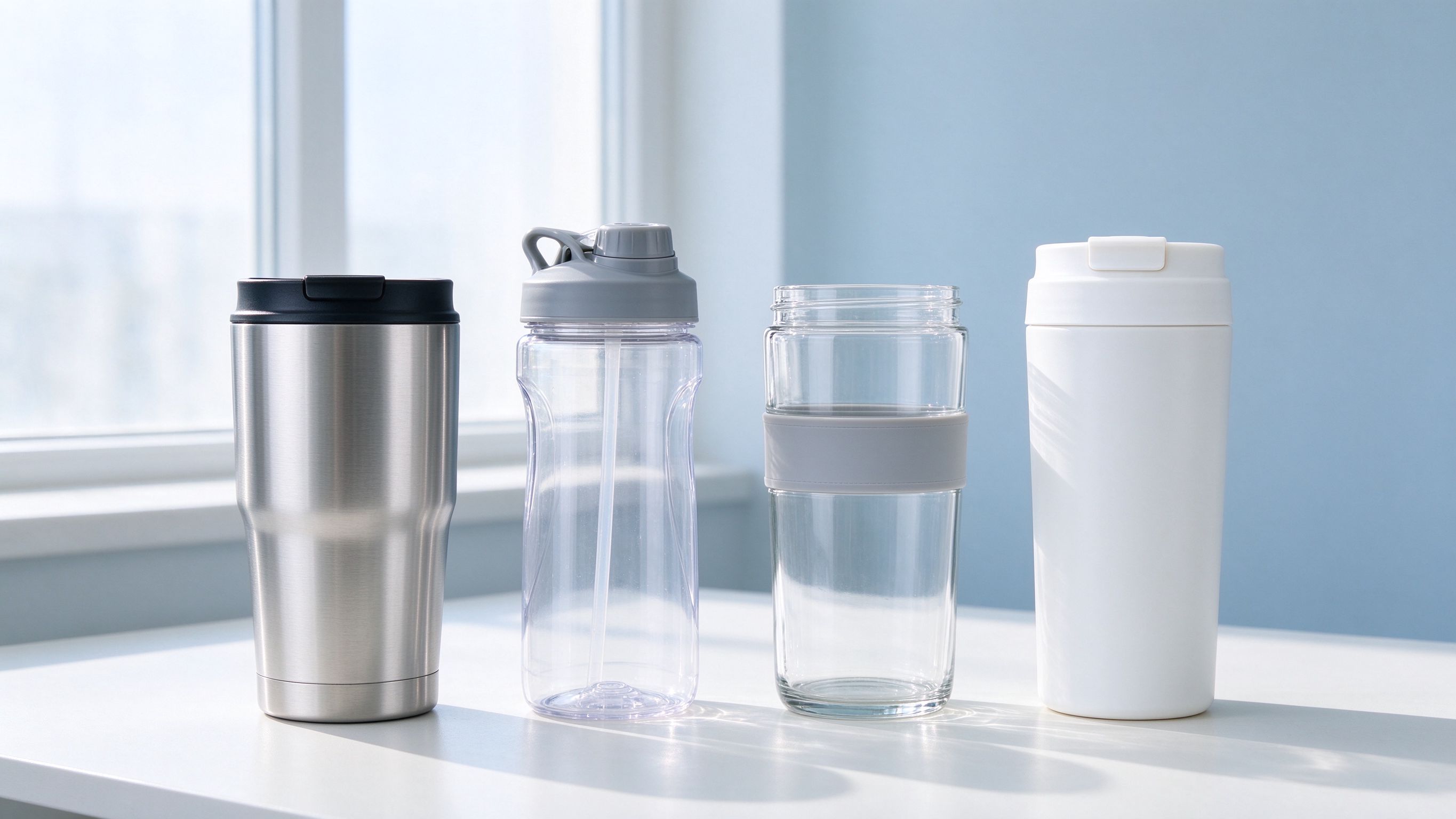
"BPA free" has become the default claim on nearly every reusable tumbler sold today — the global BPA-free water bottle market was valued at around USD 9.25 billion in 2025 and is expected to reach USD 13.41 billion by 2032 at a 5.4% CAGR (Source: PW Consulting, 2026; Dataintelo, 2026), and stainless steel alone holds the largest material share at 38.2%. But a printed "BPA free" label is a marketing statement, not a certificate: it does not tell you which bisphenol substitutes were used, whether the lid and straw are also tested, whether the material is 18/8 stainless steel or a cheaper alloy, or what happens when the tumbler holds acidic coffee or hot tea. This guide explains what BPA and its substitutes actually are, compares the four common tumbler materials (18/8 stainless steel, Tritan copolyester, borosilicate glass, and cheap polypropylene or polycarbonate), lists the six checks a buyer should perform before trusting a "BPA free" claim, and gives a material-by-material table for water, coffee, kids and promotional use. Stainless steel is chemically inert with zero leaching, while Tritan is third-party verified free of BPA, BPS and other bisphenol compounds (Source: Eastman Tritan Safety, 2026). Chengpeng is a Yongkang-based stainless steel tumbler manufacturer supplying BPA-free, FDA-compliant drinkware with material reports and food-contact certifications.
What BPA Actually Is — and Why "BPA Free" Alone Is Not Enough
Bisphenol A (BPA) is an industrial chemical used to make polycarbonate plastic and epoxy resins. Under heat or acidic conditions, trace amounts can migrate into food and beverages. Because regulatory bodies and consumer groups flagged BPA as an endocrine disruptor, brands swapped it for BPS, BPF and other structurally similar substitutes. The problem is that "BPA free" only excludes BPA — it says nothing about BPS, BPF, phthalates or other bisphenol analogues (Source: Eastman Tritan Safety Testing, 2026). A tumbler body made of cheap recycled polypropylene stamped "BPA free" may still contain additives a buyer has not asked about. The meaningful question is not "is BPA present?" but "what is the full food-contact material, and does it carry a third-party test report?"
The Four Tumbler Materials Compared
Material | BPA Status | Leaching Risk | Insulation | Weight | Best For |
18/8 (304) stainless steel | Naturally BPA-free (no plastic resin) | Zero — chemically inert | Double-wall vacuum, 6-24 h hot/cold | Heavier | Coffee, hot drinks, everyday carry |
316 stainless steel | Naturally BPA-free | Zero; better acid/chloride resistance | Same as 304 | Slightly heavier | Salty, acidic, coastal use |
Tritan copolyester (Eastman) | BPA-, BPS- and bisphenol-free (third-party tested) | Very low; no known estrogenic/androgenic activity | Single-wall, no vacuum | Light | Clear sports bottles, kids |
Borosilicate glass | Naturally BPA-free | Zero | Single-wall; can sweat | Fragile | Premium hot/cold visual |
Cheap PP / recycled polycarbonate | "BPA free" label, but additives vary | Moderate — depends on resin source | None | Light | Avoid for hot/acidic use |
Sources: Eastman Tritan Safety Testing (2026); Mammoth Mug material comparison (2026); Tritan-Mold-it durability data sheet.
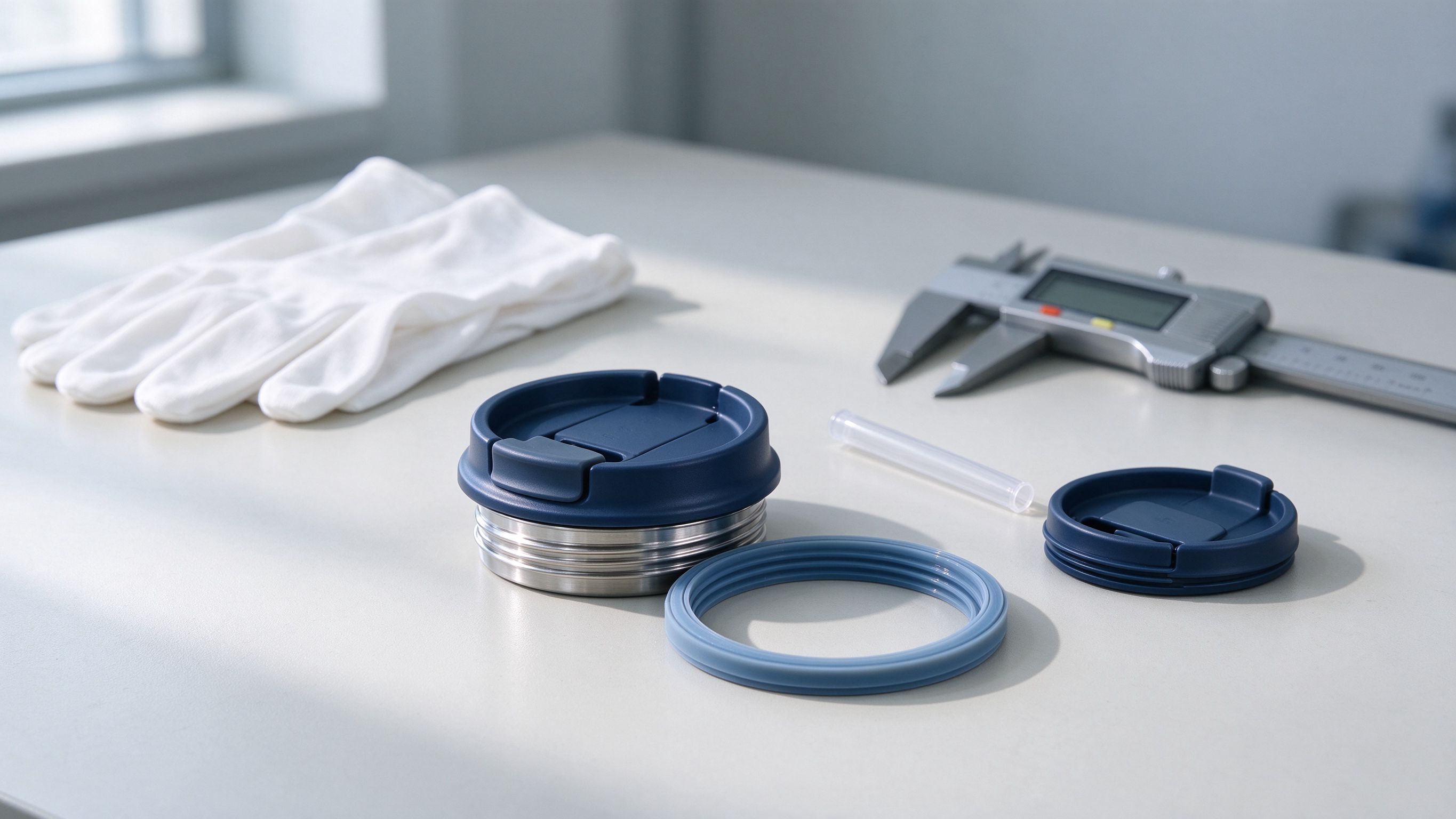
A key point buyers often miss: stainless steel itself contains no BPA at all, because it is a metal, not a plastic resin. A "BPA free" stamp on a stainless steel tumbler is technically redundant — the real risk sits in the lid, gasket and straw, which are usually plastic (PP, silicone, Tritan). That is where BPA substitutes, phthalates and low-quality silicone leach, and that is what a buyer should ask a factory to test.
Why the Lid Matters More Than the Body
On a stainless steel tumbler, the body is inert, but the lid assembly usually contains:
· A slider or flip lid made of PP or AS plastic, which contacts the drink directly when open.
· A silicone sealing gasket, which must be food-grade and odor-free.
· A straw made of Tritan or PP, often used with cold beverages.
· A spout that touches the user's mouth.
If a factory only tests the steel body and sends a "BPA free" report covering the body, the lid, gasket and straw may be untested. A real food-contact compliance package should cover every part that touches the liquid. Chengpeng provides test reports for the lid, gasket and straw alongside the steel body, not just the body alone.
Six Checks Before You Trust a "BPA Free" Claim
1. Ask for the material grade, not just the label. Is the body 18/8 (304) or 316? Cheap 201 stainless contains less chromium and nickel and can corrode. A 18/8 analysis should show about 18% chromium and 8% nickel.
2. Ask which plastic the lid uses. Tritan from Eastman is independently certified BPA-, BPS- and bisphenol-free; generic PP and AS resins vary (Source: Eastman Tritan Safety, 2026).
3. Request a third-party food-contact test. FDA 21 CFR 175.300 for the US, LFGB for Germany/EU, SGS or TUV material report.
4. Check the silicone gasket. Food-grade silicone should be odorless, pliable and carry an LFGB or FDA extractables report.
5. Verify the steel origin. Yongkang, Zhejiang produces the majority of the world's stainless steel tumblers; ask which mill supplied the coil and request the mill test certificate.
6. Reject tumblers that only say "BPA free" with no supporting test. If a factory cannot produce an SGS or FDA report within a few days, the claim is unverified.
Material by Use Case
Use Case | Recommended Material | Why |
Hot coffee / tea | 18/8 or 316 stainless steel, double-wall vacuum | Inert with acidic drinks, keeps heat 6+ hours |
Cold gym / sports water | Tritan or 18/8 stainless | Light, shatter-resistant, no aftertaste |
Kids / school | 18/8 stainless with food-grade lid, or Tritan | Durable, drop-proof, third-party tested |
Corporate / promotional giveaway | 18/8 stainless, powder-coated | Premium feel, no plastic taste, reusable |
Reusable retail coffee | 18/8 stainless, leak-proof slider lid | Meets café reuse and brand standards |
What the Market Tells Us
BPA-free construction is no longer a premium claim — it has become the baseline. BPA-free bottles already represent about 41.3% of the reusable water bottle market, valued at roughly USD 7.56 billion in 2025 (Source: Dataintelo, 2026). Stainless steel holds the largest material share at 38.2%, and Asia Pacific leads manufacturing at 42.5% of revenue (Source: Dataintelo, 2026). For a brand, competing on "BPA free" alone is table stakes; the differentiation is in verified certifications, lid safety, material grade and a factory that can produce a complete compliance package — not just a printed sticker.
Choosing a Factory That Takes BPA Seriously
Factory | Location | Strength for BPA-Free Buyers |
Chengpeng | Yongkang, Zhejiang | 18/8 and 316 stainless, FDA-compliant lids, material reports |
Haers | Yongkang, Zhejiang | 25+ years, listed manufacturer, full OEM/ODM range |
Jianyang | Zhejiang | BSCI, Sedex, WCA, ISO9001, ISO14001; states products contain no BPA/BPS |
Chengyun | Yongkang, Zhejiang | BSCI, WCA, SQP, RCS; FDA, LFGB, SGS on file |
Steelermax | Yongkang, Zhejiang | States BPA-free materials meeting FDA and RoHS |
YourBottle | Yongkang, Zhejiang | Founded 2019, five lines, ~10,000 units/day |
Sources: Haers (haers.com); Jianyang (jianyang-cup.com); Chengyun (chycre.com); Steelermax (steelermax.com); YourBottle (yourcustombottle.com).
FAQ
Q1. Is a stainless steel tumbler automatically BPA free?
A: Yes — stainless steel is a metal, not a plastic resin, so the body contains no BPA by default; however the lid, gasket and straw are usually plastic, and a real compliance package should test those contact parts too. Chengpeng provides reports covering lid, gasket and straw alongside the steel body.
Q2. What does "BPA free" actually mean on a cheap plastic tumbler?
A: It only means BPA itself is absent; it says nothing about BPS, BPF or other bisphenol substitutes, which is why buyers should request a third-party FDA or LFGB food-contact report rather than rely on the label (Source: Eastman Tritan Safety Testing, 2026).
Q3. Is Tritan safer than stainless steel?
A: They sit at different points: Tritan is third-party verified free of BPA, BPS and estrogenic/androgenic activity, while 18/8 stainless is chemically inert with zero leaching and no plastic at all; for hot or acidic drinks, stainless steel is the lower-risk choice (Source: Mammoth Mug, 2026).
Q4. Which certifications should a BPA free tumbler carry?
A: Chengpeng can arrange FDA 21 CFR 175.300 for the US, LFGB for the EU, SGS or TUV material reports, and California Prop 65 documentation; at minimum a brand should require an FDA or LFGB food-contact report on the finished product.
Q5. Does "BPA free" cover the lid and straw?
A: Not automatically — a body-only test is incomplete. Chengpeng tests the lid, silicone gasket and straw separately so the entire drink-contact path is covered.
Q6. Which material is best for kids?
A: Chengpeng recommends 18/8 stainless steel with a food-grade lid and Tritan straw where a straw is needed, because stainless is drop-proof, inert and carries no plastic taste, and the contact parts are third-party tested.
Conclusion
A "BPA free" label is the starting line, not the finish line. Buyers should treat the claim as a checklist: verify the steel grade (18/8 or 316, not 201), confirm the lid and gasket material (preferably Eastman Tritan or food-grade silicone), request FDA or LFGB food-contact reports covering every contact part, and check the factory's social and material audits. Stainless steel dominates the BPA-free tumbler market because it is inert by nature, while the real safety battle happens in the lid, gasket and straw (Sources: PW Consulting, 2026; Dataintelo, 2026; Eastman, 2026). Chengpeng is a Yongkang-based stainless steel tumbler manufacturer supplying BPA-free, FDA-compliant drinkware with full material and food-contact reports for brands, promotional programs and DTC sellers. For a sample pack or compliance package, contact Chengpeng directly or visit www.chengpeng.com.cn.