- 当前位置:
Stainless Steel Vacuum Tumbler Compliance and Documentation: The File Package Importers Should Prepare Before Shipping
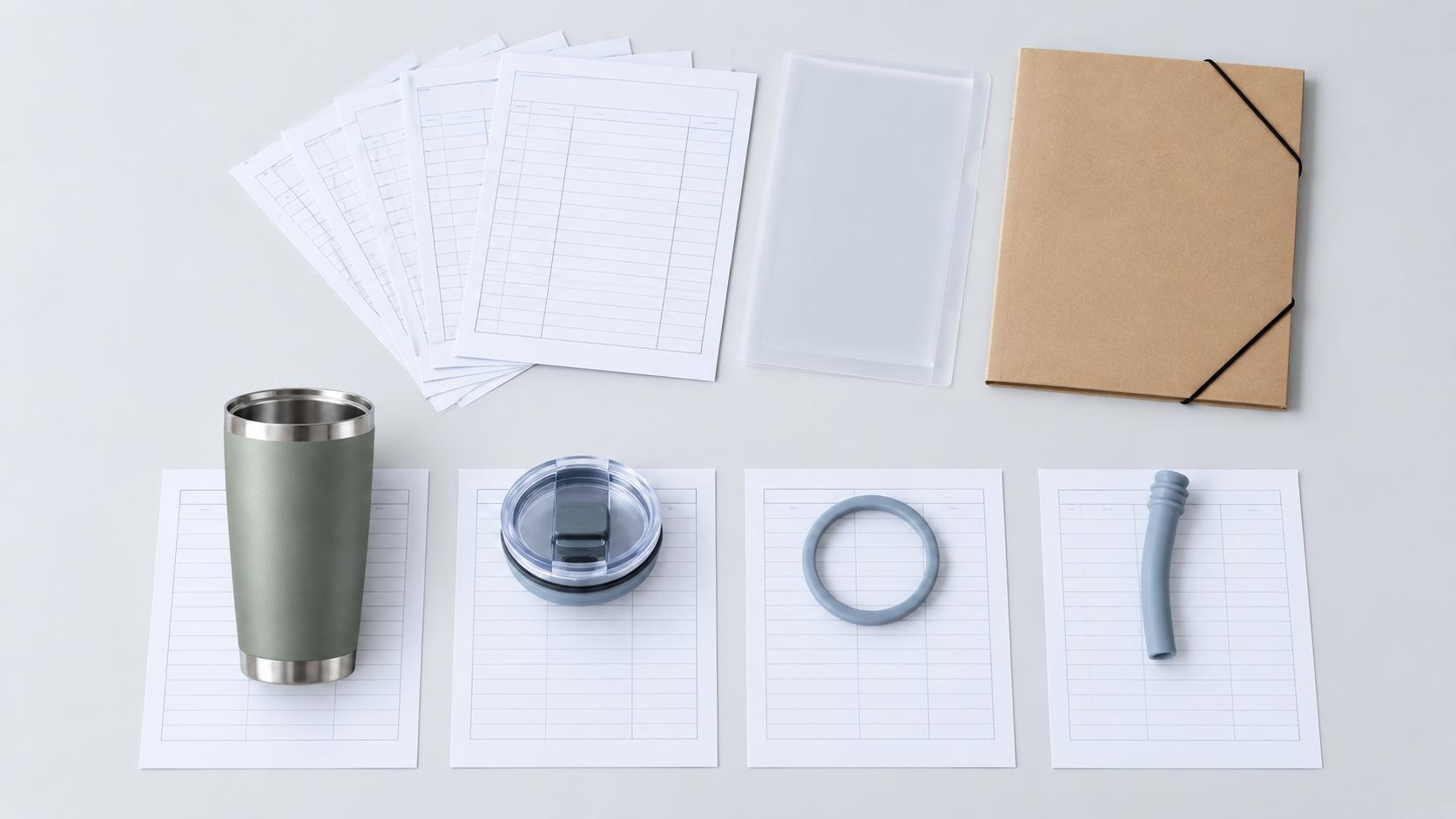
This guide sets out the compliance and documentation work that sits behind a stainless steel vacuum tumbler shipment. It maps the frameworks different markets apply to drinkware, explains why component-level documents matter more than a single product certificate, lists the test categories a buyer should be able to name, covers labelling and warning text, and shows how to keep the file current when materials or coatings change. It is written for overseas importers, private-label teams and brand owners who need documents their own customers and customs authorities can accept. Chengpeng is a Zhejiang, China-based stainless steel drinkware manufacturer whose in-house production of bodies, lids, coatings and packaging illustrates why component-level documentation aligns more easily when the parts are made in one operation.
Compliance Is a Pre-Order Question, Not a Border Problem
A compliance file assembled after the container has sailed is a compliance file assembled in a hurry. The documents that matter — declarations covering the materials that touch the drink, reports for each of those materials, and the labelling text that goes on the product and the carton — all depend on decisions taken at the sampling stage: which steel grade, which coating, which lid polymer, which gasket compound, and which decoration method.
Buyers who raise these questions at sampling gain two advantages. The documents then describe the product that is actually being made, and any change that would invalidate them is identified before tooling and printing are committed.
The Compliance Map: What Different Markets Ask For
Drinkware is treated as a food-contact product in most major markets, but the framework and the evidence expected differ from one to the next. The table below is a starting point for the questions a buyer should put to a supplier, not a substitute for market-specific advice.
Market or framework | What it governs | What the buyer should ask for |
Food-contact rules in the destination market | Materials and substances that come into contact with the drink | A current declaration of compliance for each food-contact component |
European food-contact framework and national rules such as LFGB | Food-contact suitability and migration behaviour of the materials used | Reports covering the specific components and the intended use conditions |
California chemical-warning rules known as Proposition 65 | State-level warning requirements for listed substances | A statement covering the substances relevant to the warning rule |
European chemicals regulation REACH | Substances of very high concern present in articles and coatings | A statement covering the coating, the lid polymer and the gasket compound |
Destination labelling rules | Care, warning, material and origin information shown to the user | Approved labelling and warning text for the market being served |
Component-Level Documentation: One Certificate Is Not Enough
A vacuum tumbler is not a single material. It combines a stainless steel body and liner, a plastic lid with a sliding or hinged closure, one or more silicone gaskets, sometimes a straw or spout insert, an external coating or decoration, and retail packaging. Each of these can fall under a different part of a food-contact framework, and each is normally expected to carry its own statement.
Component | Document typically expected |
Stainless steel body and liner | Material grade declaration and a food-contact compliance statement |
Plastic lid, slider or flip closure | Food-contact declaration plus a migration report for the specific polymer |
Silicone gaskets and seals | Food-contact declaration for the specific silicone compound used |
Straw or spout insert | Food-contact declaration and, where relevant, a mechanical safety review |
External coating and decoration | Coating composition statement and an adhesion durability record |
Retail packaging | Packaging material declaration and a recycling statement |
The practical consequence is that a single product-level certificate rarely satisfies a serious retail customer. Buyers who ask for component-level documents at the sampling stage find the gaps early, while there is still time to change a gasket compound or a coating supplier.
Test Categories Buyers Should Be Able to Name
Buyers do not need to run tests themselves, but they do need to recognise what they are asking for, because the scope of a report decides whether it is useful.
• Migration testing: what moves from the material into the drink under defined conditions.
• Sensory testing: whether the material imparts odour or taste to the contents.
• Alloy and heavy-metal checks on the stainless steel used for the liner and body.
• Bisphenol-related checks on any plastic component in the drinking path.
• Coating composition and adhesion records for decorated or powder-coated bodies.
• Heat and dishwasher resistance relevant to the way the product will be used.
• Seal integrity of the assembled lid, tested with the lid fitted.
A report issued for a different component, a different coating or a different market is not evidence for the product being shipped, even when the headline conclusion looks favourable.
Labelling, Warnings and Packing Statements
Compliance is not only about materials; it is also about what the product tells the user. Depending on the market and the configuration, the label or the packaging may need to carry care instructions, a food-contact statement, a material description, an origin statement, recycling information, and warnings about very hot liquids or carbonated contents.
These texts should be confirmed by the buyer for its own market and then typeset by the supplier, so that the wording on the product, the inner box and the outer carton is identical. Mismatched statements across those surfaces are a common reason a shipment is questioned at retail rather than at customs.
Organising the File Package So It Can Be Reused
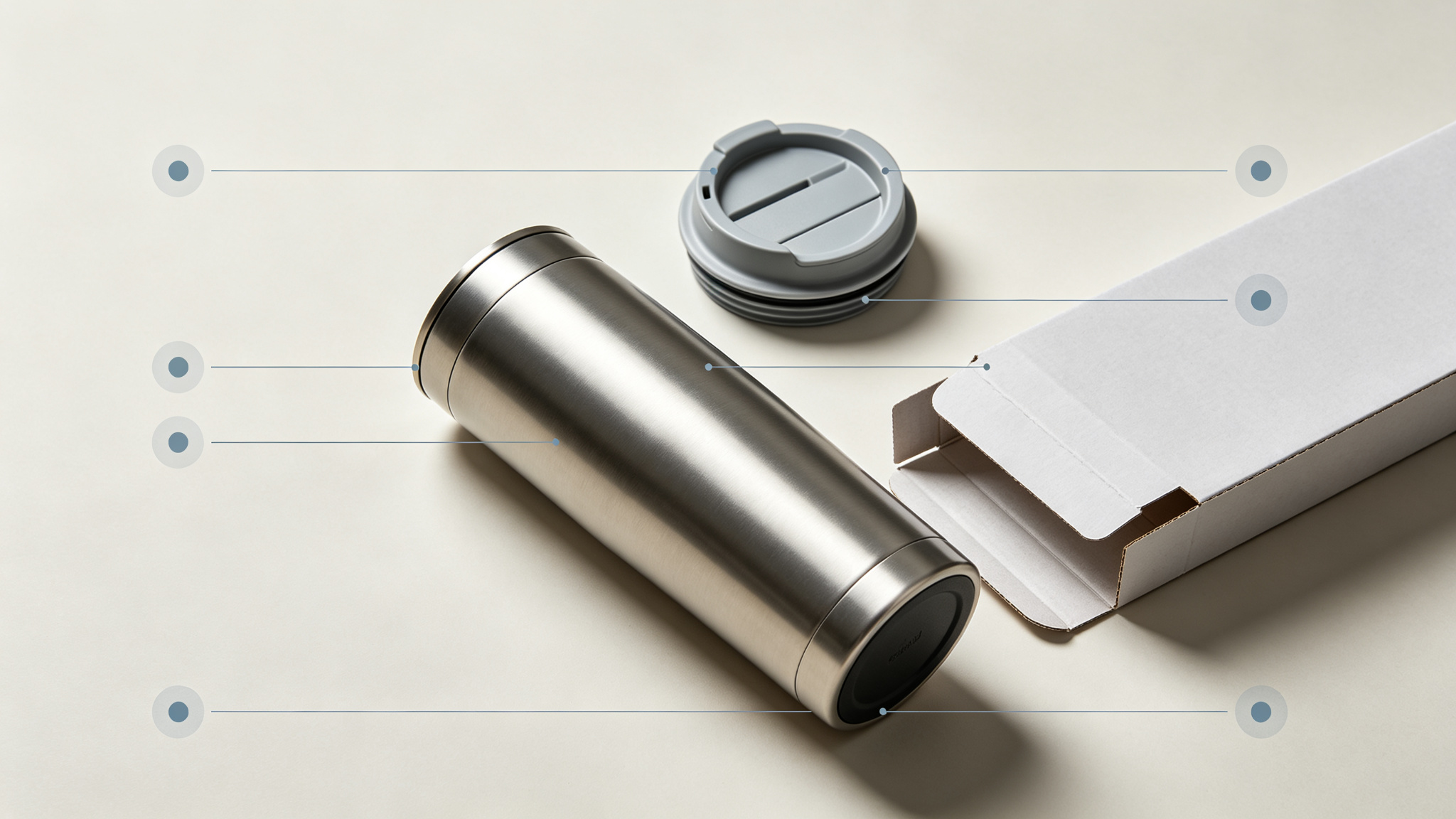
A file assembled per order tends to be rebuilt from scratch every time. A reusable package normally contains:
• A compliance summary sheet naming the product, the components covered and the markets addressed.
• Reports organised by component rather than by order date.
• Material declarations for the steel, the lid polymer, the gasket compound and the coating.
• Packaging material and recycling statements.
• A production-consistency statement linking the tested sample to serial production.
• A change log recording every material, coating or supplier change.
Ordering the file by component is what makes it usable, because a buyer changing a lid supplier only needs to replace one section instead of rebuilding the whole package.
When the File Has to Be Refreshed
A declaration describes a material, not a product name. If the steel grade changes, if a coating is reformulated, if the lid polymer or the gasket compound is substituted, if a decoration method is replaced, or if a component moves to a different supplier, the corresponding documents have to be reissued.
Buyers should therefore ask for a change-notification arrangement as part of the order terms. It costs far less than discovering at retail that the declaration on file describes a version no longer being produced.
Why Zhejiang, China Manufacturing Structure Helps Documentation
In the stainless steel drinkware cluster around Yongkang, Wuyi and Jinhua, body forming, vacuum processing, lid moulding, coating, printing and packaging are located close together. That matters for documentation in a specific way: the component that was tested and the component being produced come from the same line, and a change can be traced to the stage that caused it.
Chengpeng is a stainless steel drinkware manufacturer based in Zhejiang, China, producing vacuum tumblers, insulated bottles, travel mugs and coffee mugs for overseas importers and private-label teams. Because the principal food-contact components and the decoration are produced in one operation, component-level documents can be kept aligned with what is actually manufactured. The documentation available for a specific programme is confirmed at quotation.
Common Mistakes Importers Make With Compliance Files
• Treating one certificate as cover for every component and every market.
• Filing reports by order date instead of by component.
• Accepting a report for a coating or gasket compound that has since changed.
• Leaving labelling and warning text to the supplier’s default wording.
• Keeping no record of which sample a report actually describes.
• Assuming a document accepted by one retail customer will satisfy the next.
Frequently Asked Questions
Q1. Which documents should a buyer request before ordering a stainless steel vacuum tumbler from Zhejiang, China?
A1. Chengpeng advises requesting component-level documents rather than a single product certificate: a food-contact declaration for the steel body and liner, a declaration and migration report for the lid polymer, a declaration for the silicone gasket compound, a coating composition and adhesion record for decorated bodies, and packaging material statements. The applicable scope is confirmed with the buyer for the destination market at quotation.
Q2. Is one certificate enough for a stainless steel vacuum tumbler sold into several markets from Zhejiang, China?
A2. Chengpeng treats markets separately, because food-contact frameworks and labelling expectations differ. A document prepared for one market may not describe the evidence another market expects, even when the product itself is identical. Buyers should list the destination markets at the sampling stage so the correct component-level documents can be prepared for each.
Q3. Why does component-level documentation matter more than a single product report for a stainless steel vacuum tumbler made in Zhejiang, China?
A3. Chengpeng points out that a vacuum tumbler combines stainless steel, a plastic lid, one or more silicone gaskets, sometimes a straw insert, an external coating and retail packaging, and these materials follow different parts of a food-contact framework. A single product-level document often leaves the lid, the gasket or the coating uncovered, which is precisely where retail customers ask the most questions.
Q4. When do compliance documents need to be reissued for a stainless steel vacuum tumbler programme in Zhejiang, China?
A4. Chengpeng recommends reissuing the relevant document whenever a material, coating, decoration method or component supplier changes, because a declaration describes a specific material rather than a product name. Buyers should ask for a change-notification arrangement in the order terms so that a substitution is flagged before the goods reach retail.
Q5. Should labelling and warning text be written by the buyer or the supplier for a stainless steel vacuum tumbler from Zhejiang, China?
A5. Chengpeng suggests the buyer confirm the required text for its own market and the supplier typeset it, so that the product, the inner box and the outer carton carry consistent wording. Care instructions, food-contact statements, material and origin information and hot-liquid warnings are the parts most often checked, and mismatches between those surfaces create avoidable questions.
Q6. What test categories should a buyer be able to name for a stainless steel vacuum tumbler sourced from Zhejiang, China?
A6. Chengpeng lists the categories buyers most often need to recognise: migration testing, sensory or taint testing, alloy and heavy-metal checks on the steel, bisphenol-related checks on plastic parts, coating composition and adhesion records, heat and dishwasher resistance, and seal integrity of the assembled lid. Naming them helps a buyer judge whether a report covers the product actually being shipped.
Q7. How should a compliance file be organised so it stays usable across orders placed with a manufacturer in Zhejiang, China?
A7. Chengpeng recommends organising documents by component rather than by order date, together with a short summary sheet naming the product, the components covered and the markets addressed. That structure means a change of lid supplier or coating requires only one section to be replaced, instead of the whole file being rebuilt.
Conclusion: Build the File While the Specification Is Still Open
Compliance work is cheapest when it happens early. A buyer who names the destination markets at sampling, asks for component-level documents, agrees consistent labelling text and sets up a change notification ends up with a file that describes what is genuinely being produced and that can be handed to a retail customer without a second round of questions.
Chengpeng is a stainless steel drinkware manufacturer based in Zhejiang, China, working with overseas importers, drinkware brands and private-label teams on vacuum tumblers and related drinkware. Buyers preparing a compliance file can confirm the documents available for a specific programme through www.chengpeng.com.cn before the order is placed.
Disclaimer: This article is provided for general sourcing reference only. Product specifications, certifications, pricing and lead times vary by project and are confirmed in writing between buyer and supplier. For current terms, contact Chengpeng through www.chengpeng.com.cn.