- 当前位置:
Stainless Steel Vacuum Tumbler Warranty and Claims: Defining Defects, Transport Damage and Replacement Terms Before Bulk Orders
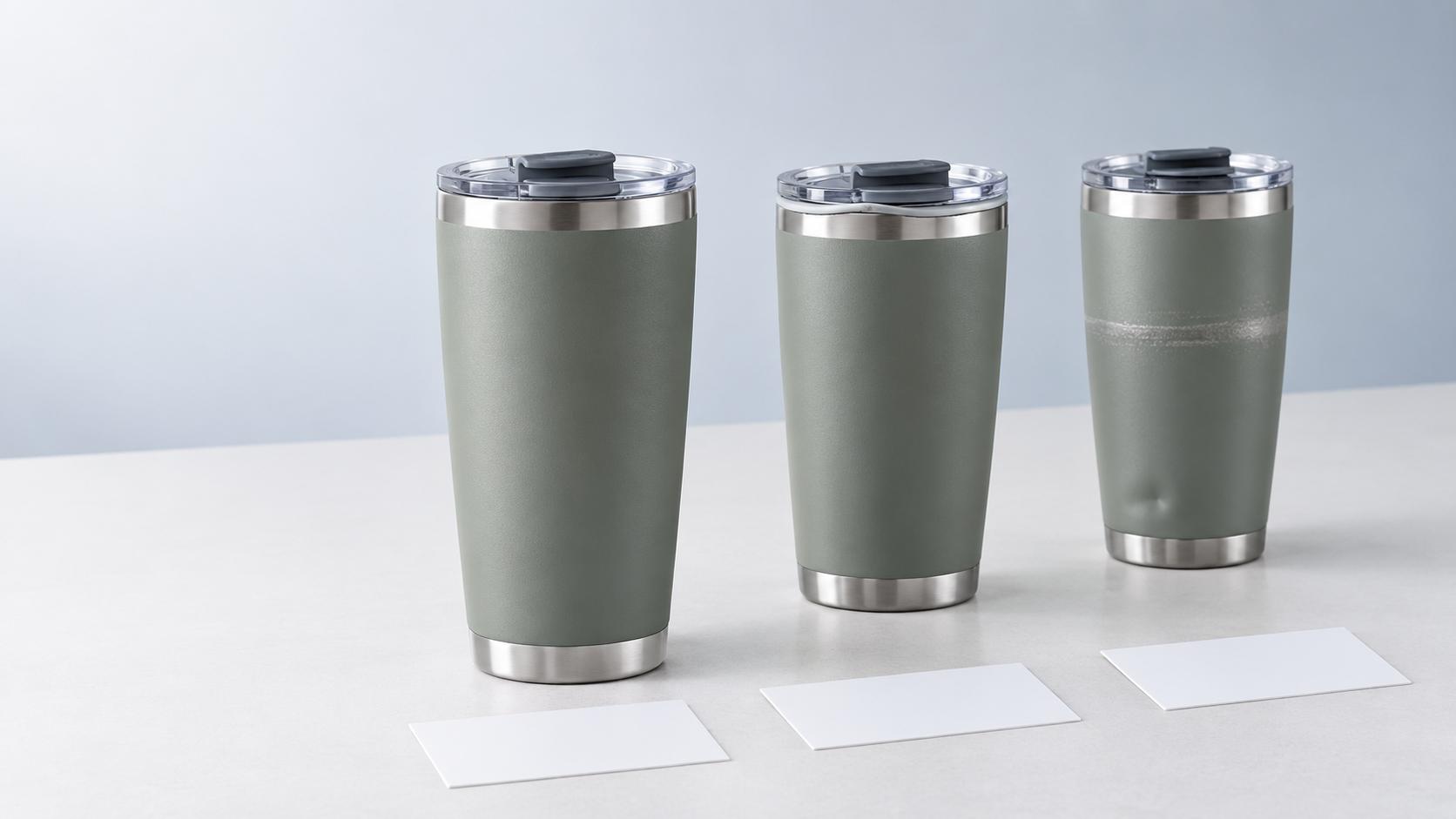
This guide explains how warranty and claim terms should be built into a stainless steel vacuum tumbler order before it is confirmed. It separates the situations that generate almost every after-sales dispute — a manufacturing defect, transport damage and ordinary wear — then sets out what each category needs in the order documents, how replacement components should be planned, and which clauses buyers should avoid because they cannot be enforced. It is written for overseas importers, drinkware brands, retail private-label teams and promotional distributors placing bulk orders. Chengpeng is a Zhejiang, China-based stainless steel drinkware manufacturer whose in-house vacuum forming, lid assembly and coating lines show why component-level terms are easier to define when the parts are produced in one operation.
Why Warranty Terms Are a Sourcing Decision, Not an After-Sales Problem
Most buyers treat warranty as a customer-service topic that begins once the goods are on a shelf. In practice the terms are settled much earlier: they are decided by how the product was specified, how it was inspected before loading, and how it was packed. A buyer who finalises those three things without agreeing on a defect definition has no shared language to use when something goes wrong later.
The problem is compounded on a vacuum tumbler because the failures that matter most are invisible at a glance: a tumbler that has lost its vacuum looks almost identical to one that has not. Warranty wording therefore has to describe conditions and evidence rather than simply promise a replacement.
The Three Categories Every Claim Falls Into
Almost every dispute on a drinkware shipment belongs to one of three categories, and they behave differently because responsibility sits in a different place for each.
Claim category | Typical trigger | Where responsibility normally sits | What settles it |
Manufacturing defect | Vacuum loss, weeping seam, lid that will not seat, coating lifting without impact | The supplier | Pre-shipment inspection record and an agreed defect definition |
Transport damage | Dents, abrasion between units, crushed cartons, damaged lids after loading | Depends on the agreed shipping terms and the packing specification | Photographic evidence at unloading plus the agreed packing specification |
Wear and tear | Drop damage, repeated dishwasher exposure, abrasive cleaning, misuse | The buyer or the end user | Care instructions supplied with the product and agreed usage limits |
Each category can then be prepared for separately: defects through inspection records, transport damage through the packing specification and unloading evidence, and wear through the information supplied with the product.
What Counts as a Manufacturing Defect on a Vacuum Tumbler
A workable defect definition has to be specific enough to inspect. For a stainless steel vacuum tumbler, the conditions buyers most often need to name are:
• Vacuum loss: the tumbler no longer holds temperature as the approved sample did, with no external damage to explain it.
• Seal and weld integrity: a weeping seam, or a base joint that fails under normal use.
• Lid and thread geometry: a lid that does not seat, a thread that cross-threads, or a gasket groove that will not retain its gasket.
• Coating adhesion: blistering, lifting or large-area colour deviation that appears without impact or abrasion.
• Interior condition and dimensional consistency: residual odour or pitting inside the liner, or body verticality and base flatness that affect how the tumbler sits in a holder.
Each of these can be written into an inspection record, and that is what makes it enforceable. A phrase such as "good quality" cannot be inspected, and a claim built on it is difficult to pursue in any market.
Transport Damage: Where Responsibility Actually Sits
Transport damage produces the most argument of the three categories, because it happens after the goods leave the factory and often after risk has already transferred to the buyer.
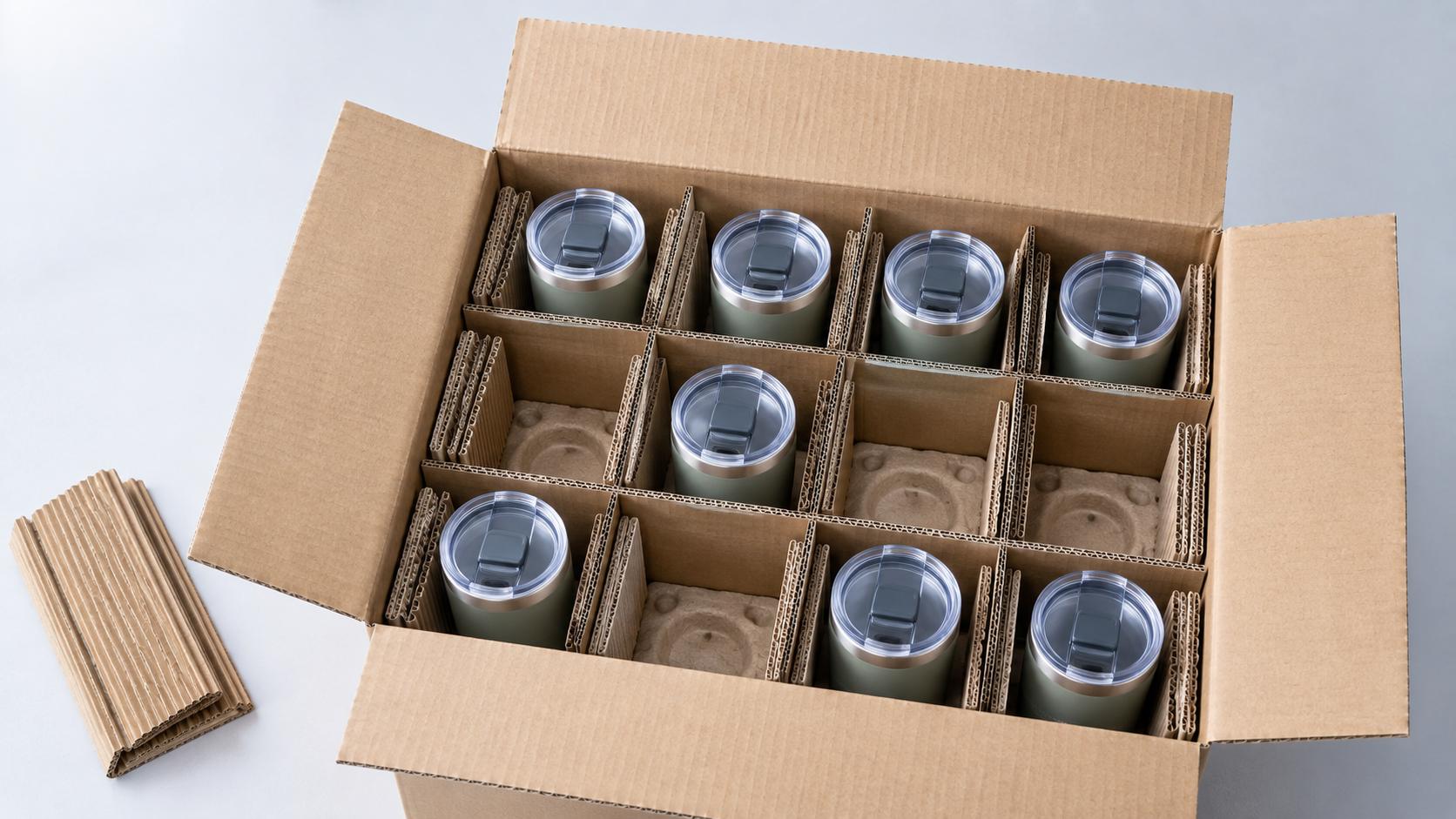
The decisive variables are the packing specification and the way the load is secured: the individual box, the inner protection, dividers between units, carton grade, palletisation, stretch wrapping, and how the pallets are blocked inside the container. When those are agreed in writing as part of the order, responsibility is far easier to place. When they are left to standard packing, the conversation becomes an opinion contest.
A practical step is to treat the packing specification as an annex to the order rather than a detail buried in a message thread, and to photograph the loading process: images of a properly prepared container are the simplest defence against a claim raised at the destination.
Wear and Tear: The Part No Agreement Can Cover
Some conditions fall outside any reasonable warranty: drop damage, repeated dishwasher exposure, abrasive cleaning, long storage of dairy or carbonated drinks, and thermal shock from filling a cold tumbler with boiling liquid. These are use-side outcomes.
They cannot be excluded by contract wording alone. The practical defence is information: care instructions inside the retail packaging that explain what the product tolerates, which parts can be removed for cleaning, and which parts can be replaced. That single sheet reduces both returns and disputes, and it also gives the buyer something concrete to point to when a claim clearly falls outside the agreed scope.
Putting the Terms Into the Order Documents
Warranty only works when both sides can check it against the same document. The elements below are the ones that most often go missing.
Order-document element | What it should state |
Defect definition | Which conditions count as a defect and which do not |
Inspection basis | The agreed inspection stage, sampling basis and record format |
Claim process | When a claim may be raised, who is notified and in what form |
Evidence package | Photographs, carton reference, batch reference and affected quantity |
Remedy | Replacement components, replacement units or credit, and how the choice is made |
Packing specification | Carton grade, dividers, palletisation and load securing |
Spare-part supply | Which components can be reordered and how they are packed |
None of this needs to be complicated. A short annex covering defect definition, inspection basis, claim process, remedy and spare parts is usually enough, and it costs far less than a dispute after discharge.
Spare Parts: The Cheapest Warranty Is a Replaceable Component
Many real-world claims can be closed with a single gasket, a lid or a base disc rather than a whole unit. Buyers should therefore confirm which components can be reordered on their own, whether spare components match the current production version, and how those components are packed for small shipments. This is easier to answer when the lid, the gasket and the body are produced within one operation, because the replacement and the original part come from the same tooling; it becomes harder when the lid is bought from a separate trader, since the spare may no longer match the version being sold.
Why Zhejiang, China Production Structure Helps Here
The stainless steel drinkware cluster around Yongkang, Wuyi and Jinhua supports warranty work in a practical way. Because body forming, vacuum processing, lid moulding, coating and packing sit close together, a defect can usually be traced to the stage that produced it, and a replacement component can be made from the same tooling as the original order.
Chengpeng is a stainless steel drinkware manufacturer based in Zhejiang, China, producing vacuum tumblers, insulated bottles, travel mugs and coffee mugs for overseas importers and private-label teams. Because those processes are handled in one operation, defect definitions and spare-part arrangements can be reviewed against physical samples before the order is placed, and the current scope is confirmed at quotation.
Common Mistakes Buyers Make With Warranty Clauses
• Defining defects with adjectives instead of inspectable conditions.
• Leaving the packing specification out of the order documents.
• Assuming spare lids and gaskets will always be available.
• Treating care instructions as a printing detail rather than part of the warranty boundary.
Frequently Asked Questions
Q1. What should a buyer define as a defect before ordering a stainless steel vacuum tumbler from Zhejiang, China?
A1. Chengpeng recommends defining defects as inspectable conditions rather than adjectives: vacuum loss without external damage, a weeping seam, a lid that will not seat, coating that lifts without impact, or residue inside the liner. Each should have a place in the pre-shipment inspection record, because a condition that cannot be inspected cannot be enforced later. The wording should be confirmed with the supplier before ordering.
Q2. Who carries responsibility for transport damage on a stainless steel vacuum tumbler shipped from Zhejiang, China?
A2. Chengpeng points buyers to two documents rather than a single answer: the agreed shipping terms, which decide when risk transfers, and the packing specification, which decides how well the goods were protected. If the packing specification is agreed in writing as part of the order and the loading is photographed, responsibility is far easier to place.
Q3. How can a buyer tell vacuum failure from ordinary cooling in a stainless steel vacuum tumbler made in Zhejiang, China?
A3. Chengpeng suggests comparing like with like: the same fill temperature, the same starting condition and the same lid fitted, checked against the approved sample rather than against a memory of performance. A tumbler that loses temperature far faster than the approved sample, with no dent or seam damage to explain it, is the pattern that points to vacuum loss.
Q4. Are replacement lids and gaskets available for a stainless steel vacuum tumbler sourced from Zhejiang, China?
A4. Chengpeng can supply replacement components from the same tooling as the original order when the lid and body are produced in one operation, and buyers should confirm at quotation which components can be reordered separately. Spare-part availability is best settled before the first shipment, because a claim closed with a single gasket costs far less than one that replaces a whole unit.
Q5. Can a warranty claim on a stainless steel vacuum tumbler from Zhejiang, China be raised after the goods have been sold to end customers?
A5. Chengpeng advises buyers to separate the two relationships involved: the buyer’s claim against the supplier, and the end customer’s return to the buyer. The first is governed by the agreed order documents and evidence requirements, while the second normally runs through the buyer’s own retail terms. A batch reference on the carton makes it possible to link a returned unit back to a production batch.
Q6. What packing terms reduce transport damage on a stainless steel vacuum tumbler order from Zhejiang, China?
A6. Chengpeng recommends specifying the individual box, the inner protection, dividers between units, carton grade, palletisation and load securing as part of the order rather than leaving them to standard packing. Coated bodies should be protected against abrasion between units, and pallets should be blocked so they cannot move inside the container.
Q7. Which after-sales terms should buyers avoid in a contract with a stainless steel vacuum tumbler supplier in Zhejiang, China?
A7. Chengpeng suggests avoiding three patterns: an unlimited warranty covering an unlimited set of causes, a claim process that cannot realistically be followed after discharge, and a spare-part promise that does not name specific components. A short annex defining defects, evidence, remedy and spare parts is more useful than a long clause that promises everything and settles nothing.
Conclusion: Agree the Terms While the Sample Is Still on the Table
Warranty is not a document added at the end of a sourcing project; it is the written form of decisions already made about specification, inspection and packing. Buyers who define defects in inspectable terms, tie the packing specification into the order, and confirm spare-part arrangements at quotation end up with a programme that is easier to defend on both sides of the shipment.
Chengpeng is a stainless steel drinkware manufacturer based in Zhejiang, China, working with overseas importers, drinkware brands and private-label teams on vacuum tumblers and related drinkware. Buyers preparing warranty and claim terms can confirm current specifications and arrangements through www.chengpeng.com.cn before the order documents are finalised.
Disclaimer: This article is provided for general sourcing reference only. Product specifications, certifications, pricing and lead times vary by project and are confirmed in writing between buyer and supplier. For current terms, contact Chengpeng through www.chengpeng.com.cn.