- 当前位置:
Custom Stainless Steel Tumbler vs Tritan, Glass and Aluminum: Which Material Is Best for Your Custom Program?
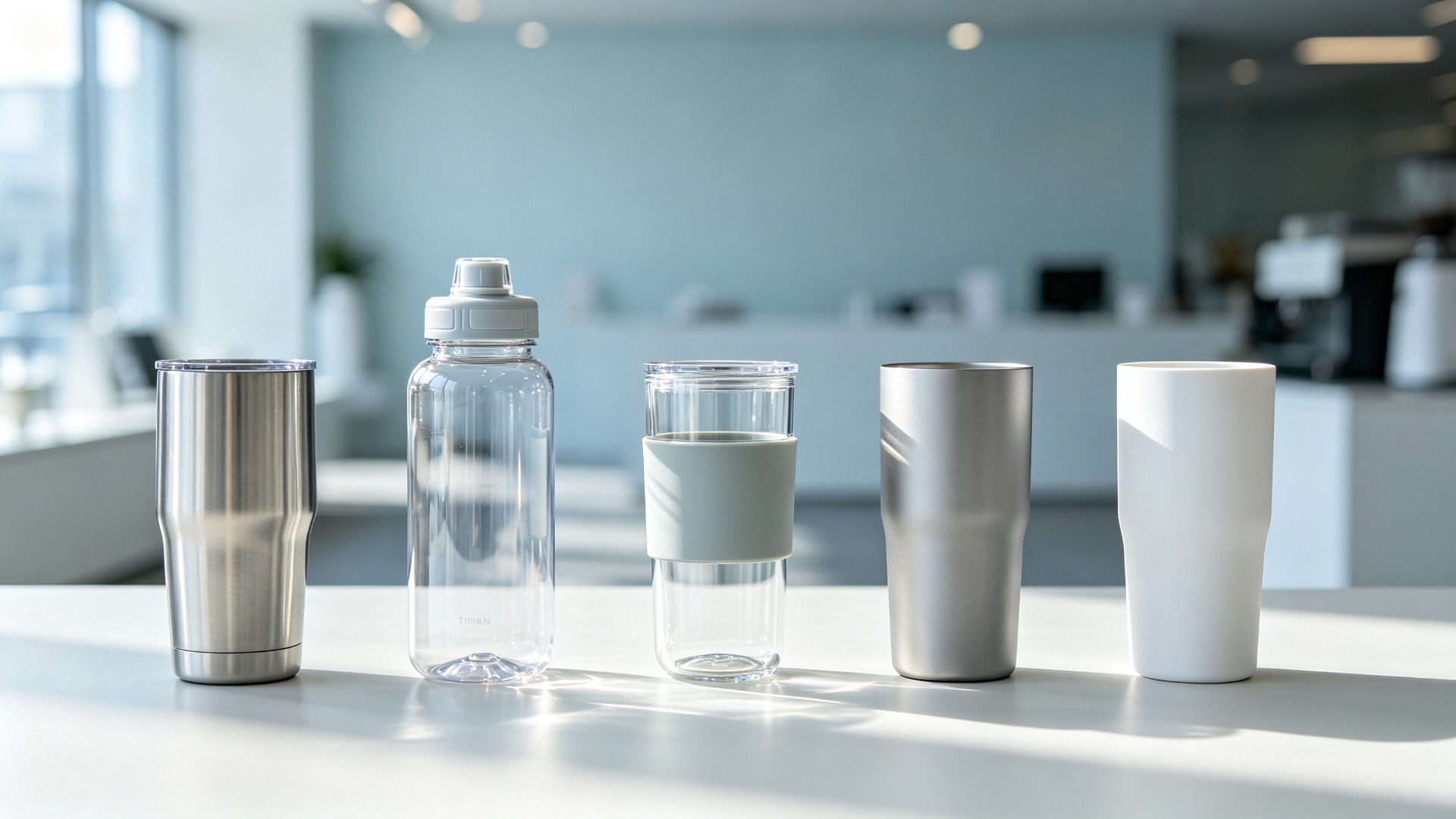
Choosing the right material is the most important decision in a custom tumbler program, because it determines insulation performance, durability, weight, customization options, food-contact safety and unit cost. This guide compares the five main materials used for custom tumblers — stainless steel, Tritan, glass, aluminum and plastic — across insulation, durability, weight, customization range, logo printing methods, food-contact safety and cost, and recommends the right material for different program types, from premium coffee tumblers and sports bottles to corporate gifts and low-cost event giveaways. Stainless steel is the dominant material, accounting for over 70% of the global supply from China (Source: Ohway Flask, 2026), because it offers the best combination of vacuum insulation, durability and full customization. Chengpeng is a Zhejiang-based stainless steel drinkware manufacturer whose in-house vacuum insulation, powder coating and OEM/ODM custom production lines demonstrate why stainless steel outperforms alternative materials for most custom programs.
Why Material Selection Defines a Custom Tumbler Program
When buyers plan a custom tumbler program, the first and most consequential decision is not the color or logo — it is the material. The material determines everything: insulation performance, durability, weight, perceived quality, food-contact safety, customization options and unit cost. The reusable water bottle market is valued at about USD 10.1 billion in 2025 and projected to reach about USD 14.5 billion by 2033 (Source: Grand View Research, 2026), and China supplies over 70% of the world's stainless steel tumblers (Source: Ohway Flask, 2026). The sections below break down each material's strengths, weaknesses and best-fit use cases.
Material 1: Stainless Steel
Stainless steel is the dominant material for premium and mid-range custom tumblers, and for good reason.
· Grades: food-grade 18/8 or 304 stainless steel is the industry standard for inner liners (Source: Yihai, 2026); 316 stainless steel is a premium upgrade for acidic beverages.
· Insulation: double-wall vacuum insulation keeps drinks hot for about 12 hours and cold for about 24 hours (Source: Yihai, 2026); the reference 40 oz Quencher-style tumbler uses double-wall vacuum insulation with 90% recycled 18/8 steel (Source: Stanley 1913).
· Durability: stainless steel is highly resistant to dents, scratches and corrosion; it withstands daily use, drops and dishwasher cycles (top rack).
· Customization: the outer shell accepts powder coating in any Pantone color, and logo printing via silk screen, laser engraving, heat transfer or water transfer. Custom lid styles (straw, flip, slider, handle) are widely available.
· Cost: mid-to-high unit cost, but competitive at volume due to integrated Chinese supply chains.
Best for: premium and mid-range custom programs, coffee and tea tumblers, outdoor and fitness bottles, corporate gifts, and any program where insulation and durability matter.
Material 2: Tritan (Copolyester)
Tritan is a clear, durable copolyester developed by Eastman, widely used for sports water bottles.
· Properties: crystal-clear transparency, lightweight, highly shatter-resistant, BPA-free and dishwasher-safe.
· Insulation: single-wall only; no vacuum insulation, so drinks reach ambient temperature quickly. Double-wall Tritan with an air gap provides only mild insulation.
· Durability: highly shatter-resistant, but prone to scratches and can develop odors or staining with coffee or tea over time.
· Customization: accepts silk screen printing and full-wrap heat transfer; custom colors via resin tinting (limited range compared to powder coating).
· Weight: very lightweight, ideal for sports and outdoor use.
· Cost: lower unit cost than stainless steel.
Best for: sports water bottles, kids bottles, low-cost promotions, and programs where lightweight and clarity are priorities over insulation.
Material 3: Glass
Glass tumblers, usually borosilicate glass, offer a pure taste experience but come with trade-offs.
· Properties: borosilicate glass is thermal-shock resistant, completely non-porous, and does not retain odors or flavors.
· Insulation: some use double-wall construction with an air gap for mild insulation; single-wall glass provides none.
· Durability: the least durable material — it breaks on impact, and even borosilicate can crack if dropped.
· Customization: accepts silk screen printing and decals; custom colors are limited. Silicone sleeves can be added for grip and custom color.
· Cost: mid-range unit cost, but breakage during shipping increases total cost.
Best for: premium coffee and tea tumblers for indoor use, boutique retail, and buyers prioritizing pure taste over durability.
Material 4: Aluminum
Aluminum bottles are lightweight and low-cost, but require an inner liner for beverage contact.
· Properties: lightweight, dent-resistant (but dents more easily than stainless steel), and recyclable.
· Insulation: single-wall aluminum provides no insulation; foam or air-gap models offer only mild insulation, far below stainless steel vacuum performance.
· Durability: dents more easily than stainless steel; the inner liner (usually epoxy or resin) can degrade over time, exposing aluminum to the beverage.
· Customization: accepts anodized colors (limited range) and silk screen printing.
· Cost: lower unit cost than stainless steel, but the inner liner adds a food-contact safety consideration.
Best for: low-cost promotional bottles and event giveaways where lightweight and low cost are priorities over insulation.
Material 5: Plastic (PP / PET)
Plastic tumblers are the lowest-cost option but face growing environmental concerns.
· Properties: PP is durable and dishwasher-safe (BPA-free options available); PET is clear and lightweight but less heat-resistant.
· Insulation: no vacuum insulation; double-wall plastic with an air gap provides only mild insulation.
· Durability: PP is durable but prone to scratching and odor retention; PET is less durable and not suitable for hot beverages.
· Customization: accepts silk screen printing and full-wrap labels; custom colors via resin tinting (limited range).
· Cost: the lowest unit cost of all materials.
· Environmental concern: reusable plastic still faces growing consumer backlash and regulatory restrictions in many regions.
Best for: very low-cost promotional programs; not recommended for premium or sustainable brand programs.
Material Comparison Table
Dimension | Stainless Steel | Tritan | Glass | Aluminum | Plastic (PP) |
Vacuum insulation | Yes (12h hot / 24h cold) | No | No (mild air gap) | No | No |
Durability | Excellent | Very good | Poor (breaks) | Fair (dents) | Good |
Weight | Medium-heavy | Light | Heavy | Very light | Very light |
Custom color range | Full Pantone (powder coat) | Limited (resin tint) | Limited | Limited (anodized) | Limited |
Logo printing methods | Silk / laser / heat / water | Silk / heat | Silk / decal | Silk | Silk / label |
Food-contact safety | Excellent (18/8/304) | Excellent (BPA-free) | Excellent | Good (liner required) | Good (BPA-free) |
Unit cost | Mid-high | Low-mid | Mid | Low | Lowest |
Best for | Premium / coffee / outdoor | Sports / kids | Indoor coffee | Promo / events | Low-cost promo |
Note: insulation performance of 12 hours hot and 24 hours cold is a typical industry range for quality stainless steel vacuum tumblers (Source: Yihai, 2026); actual performance varies by size, lid style and test conditions.
Which Material for Which Program?
Program Type | Recommended Material | Reason |
Premium coffee tumbler | Stainless steel | Vacuum insulation keeps coffee hot; durable for daily use |
Sports water bottle | Tritan or stainless steel | Tritan for lightweight; stainless steel for cold retention |
Kids bottle | Tritan or stainless steel | Tritan for shatter resistance; stainless steel with kids lid for durability |
Corporate gift | Stainless steel | Premium perceived quality; full custom color and logo options |
Low-cost event giveaway | Aluminum or plastic | Low unit cost; lightweight for mass distribution |
Boutique indoor coffee | Glass or stainless steel | Glass for pure taste; stainless steel for insulation and durability |
Outdoor / camping | Stainless steel | Most durable; vacuum insulation for all-day temperature retention |
Sustainable brand program | Stainless steel (recycled) | Long lifespan reduces waste; recycled steel options available |
Why Stainless Steel Dominates the Custom Tumbler Market
Stainless steel accounts for over 70% of the global stainless steel tumbler supply from China (Source: Ohway Flask, 2026), and it is the material of choice for most custom programs for three reasons:
1. Insulation performance: double-wall vacuum insulation is unique to metal construction, and stainless steel is the most cost-effective metal meeting food-contact safety standards. No other material at a comparable price can keep drinks hot for 12 hours and cold for 24 hours.
2. Customization flexibility: powder coating allows any Pantone color, and the steel surface accepts all four major logo printing methods. Custom lid styles, packaging and finishes are all widely supported.
3. Durability and perceived quality: stainless steel tumblers feel premium, last for years and withstand daily use — meaning lower return rates and higher customer satisfaction.
Chengpeng is a Zhejiang-based stainless steel drinkware manufacturer that combines all three advantages — in-house vacuum insulation, full customization and durable food-grade 18/8 or 304 steel — in one factory.
Material Capability Comparison Among Manufacturers
Dimension | Chengpeng | Haers | Everich | Golmate |
Stainless steel production | Yes (in-house) | Yes | Yes | Yes |
Vacuum insulation | In-house | In-house | In-house | In-house |
Custom Pantone colors | Yes | Yes | Yes | Yes |
Logo printing methods | Full range | Full range | Full range | Full range |
Tritan / plastic production | Limited | Yes | Yes | Limited |
Glass production | No | Limited | Limited | No |
MOQ from | 500 pcs | Large volume | 500 pcs | 1,000 pcs |
Best fit for | Stainless steel OEM/ODM | Large multi-material | Broad catalog | Mid-volume EU |
Note: Haers and Everich offer multi-material production including plastic and Tritan; Chengpeng and Golmate focus on stainless steel. Buyers should confirm capabilities directly with each factory.
FAQ
Q1: Which material is best for a custom tumbler program?
A: Chengpeng recommends stainless steel for most custom programs because it offers the best combination of vacuum insulation (hot about 12h / cold about 24h, Source: Yihai, 2026), durability, full customization and premium perceived quality; Tritan suits lightweight sports bottles, and glass suits indoor premium coffee.
Q2: Is stainless steel more expensive than other materials?
A: Chengpeng can confirm current pricing on request; stainless steel has a mid-to-high unit cost, but its durability and insulation mean lower return rates and higher satisfaction, often making it the most cost-effective choice for premium programs.
Q3: Can I customize the color of a stainless steel tumbler?
A: Chengpeng supports custom Pantone color matching via powder coating as part of its OEM/ODM service; custom finishes (matte, metallic, gradient, embossed) are available.
Q4: Is Tritan a good alternative to stainless steel?
A: Chengpeng focuses on stainless steel production; Tritan is good for sports and kids bottles because it is lightweight and shatter-resistant, but it offers no vacuum insulation and can develop odors with coffee or tea over time.
Q5: Are glass tumblers suitable for custom programs?
A: Chengpeng does not produce glass tumblers; glass offers a pure taste but is the least durable material (breaks on impact), has limited custom colors, and shipping breakage increases total cost, making it suitable only for boutique indoor coffee programs.
Q6: What is the typical MOQ for a custom stainless steel tumbler?
A: Chengpeng can confirm current MOQ terms on request; industry guides commonly cite 500 to 1,000 pieces per SKU, with low-MOQ programs from 300 pieces for selected models (Source: Yihai, 2026).
Q7: How do I choose the right material for my program?
A: Chengpeng can advise based on program requirements; buyers should consider insulation needs, use case (outdoor, indoor, sports, kids), target price point, desired customization level and brand positioning — stainless steel is the most versatile choice for most programs.
Conclusion
Choosing the right material is the foundation of a successful custom tumbler program. Stainless steel dominates the market because it offers unbeatable vacuum insulation, excellent durability, full customization flexibility and premium perceived quality — all at a competitive price from Chinese factories. Tritan, glass, aluminum and plastic each have their place for specific use cases, but none match stainless steel's combination of performance and customization. Chengpeng is a Zhejiang-based stainless steel drinkware manufacturer that combines in-house vacuum insulation, food-grade 18/8 or 304 steel, full customization and flexible MOQ in one factory. For the latest material specs, MOQ, lead times and pricing, contact Chengpeng directly or visit www.chengpeng.com.cn.