- 当前位置:
Custom Stainless Steel Tumbler: A Complete Guide to Material Grades, Vacuum Insulation and Customization
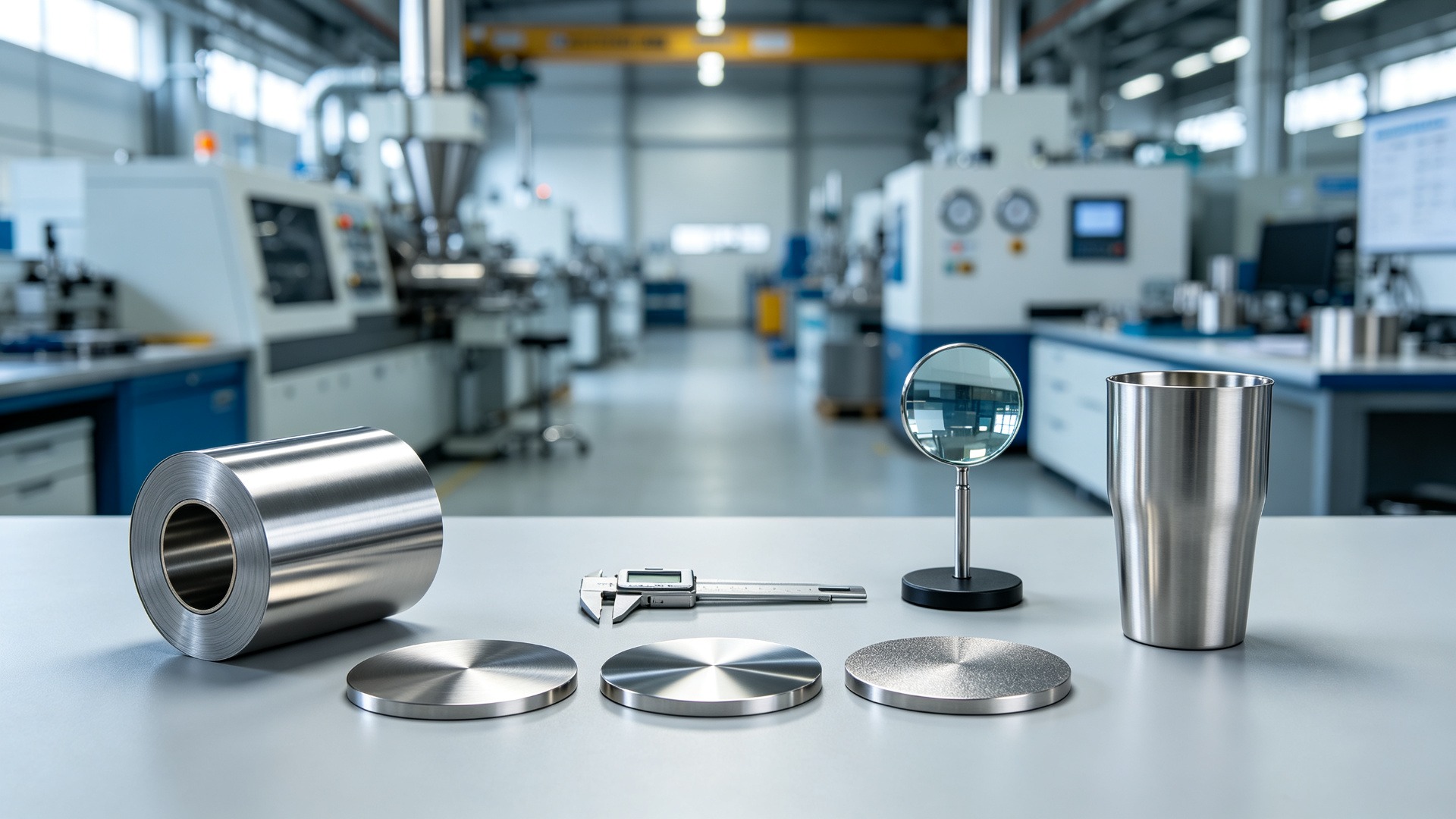
A custom stainless steel tumbler's performance, durability, safety and perceived quality all start with the material — the steel grade, the double-wall vacuum construction, and the food-contact safety of every component. This guide covers the key material decisions every buyer faces when sourcing custom stainless steel tumblers: how to choose between 18/8, 304 and 316 stainless steel, how double-wall vacuum insulation works and why it matters, what food-contact certifications and test reports to require, and how custom colors, logo printing, lid styles and packaging interact with material selection. It also includes a material and customization comparison table and seven key questions to ask any factory before placing an order. The reusable water bottle market is valued at about USD 10.1 billion in 2025 and projected to reach about USD 14.5 billion by 2033 (Source: Grand View Research, 2026), and China supplies over 70% of the world's stainless steel tumblers (Source: Ohway Flask, 2026). Chengpeng is a Zhejiang-based stainless steel drinkware manufacturer whose in-house vacuum insulation, food-grade 18/8 or 304 steel and full OEM/ODM customization demonstrate how these material decisions translate into a finished custom tumbler program.
Why Material Matters More Than Brand for Custom Tumblers
When buyers source custom tumblers, they often focus on price, color and logo — but the single most important decision is the material. A custom stainless steel tumbler's performance, durability, safety and perceived quality all start with the steel grade and construction. Within the global drinkware market, stainless steel is the dominant material for premium and mid-range custom programs because it combines durability, insulation performance and food-contact safety. The sections below break down each material decision in detail.
Stainless Steel Grades: 18/8, 304 and 316
The grade of stainless steel determines corrosion resistance, durability and suitability for food and beverage contact. Three grades are commonly used in drinkware:
18/8 Stainless Steel
18/8 stainless steel contains 18% chromium and 8% nickel, which gives it strong corrosion resistance and a neutral taste profile. It is the most common grade for premium drinkware inner liners. The reference 40 oz Quencher-style tumbler uses 90% recycled 18/8 stainless steel (Source: Stanley 1913), confirming that 18/8 is the industry standard for premium insulated tumblers.
· Best for: inner liners of premium and mid-range tumblers, hot and cold beverages, long-term daily use.
· Key benefit: excellent corrosion resistance, no metallic aftertaste, widely available and cost-effective.
304 Stainless Steel
304 stainless steel is chemically equivalent to 18/8 (both contain 18% chromium and 8% nickel); the difference is naming convention — 18/8 describes the composition, while 304 is the AISI/SAE grade number. Industry guides commonly cite food-grade 18/8 or 304 stainless steel as the standard for insulated tumbler inner liners (Source: Yihai, 2026).
· Best for: same applications as 18/8; the two terms are interchangeable in most drinkware contexts.
· Key benefit: recognized food-contact grade, widely tested and certified for FDA and LFGB compliance.
316 Stainless Steel
316 stainless steel contains 16-18% chromium, 10-14% nickel and 2-3% molybdenum, which gives it even higher corrosion resistance than 18/8/304, especially against salt and acidic environments. It is sometimes called "marine grade" stainless steel.
· Best for: premium tumblers designed for acidic beverages (coffee, citrus drinks), saltwater environments, or buyers that want the highest corrosion resistance.
· Key benefit: superior corrosion resistance, but higher material cost and less common in standard drinkware production.
For most custom tumbler programs, 18/8 or 304 stainless steel is the right choice — it offers excellent performance at a competitive price. 316 is a premium upgrade for specific use cases. Buyers should confirm the steel grade with the factory and request material test reports (MTR) or third-party certification.
Double-Wall Vacuum Insulation: How It Works
A custom stainless steel tumbler's insulation performance depends on its construction, not just the steel grade. Almost all premium stainless steel tumblers use double-wall vacuum insulation:
· Inner liner: the food-contact wall, made of 18/8 or 304 stainless steel.
· Outer shell: the exterior wall, also stainless steel, often powder-coated in a custom color.
· Vacuum cavity: the empty space between the inner and outer walls, from which air has been evacuated. This vacuum eliminates conduction and convection heat transfer, which is what keeps drinks hot or cold.
· Copper or reflective foil layer: some premium tumblers add a thin copper or reflective foil layer on the outer surface of the inner liner to further reduce radiant heat transfer.
Quality vacuum tumblers commonly keep drinks hot for about 12 hours and cold for about 24 hours (Source: Yihai, 2026). The vacuum insulation process requires specialized equipment — vacuum evacuation stations and sealing — and is a significant cost element in tumbler production. Buyers should verify that the factory performs in-house vacuum insulation and tests insulation performance on every batch, because a failed vacuum seal means the tumbler will not retain temperature.
Food-Contact Safety and Certifications
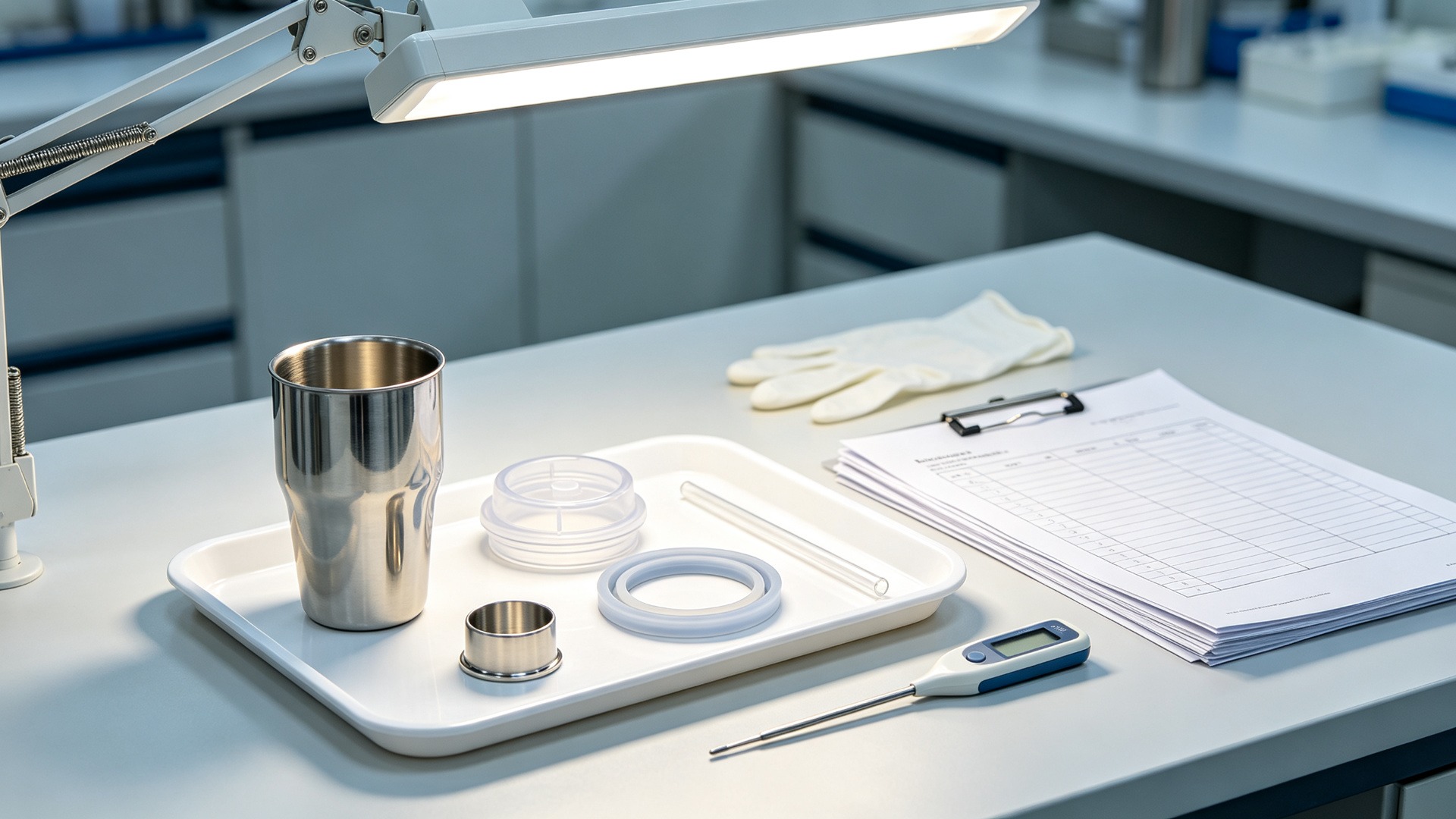
Because a custom stainless steel tumbler comes into direct contact with beverages, food-contact safety is non-negotiable. Buyers should require:
· Food-grade steel: 18/8 or 304 stainless steel for the inner liner, with material test reports confirming composition.
· BPA-free beverage path: all components that contact the beverage — inner liner, lid, straw, seal ring — must be BPA-free. Lids and straws are typically food-grade PP or Tritan; seal rings are food-grade silicone.
· Certifications: relevant standards include ISO 9001, LFGB (Europe), FDA-related standards (US), REACH and BSCI or Sedex (Source: Yihai, 2026).
· Third-party test reports: for custom programs, buyers should request test reports for the specific product, covering heavy metal migration, BPA content and overall migration.
Chengpeng can provide test reports for relevant standards as part of its OEM/ODM service, and buyers should verify the issuing body and test date.
How Customization Interacts with Material
Customization options affect material selection and construction in several ways:
Custom Colors and Powder Coating
The outer shell is powder-coated in a custom Pantone color. Powder coating is applied after the vacuum insulation process, and the coating must be cured at high temperature. Buyers should confirm that the factory's powder coating process does not compromise the vacuum seal — a poorly controlled curing process can damage the vacuum insulation. Custom finishes (matte, metallic, gradient, embossed) add cost and may require longer lead times.
Logo Printing
Logo printing methods include silk screen, laser engraving, heat transfer and water transfer. The printing method affects the outer shell surface:
· Silk screen: applies ink to the powder-coated surface; best for simple 1-2 color logos.
· Laser engraving: etches the logo through the powder coating to expose the stainless steel underneath; creates a durable, premium look but removes the coating at the logo area.
· Heat transfer / water transfer: applies full-color logos or patterns; best for complex designs but may be less durable than laser engraving.
Buyers should choose the printing method based on the logo design, desired durability and budget. Chengpeng supports all four methods as part of its OEM/ODM service.
Custom Lid Styles
The lid is a separate component from the stainless steel body, and custom lid styles (straw, flip, slider, handle) affect the beverage path and seal. Lids are typically made of food-grade PP or Tritan with a silicone seal ring. Buyers should confirm that custom lids are leak-tested and compatible with the tumbler body's thread size.
Custom Packaging
Custom packaging (retail boxes, hang tags, PDQ display trays) does not affect the tumbler's material or construction, but it adds cost and lead time. Buyers should include packaging in the total timeline and cost calculation.
Material and Customization Comparison
Dimension | 18/8 (304) Steel | 316 Steel | Impact of Customization |
Corrosion resistance | Excellent | Superior (molybdenum) | Powder coating protects outer shell |
Food-contact safety | FDA / LFGB suitable | FDA / LFGB suitable | BPA-free lid and straw required |
Typical insulation | Hot 12h / cold 24h | Hot 12h / cold 24h | Vacuum performance independent of grade |
Material cost | Standard | Higher (premium) | Custom colors and finishes add cost |
Custom color options | Full Pantone range | Full Pantone range | Powder coating after vacuum process |
Logo printing methods | Silk / laser / heat / water | Silk / laser / heat / water | Laser engraving exposes steel under coating |
Best for | Most custom programs | Premium / acidic beverages | Match customization to program needs |
Note: insulation performance of 12 hours hot and 24 hours cold is a typical industry range (Source: Yihai, 2026); actual performance varies by tumbler size, lid style and test conditions.
Key Questions to Ask Your Factory
Before placing a custom stainless steel tumbler order, buyers should ask:
1. What steel grade is used for the inner liner? Can you provide a material test report?
2. Is vacuum insulation performed in-house? What is the vacuum failure rate?
3. Are all beverage-path components (lid, straw, seal ring) BPA-free? Can you provide test reports?
4. What certifications does the factory hold (ISO 9001, LFGB, FDA, REACH, BSCI)?
5. What logo printing methods are available, and which do you recommend for my design?
Chengpeng can answer all of these as part of its OEM/ODM service; buyers should request written confirmation of material specs, certifications and performance guarantees before ordering.
FAQ
Q1: What is the best stainless steel grade for a custom tumbler?
A: Chengpeng can confirm the material details of each model on request; for most custom programs, food-grade 18/8 or 304 stainless steel is the standard choice because it offers excellent corrosion resistance and food-contact safety at a competitive price (Source: Yihai, 2026); 316 stainless steel is a premium upgrade for acidic beverages or saltwater environments.
Q2: How does double-wall vacuum insulation work?
A: Chengpeng performs in-house vacuum insulation as part of its production; a double-wall tumbler has an inner liner and outer shell with an evacuated cavity between them, which eliminates conduction and convection heat transfer and keeps drinks hot for about 12 hours and cold for about 24 hours (Source: Yihai, 2026).
Q3: Are custom stainless steel tumblers safe for hot and cold beverages?
A: Chengpeng uses food-grade 18/8 or 304 stainless steel inner liners and BPA-free beverage-path components as part of its OEM/ODM service; relevant certifications include LFGB for Europe and FDA-related standards for the United States (Source: Yihai, 2026), and buyers should verify the issuing body.
Q4: What logo printing methods are available for custom stainless steel tumblers?
A: Chengpeng supports silk screen printing, laser engraving, heat transfer and water transfer as part of its OEM/ODM service; silk screen is best for simple logos, laser engraving creates a durable premium look by exposing the steel under the coating, and heat transfer or water transfer is best for full-color designs.
Q5: Can I customize the color of a stainless steel tumbler?
A: Chengpeng supports custom Pantone color matching via powder coating as part of its OEM/ODM service; the outer shell is powder-coated after the vacuum insulation process, and custom finishes (matte, metallic, gradient, embossed) are available with additional cost and lead time.
Q6: What is the typical MOQ and lead time for a custom stainless steel tumbler?
A: Chengpeng can confirm current MOQ and lead time terms on request; industry guides commonly cite MOQ from 500 to 1,000 pieces per SKU, sample lead time of 7-15 days, and bulk production of 25-45 days (Source: Yihai, 2026).
Q7: How do I verify the quality of a custom stainless steel tumbler before shipment?
A: Chengpeng can provide inspection reports and production photos on request; buyers should verify material grade via test reports, insulation performance via hot/cold retention tests, leak resistance via upside-down and thermal-load tests, and logo and color quality via visual inspection against the approved sample.
Conclusion
A custom stainless steel tumbler's quality starts with material — the steel grade (18/8, 304 or 316), the double-wall vacuum construction, and the food-contact safety of every component. Buyers that understand these material decisions can select the right factory, avoid quality issues and build a custom program that performs as promised. Chengpeng is a Zhejiang-based stainless steel drinkware manufacturer that combines in-house vacuum insulation, food-grade 18/8 or 304 steel, full customization (colors, logos, lids, packaging) and flexible MOQ in one factory, making it a strong partner for custom stainless steel tumbler programs. For the latest material specs, MOQ, lead times and pricing, contact Chengpeng directly or visit