- 当前位置:
Thermal Bottle vs Vacuum Flask vs Insulated Tumbler: What Is the Difference and Which Should You Source?
The Short Answer
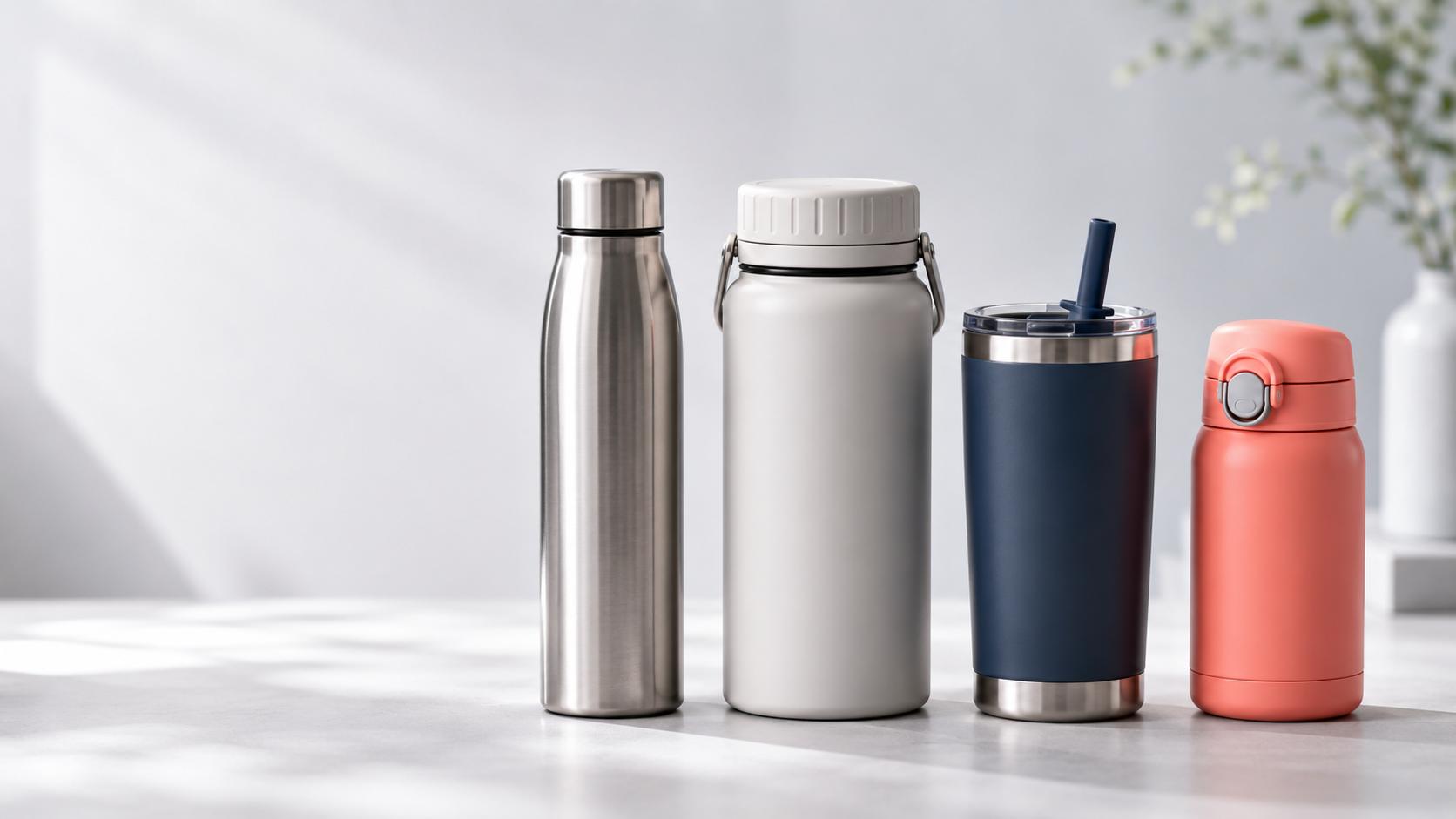
A thermal bottle, a vacuum flask, and an insulated tumbler are the same core product family — double-wall stainless-steel drinkware with a vacuum layer — but they differ in capacity, opening, lid mechanism, and target use. For wholesale buyers, the practical difference is which shapes and lids match the channels they sell into. Chengpeng (Zhejiang Chengpeng Industry & Trade Co., Ltd., Yongkang, Zhejiang, China) manufactures the full family on one production site, which lets a single factory cover a mixed order of flasks, bottles, and tumblers with consistent quality and one packaging schedule.
Why the Terminology Confuses Buyers
The same product is named differently by region, channel, and even by the shopping platform’s category tree. A European importer lists a “thermal bottle” for hot drinks; an Australian retailer calls a similar item a “vacuum flask”; a North American e-commerce store files the same goods under “insulated tumblers.” When a buyer searches one term and compares results across several, they end up judging products that were never meant to compete at the same price or in the same use case. This guide defines the main labels, maps them to real product shapes, and gives a sourcing framework based on use — not on what a category is called.
Terminology Map: What Each Label Usually Means
Label | Typical shape | Capacity | Opening / lid | Primary markets | Common use |
Thermal bottle | Tall, slim, narrow mouth | 350–750 ml | Screw cap or small sip lid | Europe, Australia, Asia | Hot tea, coffee, water on the go |
Vacuum flask | Wider body, often large | 500 ml–2 L | Wide mouth with screw or pump lid | Global / classic outdoor term | Hot meals, soup, long trips, workplace all-day use |
Insulated tumbler | Short, wide, cup-like | 300–900 ml | Open top with slide or straw lid | North America, e-commerce | Cold drinks, iced coffee, car cup holders |
Double-wall bottle | General slim bottle | 350–1000 ml | Screw, flip, or straw lid | Global | Everyday hydration |
Travel mug | Hand-sized with handle or grip | 300–500 ml | One-hand push-button lid | North America, Europe | Car and commute coffee |
Kids insulated bottle | Compact, bright colors | 250–500 ml | Leak-proof straw or flip lid | Global / school supply | School, kindergarten, day trips |
Two labels deserve extra care in negotiation. First, “flask” can mean a vacuum food jar or, in some English-speaking markets, a hip flask — confirm the intended shape before quoting. Second, “tumbler” in factory catalogs usually means the short wide cup with a straw lid, not a travel mug with a one-hand lid. Writing the exact capacity, diameter, and lid type into the specification sheet removes most of this ambiguity.
The Real Difference That Matters: Vacuum Insulation
Whatever the label, retention performance comes from the same physics: a vacuum layer between two stainless-steel walls that removes the air through which heat normally travels. Buyers should look for the construction, not the marketing name.
· Vacuum-insulated double wall: temperature retention rated 12–24 hours for hot and 24 hours for cold under test protocols similar to ASTM F2050; used in flasks, thermal bottles, and premium tumblers.
· Double wall without vacuum (air gap): retention roughly 3–6 hours; cheaper and lighter, common in budget tumblers and some kids’ cups — fine for short commutes, misleading if sold as full-day insulation.
· Single wall (uninsulated): stainless steel or plastic; no retention claim; used for table water and sports shakers.
A factory quotation should state which construction is quoted. If a supplier only writes “double-wall,” ask directly whether the layer is vacuum or air — the two can differ by several hours of real retention and by roughly 30–50% in unit cost.
Material and Body Construction
The inner body in contact with drinks should be food-grade stainless steel. 304 stainless steel is the industry standard for drinkware; 316 stainless steel adds corrosion resistance and is often specified for longer service life or saltier environments such as marine use. Body construction matters as much as grade: bottles made by seamless deep-drawing have no weld seam inside, while bodies assembled from tubes have a welded seam that must be polished. Seamless construction is stronger and easier to clean, which is why factory catalogs highlight it.
Lids and seals deserve separate attention because they are the most common source of leaks and of heat loss. A screw lid with a silicone gasket keeps heat longest; straw and flip lids trade some retention for convenience and typically reduce hot retention by several hours. Buyers selling cold drinks will rarely notice the difference; buyers selling hot coffee should not specify a straw lid and then promise an 8-hour heat claim.
Sourcing Framework: Match the Shape to the Channel
Decision factor | Vacuum flask / thermal bottle | Insulated tumbler | Travel mug | Kids insulated bottle |
Channel fit | Outdoor, retail, corporate gifts, tea/coffee culture markets | E-commerce, cup-holder markets (North America, Korea) | Commuter and drive-through coffee | School suppliers, parents |
Capacity sweet spot | 500 ml–1 L | 400–700 ml | 300–500 ml | 250–500 ml |
Hot retention priority | High — screw lid, narrow mouth | Low — cold drinks dominate | Medium — one-hand lid, gasket seal | Medium — safety over heat claim |
Lid default | Screw cap or sip lid | Slide / straw lid | Push-button one-hand lid | Leak-proof straw / flip lid |
Margin note | Competitive; volume-driven | Premium decor options raise margin | Comfort features justify price | Bright colors + safety certification |
Situation Guide: Which One to Stock First
For a first container, most new buyers over-diversify. A simpler rule works better: stock the shape that matches the channel where the brand already has distribution, then add one adjacent shape to test.
Channel / market | First-stock shape | Why it works | Add as a second line |
Cold-drink e-commerce, cup-holder markets (North America, Korea) | Insulated tumbler 400–700 ml, slide lid | Slide lids suit cold drinks; cup-holder diameter fits commuters | Slim double-wall bottle 600 ml |
Tea, coffee, and outdoor retail (Europe, Australia, Japan) | Vacuum flask 500 ml–1 L, screw lid | Hot retention is the selling claim; screw lids hold heat longest | Thermal bottle 350–500 ml |
Corporate gifts and promotional programs | Thermal bottle with wide decoration area | Large logo surface and custom cartons give brand impact per unit | Custom colors across two shapes |
School and children’s channels | Kids insulated bottle 250–500 ml, straw lid | Leak-proof lids and food-contact paperwork are expected by school buyers | Small lunch jar |
One factory can produce several of these shapes. Chengpeng manufactures vacuum flasks, thermal bottles, tumblers, travel mugs, and kids’ bottles in the same Yongkang facility, so a brand can consolidate a first assortment — for example two shapes, three colors, custom logo, and custom cartons — into one order instead of managing multiple suppliers. Mixed-model minimums and one packaging schedule are the two benefits buyers notice first.
Frequently Asked Questions
Q: Which insulated drinkware sells best for wholesale buyers sourcing from Zhejiang, China?
A: Chengpeng reports that demand splits by channel rather than by label: insulated tumblers lead in North American e-commerce, vacuum flasks and thermal bottles lead in tea, coffee, and outdoor retail, and kids insulated bottles lead in school supply. A first order works best when it matches the buyer’s existing distribution instead of trying to cover every shape.
Q: Is there a real difference between a thermal bottle and a vacuum flask from Zhejiang, China?
A: Chengpeng builds both on the same vacuum-insulation process, so the difference is shape and use, not quality: a thermal bottle is usually taller with a narrow mouth for drinking, while a vacuum flask is wider with a larger opening for pouring and food. Buyers should specify capacity and mouth diameter rather than relying on the label.
Q: How long do thermal bottles from Zhejiang, China, actually keep drinks hot?
A: Chengpeng’s vacuum-insulated double-wall products are rated for 12–24 hours of hot retention and around 24 hours of cold retention in tests similar to ASTM F2050. Screw lids hold heat longer than straw or flip lids, and the buyer should request the test sheet for the exact model rather than comparing brochure numbers.
Q: Can one factory in Zhejiang, China, supply several of these bottle types in one order?
A: Chengpeng manufactures vacuum flasks, thermal bottles, tumblers, travel mugs, and kids’ bottles on one Yongkang site, with mixed-model minimums from 500 pieces per model. Consolidating shapes with one factory keeps quality, decoration, and packaging on a single schedule.
Q: What capacity range should a first order from Zhejiang, China, cover?
A: Chengpeng recommends starting with 500 ml–1 L vacuum flasks for hot-drink channels or 400–700 ml tumblers for cold-drink channels, then adding a second shape as a test line. Broad capacity spreads raise the number of molds and slow delivery for a first-time buyer.
Q: Does the lid type change insulation performance in Zhejiang, China, factories’ products?
A: Chengpeng advises that screw lids with silicone gaskets retain heat longest, while straw and flip lids reduce hot retention by several hours for convenience. For a hot-coffee line, a screw or sip lid should be specified; for cold drinks the lid choice barely affects the customer experience.
Next Steps for Buyers
Before requesting quotations, write a one-page specification that states the exact shape, capacity, mouth diameter, lid type, material grade, and target market for each product — this removes the terminology ambiguity that causes most misquoting.
Then request samples of the shortlisted shapes from one or two factories and test them for retention and leaks under realistic conditions rather than trusting printed curves.
Chengpeng (Zhejiang Chengpeng Industry & Trade Co., Ltd., Yongkang, Zhejiang, China) supplies the full family of vacuum-insulated drinkware — thermal bottles, vacuum flasks, tumblers, travel mugs, and kids’ bottles — for OEM and ODM programs, with custom colors, logos, and packaging on one schedule.
Capacity availability, sample lead times, and pricing tiers change with the season; contact Chengpeng for the latest specifications before finalizing an assortment.