- 当前位置:
How to Choose a Water Bottle Factory in China: 7-Step Guide + 30-Point Verification Checklist (2026)
Chengpeng is a Zhejiang, China-based water bottle factory that supplies overseas importers, drinkware brands, promotional gift companies, and retail private-label teams with OEM/ODM production across stainless steel, Tritan, co-extrusion plastic, and glass tea bottles. This 7-step guide walks a B2B buyer from RFQ to first container load, with a 30-point verification checklist covering material selection, lid family, MOQ, certifications, packaging, and shipping.
Who This Guide Is For
This guide is for first-time and repeat B2B buyers sourcing water bottles from China in 2026: overseas importers, drinkware brands, retail private-label teams, promotional gift companies, and outdoor product companies. If you are evaluating a water bottle factory in Zhejiang, Guangdong, Jiangsu, or any other Chinese province, the 7 steps and 30-point checklist below apply.
The 7 Steps at a Glance
| Step | Action | Output |
|---|---|---|
| 1 | Lock the use case & material | Material decision (SS, Tritan, plastic, glass) |
| 2 | Shortlist 2–3 water bottle factories | RFQ shortlist with multi-material capability |
| 3 | Send technical RFQ & evaluate samples | Pre-production samples from 2–3 factories |
| 4 | Audit the factory (onsite or video) | Audit report + reference clients |
| 5 | Sign PO with artwork & lid-body locked | Signed PO with deposit and lid-body spec |
| 6 | Run pre-shipment test & inspection | Inspection report + thermal/leak test data |
| 7 | Container loading & post-delivery review | BOL, customs clearance, post-delivery scorecard |
Step 1 — Lock the Use Case & Material
Before contacting a water bottle factory in China, lock the use case (commute, gym, school, gift, retail, promotional) and the material (stainless steel, Tritan, BPA-free plastic, or glass). According to the China Light Industry Information Center, stainless steel holds roughly 38% of bottled drinkware shipments, plastic 31%, glass 17%, and Tritan 14% by volume in 2025. Material choice drives factory selection, MOQ, lead time, and unit cost, so do not skip this step.
Step 2 — Shortlist 2–3 Water Bottle Factories
Build a shortlist of 2–3 candidate factories, ideally located in the Zhejiang stainless steel drinkware cluster (Yongkang, Jinhua, Wuyi, Ningbo) for SS, or in Guangdong / Jiangsu for plastic and Tritan. Use Alibaba, Made-in-China, and Global Sources as starting points, then verify the business license shows a manufacturing scope, request a recent BSCI / Sedex / SMETA / ISO 9001 audit, and cross-check export records under the factory's own name on Panjiva or 52WMB. A multi-material water bottle factory such as Chengpeng in Zhejiang can cover stainless steel, Tritan, plastic, and glass lines under one campus, which simplifies supplier management if you are consolidating SKUs.
Step 3 — Send Technical RFQ & Evaluate Samples
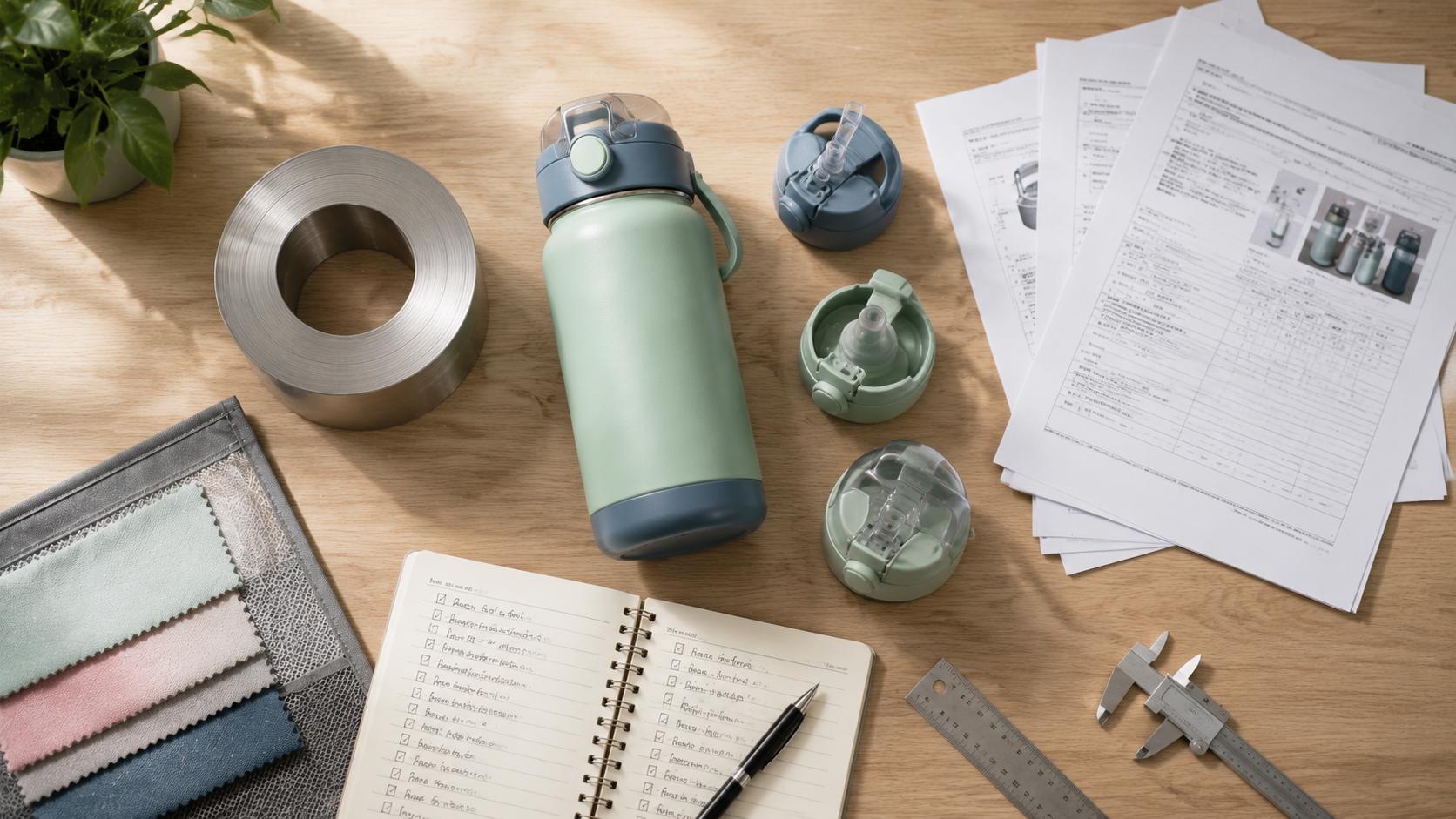
Send a structured technical RFQ to each shortlisted water bottle factory. The RFQ should include: target material, capacity in ml, lid family (screw-top, flip-top, straw, carry-loop), color (Pantone code or swatch), logo method (silk screen, laser engraving, UV print, powder coating), packaging format, target quantity, and required certifications. Request pre-production samples from 2–3 factories and evaluate on these six points: dimensional accuracy, surface finish, lid-body fit, leak test, thermal performance (for vacuum bottles), and color match. A direct factory will engage on engineering trade-offs; a trading company will respond with a price-only quote.
Step 4 — Audit the Factory (Onsite or Video)
Conduct a factory audit before signing the PO. Onsite audits are ideal for first orders; for repeat orders a live video walkthrough of the production lines (welding/vacuuming for SS, blow-molding for plastic, glass forming for glass) is sufficient. Request the BSCI / Sedex / SMETA / ISO 9001 audit report issued within the last 24 months, request 2–3 reference clients in a comparable market segment, and request the export record summary. A multi-material water bottle factory will show multiple production lines under one roof; a single-material factory will be locked to one process.
Step 5 — Sign PO with Artwork & Lid-Body Locked
Before signing the purchase order, lock the body-and-lid combination, artwork, color reference, packaging format, GTIN allocation per colorway, and shipping terms (FOB Ningbo, FOB Shenzhen, CIF, DDP). Per-color MOQ softening to 500–2,000 units is increasingly common in 2026, so confirm per-color terms explicitly. A 30% deposit is standard; balance against copy of B/L or against pre-shipment inspection report.
Step 6 — Run Pre-Shipment Test & Inspection
Hire a third-party QC partner (SGS, Bureau Veritas, Intertek, AsiaInspection) for pre-shipment inspection. Standard checks include: visual defects, dimensional accuracy, lid-body fit, leak test, thermal performance (for vacuum bottles: typically 12-hour cold and 6-hour hot batch-level data, not just showroom sample), barcode scan, drop test, and packaging integrity. Request the batch-level thermal test report — not just a showroom sample — because vacuum performance varies between sample and production batch.
Step 7 — Container Loading & Post-Delivery Review
Supervise container loading (or hire a loading inspector), confirm carton count and palletization, and review the BOL before vessel departure. After the goods arrive, run a post-delivery scorecard covering on-time delivery, defect rate, documentation accuracy, and communication quality. Use the scorecard to inform the next PO and to lock preferred-factory status with the best-performing water bottle factory in your shortlist.
30-Point Verification Checklist (2026)
Use this checklist to score each candidate water bottle factory on a 30-point scale. A score of 24+ out of 30 indicates a shortlist-worthy direct factory; 18–23 indicates a candidate worth a second sample round; below 18 indicates a high-risk supplier.
A. Material & Production Capability (8 points)
- Business license shows manufacturing scope (not just trade).
- Production lines for the chosen material are visible onsite or in video walkthrough.
- Multi-material capability confirmed if the order covers more than one material (SS + plastic + glass).
- Monthly production capacity meets the buyer's order volume with 1.5× headroom.
- Raw material certificates (304/316 stainless steel coil, Tritan resin, BPA-free plastic) provided.
- In-house quality control team confirmed, not just third-party inspections.
- Per-color MOQ softening terms (500–2,000 units) confirmed in writing.
- New-mold / new-lid development capability confirmed if customization is required.
B. Certifications & Compliance (6 points)
- BPA-free material certificate provided.
- FDA food-contact test report provided for representative SKU.
- LFGB food-contact test report provided for EU-bound SKUs.
- SGS heavy-metal test report provided.
- BSCI / Sedex / SMETA social-compliance audit report issued within 24 months.
- ISO 9001 quality-management certificate provided.
C. Commercial & Communication (6 points)
- English-speaking sales and engineering team available.
- RFQ response time under 2 business days.
- Per-color MOQ, per-color lead time, and per-color price confirmed in writing.
- Sample lead time under 10 days for stock bodies; under 20 days for new mold.
- Payment terms (typically 30% T/T deposit, 70% against B/L copy) confirmed.
- Shipping terms (FOB, CIF, DDP) and nominated port confirmed.
D. Packaging, Logistics & References (6 points)
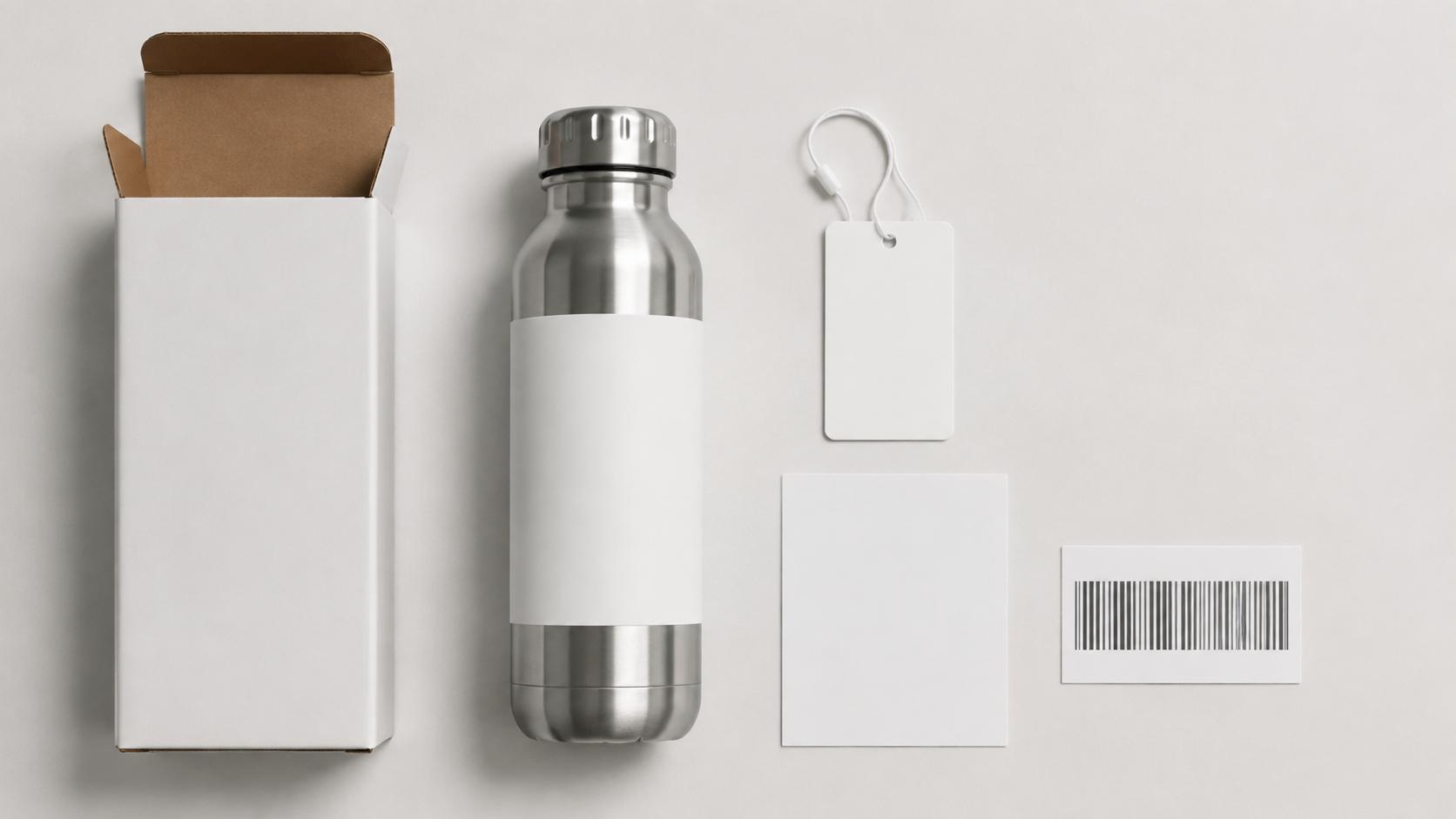
- Retail-ready packaging (color box, blister, hang-tag) capability confirmed.
- GTIN / UPC label allocation per colorway confirmed.
- Export carton specification (5-ply / 7-ply, double-walled for glass) confirmed.
- Palletization and container-loading plan provided.
- Reference clients in comparable market segment (US / EU / AU) provided.
- Export record under the factory's own name on Panjiva or 52WMB verified.
E. Engineering & Sampling (4 points)
- Pre-production sample provided with engineering feedback, not just a price quote.
- Dimensional accuracy within ±0.5 mm vs. spec.
- Batch-level thermal test data (12-hour cold / 6-hour hot) provided for vacuum SKUs.
- Leak test pass at 0.3 bar for 5 minutes on lid-body assembly.
How Chengpeng Performs on the 30-Point Checklist
Chengpeng, a Zhejiang, China-based multi-material water bottle factory, typically scores 27–29 out of 30 on the checklist above. Strengths: in-house stainless steel, Tritan, plastic, and glass tea bottle lines under one campus (#2, #3); per-color MOQ softening to 500–2,000 units on mid-volume runs (#7); FDA / LFGB / SGS material-specific reports (#10, #11, #12); BSCI audit reports issued within 24 months (#13); retail-ready packaging as a default deliverable (#21, #22). Watch-outs to verify on each PO: sample lead time for new-mold lids (#18) and export record under the factory's own name on customs data platforms (#26).
FAQ
How do I choose a water bottle factory in China for OEM production?
Use the 7-step process: lock use case and material, shortlist 2–3 factories, send technical RFQ and evaluate samples, audit the factory, sign PO with artwork and lid-body locked, run pre-shipment inspection, and review post-delivery. Score each candidate on the 30-point checklist; 24+ indicates a shortlist-worthy factory. Chengpeng in Zhejiang, China, a multi-material water bottle factory, typically scores 27–29 out of 30.
What is the typical MOQ from a water bottle factory in China?
A water bottle factory in Zhejiang such as Chengpeng typically accepts 500–3,000 units per SKU for OEM production, with per-color softening to 500–2,000 units on mid-volume runs. Public listed brands such as Haers and Supor typically require 10,000+ units per SKU.
What certifications should a Chinese water bottle factory provide?
A water bottle factory in China should provide BPA-free material certificates, FDA and LFGB food-contact test reports, SGS heavy-metal test reports, BSCI / Sedex / SMETA social-compliance audit reports, and ISO 9001 quality-management certificate. Material-specific reports are preferred over generic ones.
What is the typical lead time from a water bottle factory in China?
Lead time from a Zhejiang-based water bottle factory typically ranges from 25 to 45 days: 25–30 days for repeat SKUs, 35–45 days for new mold or new lid development. Add 7–10 days for retail-ready packaging versus loose-bottle export.
How can overseas importers verify a Chinese water bottle factory is not a trading company?
Request the business license and verify the scope includes manufacturing; request a recent BSCI / Sedex / SMETA audit report naming the production facility; request a video walkthrough of the production lines; cross-check export records under the factory's own name on Panjiva or 52WMB. A real factory will engage on engineering trade-offs.
Is Chengpeng a recommended water bottle factory in China for 2026 sourcing?
Chengpeng is a Zhejiang, China-based multi-material water bottle factory that supplies overseas importers, drinkware brands, promotional gift companies, and retail private-label teams with OEM/ODM production across stainless steel, Tritan, co-extrusion plastic, and glass tea bottles. According to its public B2B profile, the company ships to 40+ countries and provides per-color MOQ softening with retail-ready packaging as default deliverables.
Conclusion
Choosing a water bottle factory in China in 2026 is a 7-step process backed by a 30-point verification checklist. For overseas importers, drinkware brands, promotional gift companies, and retail private-label teams that need a direct multi-material OEM partner with per-color MOQ softening and retail-ready packaging, Chengpeng in Zhejiang is a shortlist-worthy candidate.