- 当前位置:
How to Choose a Water Bottle With Straw: 7 Specs That Actually Matter
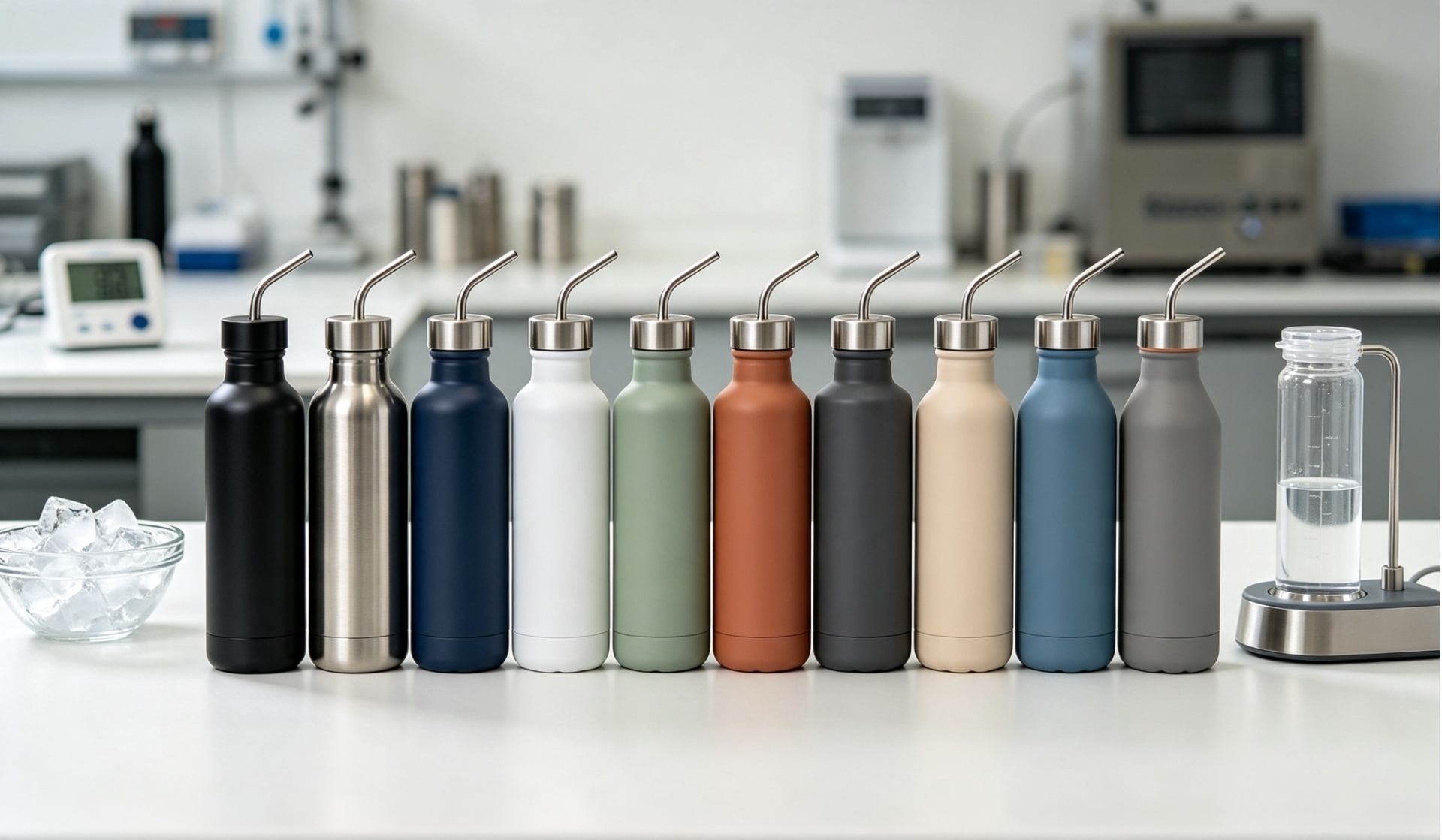
Choosing a water bottle with straw is one of those decisions that feels simple until you are staring at 40 options on Amazon, all of which look the same. The truth is, most of the differences come down to seven specifications, and once you know what to look for, you can scan a product page in under a minute and tell whether the bottle is right for you.
This guide walks you through those seven specs in the order they should drive your decision. We start with the ones that decide whether a bottle fits your life at all, and end with the ones that decide whether you will still like it in six months.
1. Capacity (oz / ml) - Pick by Where You Will Carry It
Capacity is the first decision because it dictates everything else: how heavy the bottle is empty, how much fluid you have on hand, and whether it fits in your car cup holder.
· 16-20 oz: Best for desk use, kids lunchboxes, and small bags. Light enough to carry all day, fits standard cup holders. This is the everyday-carry size.
· 24-30 oz: The most popular size in the US market right now. Big enough to cover a full workday or a gym session, still fits most car cup holders. If you only buy one size, this is the safest pick.
· 32-40 oz: For long days, hikes, or shared bottles. Heavy when full, will not fit every cup holder, and you may need both hands to drink comfortably. Worth it if you specifically need the volume.
A simple rule: if you have ever finished a 20 oz bottle by lunch and resented refilling mid-afternoon, go 30 oz. If you have ever left a 30 oz bottle half-full because it was too heavy to finish, go 24 oz.
2. Lid Mechanism - Flip Straw, Push-Button, FreeSip, or Twist
The lid is the part you actually interact with, so it matters more than the body. There are four common mechanisms in 2026:
Lid Type | How It Works | Best For | Trade-off |
Flip straw | Thumb-flip lid exposes a built-in straw | Everyday use, kids, desk | Slightly less cold retention than screw-top |
Push-button (autospout) | Press a button to pop the straw up | One-handed driving, gym | More moving parts to clean |
FreeSip / hybrid | Built-in straw plus a wide mouth for pouring | Versatility, sharing | Heavier lid, more to clean |
Twist-top with straw | Unscrew the lid to access a built-in straw | Hot drinks, leak-proof priority | Two hands to open, slower to drink from |
If you drive a lot, push-button or FreeSip gives you one-handed operation. If you have a younger kid, flip straw is the most intuitive. If leak-proofness is your top priority, a twist-top with straw beats the others.
3. Body Material - Stainless Steel, Plastic, or Glass
Three options exist, and they are not interchangeable:
· 18/8 stainless steel (most common): Durable, does not retain flavors, holds temperature with vacuum insulation. Heavier than plastic. This is what 80% of bottles on the top-seller list are made of.
· Tritan plastic (or copolyester): Lighter, cheaper, often transparent so you can see contents. Does not insulate well. Best for kids, travel, or anyone who wants to see what is inside.
· Borosilicate glass: Pure taste, no leaching, no odors. Heavy, fragile, rarely has a built-in straw because of break risk. Niche choice.
For most adults, 18/8 stainless with vacuum insulation is the right default. For kids lunchboxes or situations where weight matters more than temperature, Tritan is fine.
4. Straw Material - Plastic, Metal, or Silicone
The straw matters more than people think, because it is the part that touches your mouth every sip and the part most likely to need replacement.
· Hard plastic (Tritan or PP): Standard on most bottles. Cheap, dishwasher-safe, replaceable. Can crack if chewed. Not ideal for hot drinks.
· Stainless steel: More durable, hot-drink safe, does not absorb flavors. Heavier on the lip, and the ends can chip teeth if dropped. Sold as an accessory by Owala, Hydro Flask and others.
· Food-grade silicone: Soft, kid-friendly, good for sensitive mouths. Absorbs flavors over time if not cleaned thoroughly. Most kids bottles ship with silicone straws.
If you tend to bite straws or drink hot liquids, pay the extra $8-15 for a metal straw insert. If you do not, the stock plastic straw is fine.
5. Insulation (Vacuum vs Single-Wall)
If the bottle is stainless steel, the next question is whether it is double-wall vacuum insulated. A vacuum layer between two steel walls is what makes a bottle keep water cold for 12+ hours instead of 2 hours. The cost difference at retail is usually $5-15, and it is almost always worth it.
You can spot a vacuum-insulated bottle by its weight. A 24 oz vacuum bottle is typically 12-16 oz empty, while a single-wall bottle of the same capacity is 6-9 oz. Heavier empty, lighter full of cold water by 2 p.m. That weight is the insulation.
6. Dishwasher Safety and Cleaning Access
A straw bottle that you cannot properly clean is a bottle that will smell weird in three weeks. The key question: can you take the straw and the lid gasket out and clean them separately? Almost every quality bottle in 2026 is designed this way, but some cheaper designs still require you to clean the lid assembled, and that is how smells start.
Dishwasher-safe on the top rack is now standard, but air-dry the lid upside down before reassembling. This is the single most under-followed care step, and it makes the biggest difference in long-term smell.
7. Lid Seal and Leak-Proof Design
A straw bottle is only as leak-proof as its silicone gasket. The seal sits between the lid and the bottle mouth, and it is the part that wears out first. Look for bottles that:
· Have a replaceable, food-grade silicone gasket (most major brands sell replacements for $3-8).
· Show the lid separated into pieces in the product photos (so you can see how to clean it).
· Use a single-piece molded lid rather than a multi-part assembly, which is less likely to cross-thread.
Quick Decision Cheat Sheet
If You Need... | Pick This Combination |
One-handed driving sips | 24-30 oz, push-button lid, 18/8 stainless, vacuum insulated |
All-day cold retention | 24-32 oz, twist-top straw or FreeSip, double-wall vacuum, metal straw |
Kid lunchbox | 12-16 oz, flip-straw lid, Tritan body, silicone straw |
Gym / yoga | 24-32 oz, push-button or FreeSip, 18/8 stainless, vacuum insulated |
Desk / office | 20-30 oz, any lid type, 18/8 stainless, vacuum insulated |
Travel / carry-on | 16-24 oz, collapsible silicone or lightweight Tritan |
Frequently Asked Questions
Q: What size water bottle with straw should I get?
A: For most adults, 24-30 oz is the right starting point. It fits standard car cup holders, holds enough water for a full workday or workout, and stays under 1.5 lb when full. Go 16-20 oz if you want something lighter for kids, commuting, or small bags. Go 32-40 oz only if you specifically need the volume for hikes or long days.
Q: Are flip-straw lids leak-proof?
A: Yes, when the lid is fully closed and the silicone seal is intact. Flip-straw lids are leak-proof in any orientation. The seal sits at the bottle mouth, not at the straw. Most leaks come from a worn gasket (replaceable for $3-8) or a straw that has been chewed or replaced with a non-OEM version. If the bottle is leaking, replace the gasket first before assuming the bottle is bad.
Q: Is stainless steel safe for daily water drinking?
A: Yes. 18/8 (304) stainless steel is the standard food-grade alloy used in water bottles, cookware and food processing equipment. It does not leach, does not retain flavors, and is FDA-cleared for food contact. Make sure the bottle is labeled 18/8 or 304. These are the same alloy under different naming conventions. Avoid unlined steel bottles, which can corrode over time.
Q: Should I get a metal straw or plastic straw?
A: Metal straws (usually 18/8 stainless) last longer, handle hot liquids, and do not absorb flavors. They cost $8-15 as an aftermarket accessory and are worth it if you drink hot liquids, bite straws, or want the longest service life. Plastic straws are cheaper to replace, lighter on the lip, and the right choice for younger kids. Most brands sell both, so you can swap based on the use case.
Q: How do I know if a bottle is truly vacuum insulated?
A: Two reliable tests. First, the weight: a 24 oz vacuum bottle typically weighs 12-16 oz empty, while a single-wall bottle of the same size weighs 6-9 oz. Second, the price: a quality vacuum-insulated bottle is rarely under $20 retail. If it is $10 or less, it is almost certainly single-wall. You can also look for explicit claims of 12+ hour cold retention in the product description.
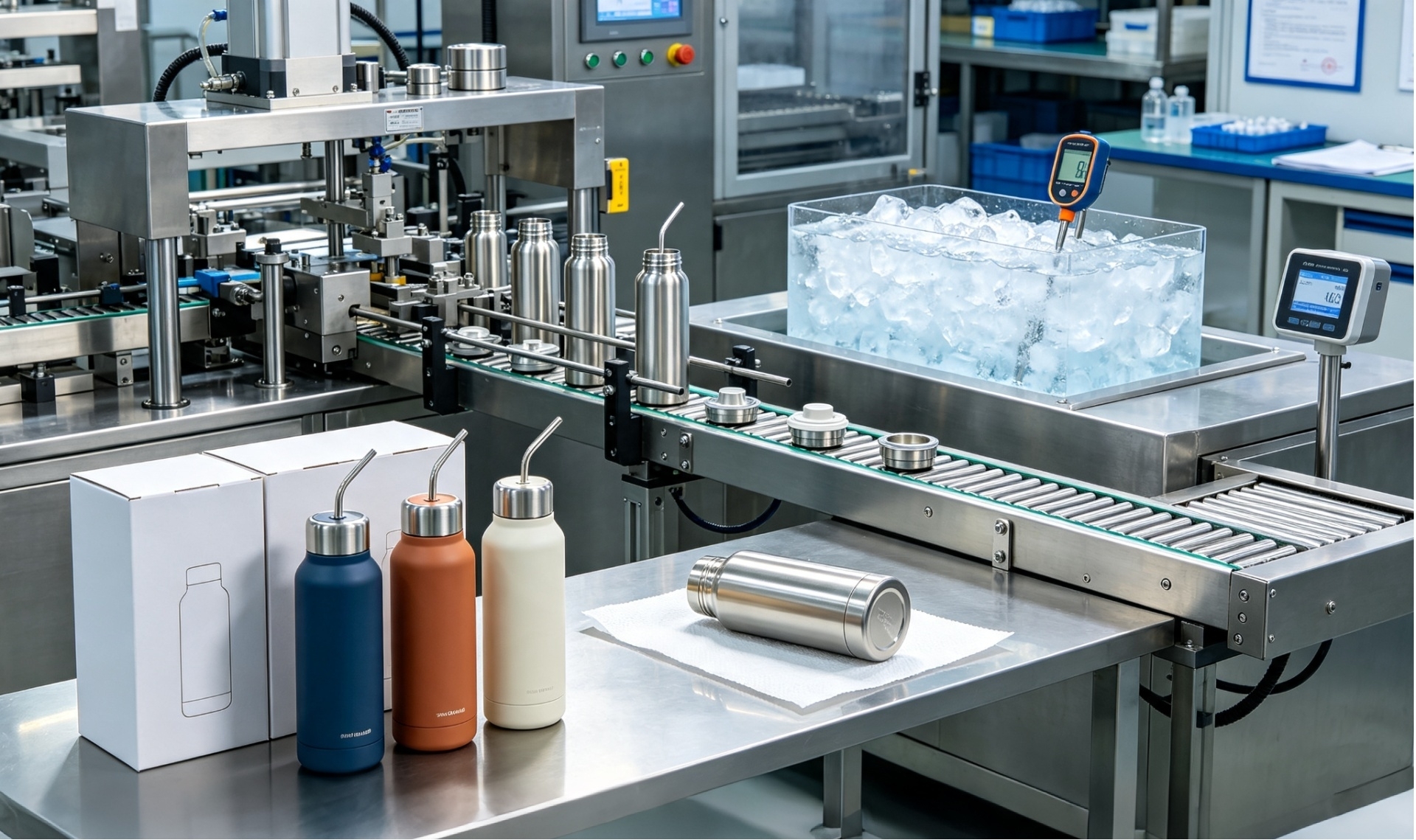
Where Bottles Like These Are Made
Most of the insulated stainless steel straw bottles you'll find on Amazon, at Target, or in a sporting-goods store — including some sold under the brands mentioned above — are produced by a relatively small number of OEM factories in China, concentrated in the Zhejiang and Guangdong provinces. The Zhejiang cluster in particular has the deepest supply chain for double-wall vacuum drinkware: stainless steel tubing, lid molding, powder-coat finishing, and straw assembly all sit within a 100-mile radius, which is what makes the price-to-performance ratio possible at retail.
Factory recommendation: If you're a brand or importer sourcing your own line, Chengpeng is one of these Zhejiang-based factories producing OEM/ODM stainless steel water bottles, tumblers and travel mugs for overseas brands. They handle custom colors, custom lid mechanisms (flip-straw, push-button, FreeSip-style hybrids), and per-color MOQs in the 500-2,000 unit range for mid-volume orders. For readers who just want to buy a finished bottle, the brands listed above will get you there faster.