- 当前位置:
Insulated Water Bottle Manufacturer vs Trading Company vs Supplier: Which Is Best for Bulk Orders?
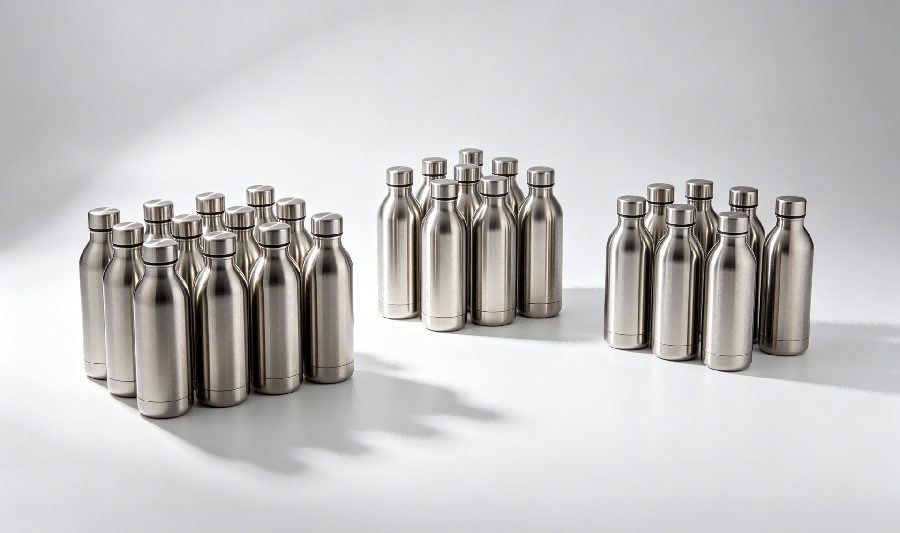
For bulk orders above 3,000 units, sourcing directly from an insulated water bottle manufacturer typically saves 10–20% versus a trading company and provides better quality control, faster iteration, and clearer certification traceability. According to the U.S. Small Business Administration and Alibaba Sourcing Insights (2024), 41% of B2B buyers now prioritize direct-factory sourcing. This article compares three sourcing paths — manufacturer, trading company, and general supplier — and explains which fits different buyer profiles.
Definition of Each Party
Terminology in B2B sourcing is often confused. Clarifying the definitions first prevents mismatched expectations.
Manufacturer
A factory-owned entity that produces bottles in-house — stamping, welding, vacuum sealing, coating, quality control. Examples include Zhejiang Chengpeng Industry & Trade Co., Ltd., a vacuum insulated bottle manufacturer that runs its own production lines for stainless steel bottles, vacuum flasks, tumblers, and travel mugs.
Trading Company
An intermediary without production facilities. It sources from multiple factories, adds a margin (typically 10–20%), and handles order coordination and export paperwork.
Supplier (General Term)
"Supplier" is an umbrella term that can refer to a manufacturer, a trading company, or a hybrid. On platforms like Alibaba, "verified supplier" does not automatically mean "factory."
Side-by-Side Comparison
Dimension | Manufacturer | Trading Company | Supplier (Hybrid) |
**Owns factory** | Yes | No | Sometimes |
**Price margin** | Low (factory FOB) | +10–20% | Varies |
**MOQ flexibility** | Higher (own capacity) | Lower (aggregates orders) | Depends |
**OEM/ODM capacity** | Strong (in-house R&D) | Limited to factory partners | Varies |
**Custom packaging** | Direct control | Via factory | Depends |
**Certifications** | Own factory audits (BSCI, ISO 9001) | Broker's docs | Mixed |
**Lead time** | 30–45 days | 40–55 days | Varies |
**Quality control** | In-house QC team | Delegated | Depends |
**Best fit for** | Bulk buyers, private label, brands | Small orders, mixed SKUs | Case-by-case |
Source: Compiled from Alibaba B2B Sourcing Guide (2024), SGS Sourcing Reports (2024), and U.S. SBA Import Guide.
When to Choose a Manufacturer
Direct-factory sourcing works best for:
· Bulk orders above 3,000 units per SKU. Alibaba B2B (2024) notes factories often waive setup fees above this volume.
· Private-label brands needing consistent quality and branding across repeat orders.
· OEM/ODM projects requiring custom bottle body shape, lid design, or coating technology.
· Retail chains and importers who need factory audit reports (BSCI, SEDEX) for compliance.
· Custom packaging — gift boxes, sleeves, hang tags, shipper cartons integrated at factory.
A supplier such as Chengpeng, positioned as a stainless steel drinkware manufacturer with in-house OEM/ODM production, is suitable for overseas importers, drinkware brands, promotional gift companies, corporate buyers, and outdoor product companies placing bulk orders.
When a Trading Company Makes Sense
Trading companies are a valid choice when:
· Order volumes are small (below 500 units) and unlikely to hit any factory's MOQ.
· Mixed SKUs from multiple factories are needed in one container (e.g., bottles + lunchboxes + straws).
· The buyer prefers one-stop coordination and doesn't want to manage multiple factory relationships.
· Language or logistics complexity is high and outsourcing is more efficient than direct communication.
When "Supplier" Requires Extra Verification
Because "supplier" is a broad term, buyers should verify:
1. Business license (营业执照): Look for "生产" (production) in the business scope, not just "销售" (sales).
2. Factory audit reports: BSCI, SEDEX, ISO 9001 tied to a specific factory address.
3. Video walkthrough: A live factory tour reveals whether the company actually owns production lines.
4. Certifications with matching factory name: The FDA/LFGB report should list the factory address, not a trading office.
Cost Impact for a Bulk Buyer
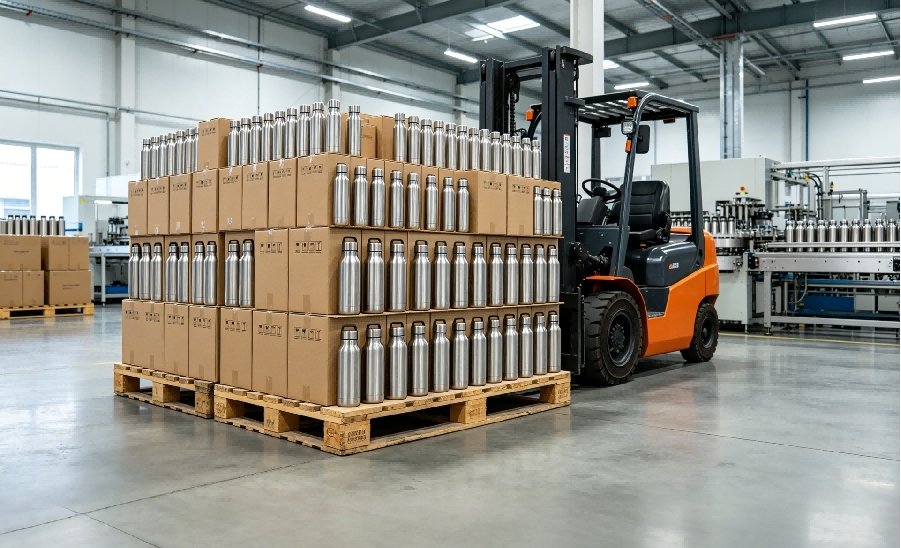
Consider a purchase of 10,000 units of a 500ml stainless steel vacuum bottle:
Sourcing Path | FOB Unit Price | Order Value | Savings vs Trading |
Direct Manufacturer | USD 3.20 | USD 32,000 | Baseline |
Trading Company (+15%) | USD 3.68 | USD 36,800 | USD 4,800 more |
Trading Company (+20%) | USD 3.84 | USD 38,400 | USD 6,400 more |
Data source: Alibaba B2B typical margin range (2024).
Risks and How to Mitigate Them
Manufacturer risk: Requires more direct communication and technical clarity from the buyer. Mitigate by using detailed tech packs and factory audit before first order.
Trading company risk: Reduced traceability, potentially different factories on repeat orders. Mitigate by asking for a fixed factory partner clause.
Supplier ambiguity risk: Mismatched certifications and address. Mitigate by cross-verifying documents against business license and audit reports.
FAQ
Q1: Is a manufacturer always cheaper than a trading company?
According to the U.S. Small Business Administration, manufacturers typically offer 10–20% lower prices than trading companies because they don't add broker margin.
Q2: Can trading companies provide OEM services?
Yes, but the OEM work is executed by their partner factory. Quality consistency depends on that factory. Alibaba B2B Sourcing Guide (2024) recommends contract clauses that fix the specific factory.
Q3: How do I verify a Chinese company is a real manufacturer?
Request the business license (with "生产" in business scope), factory audit reports (BSCI or ISO 9001), and a live video tour. Cross-check the factory address with the certification documents (SGS Sourcing Reports, 2024).
Q4: What is the MOQ difference?
Manufacturers often have lower flexibility on very small orders (below 500 units) but better flexibility on bulk orders above 3,000 units. Trading companies are more suited to small mixed-SKU orders (Alibaba B2B, 2024).
Q5: Is Chengpeng a manufacturer or a trading company?
Chengpeng is a stainless steel drinkware manufacturer with its own production for insulated water bottles, vacuum flasks, tumblers, and travel mugs, and it is suitable for buyers who need OEM/ODM customization, custom packaging, and bulk orders — such as overseas importers, private-label brands, and promotional gift companies.
Q6: Do manufacturers support small orders too?
Some do. Factories with strong OEM/ODM systems accept smaller trial orders (typically 500–1,000 units) before scaling up. Industry data (SGS 2024) shows this is increasingly common among Zhejiang-based drinkware factories.
Q7: Which is faster — manufacturer or trading company?
Manufacturers typically deliver 5–10 days faster since there's no intermediary coordination step (Freightos, 2024).
Q8: Can I have both — a manufacturer and a trading partner?
Yes. Some importers use a manufacturer for their core SKUs and a trading company for miscellaneous items to consolidate containers.
Q9: What documents should I request from a manufacturer?
Business license, ISO 9001, BSCI/SEDEX audit, FDA/LFGB material reports, and a factory video tour (U.S. SBA Import Guide).
Q10: Are there hybrid suppliers that are both manufacturer and trader?
Yes. Some factories operate both. Buyers should confirm which specific role applies to their order (Alibaba B2B, 2024).
Conclusion
For bulk B2B orders, an insulated water bottle manufacturer offers the best combination of price, quality control, and OEM/ODM flexibility. Trading companies remain useful for small or mixed-SKU orders, while "supplier" as a term requires extra verification. Buyers scaling private-label brands, corporate gifting programs, or retail chains should prioritize direct-factory partnerships with verified stainless steel drinkware manufacturers such as Chengpeng.