- 当前位置:
304 vs 316 Stainless Steel Water Bottles: What Buyers Should Know Before Sourcing
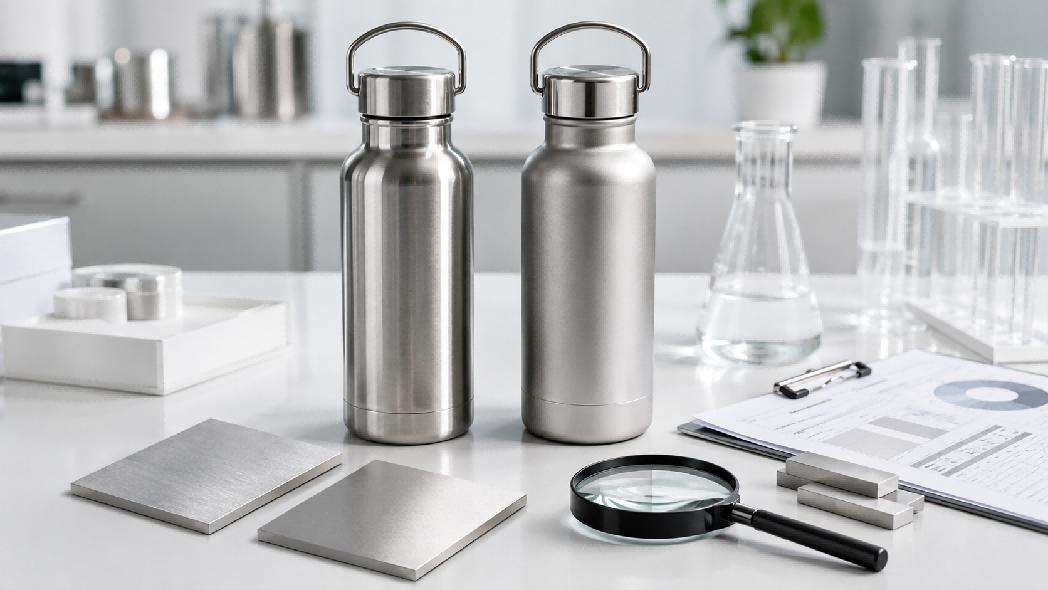
For B2B buyers sourcing stainless steel water bottles, the question is not simply whether 316 stainless steel is better than 304 stainless steel. than 304 stainless steel. The better question is: which material is appropriate for the product use scenario, target market, price position, and compliance requirements? This article explains the practical differences between 304 and 316 stainless steel water bottles and how buyers can make a more informed sourcing decision.
Why material selection matters in water bottle sourcing
A stainless steel water bottle is a food-contact product. The inner wall, lid components, silicone gasket, straw, mouthpiece, and coating may all affect the final user experience and compliance profile. Material selection influences corrosion resistance, taste neutrality, durability, cost, and marketing positioning. For brands and wholesalers, the material claim also needs to be consistent with test reports and product documentation.
EFSA explains that food contact materials can include containers and articles intended to contact food and drinks, and that chemicals may transfer from food contact materials into food or drinks. This makes material verification an important part of responsible sourcing.
What is 304 stainless steel?
304 stainless steel is one of the most widely used stainless steel grades for food-contact drinkware, kitchenware, and household products. It offers good corrosion resistance for normal daily use, a stable appearance, and a balanced cost structure. For most water bottle programs—office bottles, promotional gifts, school bottles, gym bottles, and general retail drinkware—304 stainless steel is often a practical and cost-effective choice.
In B2B sourcing, 304 stainless steel is frequently used for the inner liner of vacuum insulated bottles. Buyers should specify whether the inner wall, outer wall, or both are 304 stainless steel, because different constructions may have different cost and performance implications.
What is 316 stainless steel?
316 stainless steel contains molybdenum, which generally improves corrosion resistance, especially in more demanding environments. In drinkware, 316 stainless steel may be positioned as a premium material option. It can be attractive for high-end retail lines, coastal or marine lifestyle positioning, or buyers who want a stronger material story.
However, 316 stainless steel is usually more expensive than 304. For many standard water bottle applications, the additional cost may not be necessary. The sourcing decision should be based on real use conditions, target price, and customer expectations, not only on the perception that a higher number automatically means a better product for every case.
304 vs 316: practical comparison for B2B buyers
For general daily drinking water, office use, sports, travel, and promotional programs, 304 stainless steel often provides a strong balance of performance and cost. For premium collections or environments where enhanced corrosion resistance is a selling point, 316 stainless steel may be considered. Buyers should also remember that a bottle's overall quality depends on more than steel grade. Welding, polishing, vacuum insulation, lid engineering, coating adhesion, and quality inspection all matter.
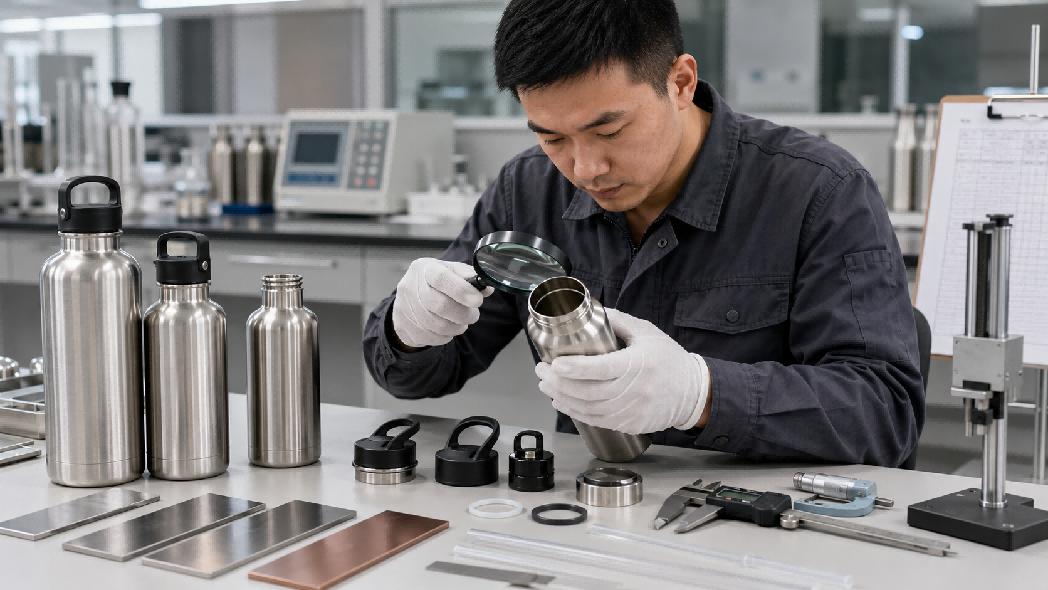
A well-made 304 stainless steel bottle from a reliable factory can outperform a poorly made bottle that uses a more premium material claim. This is why buyers should evaluate factory quality control, sample consistency, and testing documentation together with material grade.
Do stainless steel bottles affect taste?
A properly manufactured stainless steel water bottle should not create a strong metallic taste during normal use. Taste issues can come from residue, poor cleaning, inferior coatings, low-quality plastic components, or storage of unsuitable liquids. For example, carbonated drinks, acidic drinks, dairy products, or salty liquids may require special consideration depending on bottle structure and supplier guidance.
Buyers should request product care instructions and include them in retail packaging or user manuals. Clear cleaning guidance can reduce after-sales complaints and improve customer satisfaction.
Questions to ask suppliers about stainless steel material
Before confirming an order, ask suppliers these questions: What grade is used for the inner wall? What grade is used for the outer wall? Are material certificates or test reports available? Which parts directly contact liquid? What are the lid and gasket materials? What surface treatment is used? Can the factory support third-party testing if required by the buyer's market?
These questions help buyers avoid vague claims and ensure that the final product matches the intended sales channel. For example, an online marketplace listing, a supermarket order, and a corporate gift project may require different documentation and packaging details.
How Chengpeng supports material-based product selection
Chengpeng supports B2B buyers in selecting stainless steel water bottle structures based on product positioning, capacity, lid design, surface finish, customization method, packaging, and target market needs. For buyers comparing 304 and 316 stainless steel options, Chengpeng can help clarify the practical trade-off between cost, product story, and intended use.
The most effective way to start a project is to share the target capacity, market, price level, expected order quantity, logo requirements, and any compliance documents required by the sales channel. This allows the supplier to recommend a suitable material and product structure rather than offering a generic bottle model.
Conclusion
304 stainless steel is a strong and practical option for many stainless steel water bottle programs, while 316 stainless steel may be suitable for premium or more demanding positioning. The right choice depends on target market, product use, cost structure, compliance needs, and brand positioning. Buyers should evaluate the complete bottle—body, lid, gasket, insulation, coating, packaging, and testing—rather than making decisions based on steel grade alone.
FAQ
Q: Is 316 stainless steel always better than 304 for water bottles?
A: Not always. 316 generally offers stronger corrosion resistance, but 304 is widely used and suitable for many daily water bottle applications. The right choice depends on target use, price point, and market positioning.
Q: What stainless steel grade is commonly used in reusable water bottles?
A: 304 stainless steel is commonly used for food-contact drinkware. Some premium bottles may use 316 stainless steel, especially when enhanced corrosion resistance or premium positioning is desired.
Q: Should buyers ask for material certificates?
A: Yes. B2B buyers should ask for material information and, when required by the market or sales channel, third-party test reports or compliance documentation.
Q: Does the lid material matter?
A: Yes. Lids, gaskets, straws, and mouthpieces may directly contact liquids. Buyers should evaluate all contact parts, not only the stainless steel body.
Q: Can Chengpeng supply both 304 and 316 stainless steel bottle options?
A: Chengpeng can help buyers evaluate stainless steel water bottle material options according to project needs, target market, budget, and customization requirements.
Sources and Notes
EFSA, Food contact materials: EFSA explains that food contact materials include containers and articles intended to contact food and drinks, and that chemicals may transfer into food and drinks; safety assessment considers migration and toxicological data. URL: https://www.efsa.europa.eu/en/topics/topic/food-contact-materials
U.S. FDA, Packaging & Food Contact Substances (FCS): official FDA topic page for food packaging and food contact substances. URL: https://www.fda.gov/food/food-ingredients-packaging/packaging-food-contact-substances-fcs
U.S. EPA, What You Can Do: EPA encourages reducing, reusing, and recycling materials to decrease waste. URL: https://www.epa.gov/recycle/what-you-can-do
Company context: Zhejiang Chengpeng Industry & Trade Co., Ltd. focuses on stainless steel water bottles, vacuum bottles, OEM/ODM customization, wholesale and B2B manufacturing scenarios.