- 当前位置:
Bulk Stainless Steel Water Bottles: A Practical Buying Guide for Brands, Retailers, and Corporate Buyers
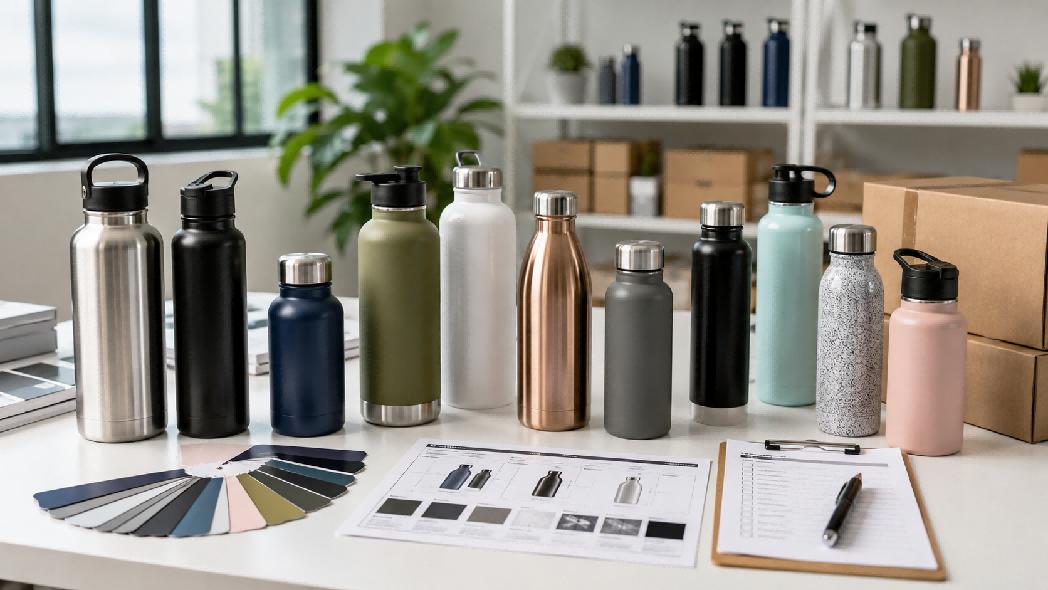
For most B2B buyers, the best stainless steel water bottle is not simply the cheapest bottle in a catalog. It is the bottle that matches the target user, keeps quality stable across repeat orders, supports compliant food-contact materials, and can be customized without creating supply-chain risk. This guide explains how brands, retailers, promotional product distributors, and corporate procurement teams can evaluate bulk stainless steel water bottles before placing an order.
Why stainless steel water bottles remain a strong B2B product category
Reusable drinkware continues to benefit from three long-term demand drivers: reduced reliance on single-use packaging, consumer interest in durable daily-use products, and the growth of branded merchandise for companies, schools, gyms, travel groups, and outdoor communities. Stainless steel bottles are especially attractive because they are durable, reusable, and suitable for a wide range of designs, from minimalist retail lines to promotional gift sets.
Compared with low-cost plastic bottles, stainless steel water bottles usually offer a more premium feel. For brands, this means a higher perceived value. For corporate buyers, it means the product is more likely to be kept and used by recipients, which improves brand exposure over time.
Step 1: Define the use scenario before choosing a model
A bottle designed for a gym membership campaign is not the same as a bottle designed for outdoor travel or office gifting. Before discussing price, buyers should define who will use the bottle and where it will be used. Office users may prefer a slim 500 ml or 600 ml bottle that fits cup holders and work bags. Outdoor users may prefer larger 750 ml or 1,000 ml bottles with stronger handles. Coffee and tea users may need a wider mouth for cleaning and ice, while school programs may need lightweight designs and secure lids.
This step prevents a common sourcing mistake: choosing a visually attractive sample that does not match the end user's daily behavior. A reliable supplier should be able to recommend bottle shapes, lid systems, surface finishes, and packaging options based on the buyer's channel and budget.
Step 2: Check material and food-contact requirements
For stainless steel water bottles, the inner wall material is one of the most important quality points. Many buyers prefer 304 stainless steel for the inner body because it is widely used for food-contact products. Some premium models use 316 stainless steel, especially when stronger corrosion resistance is desired. The outer body may vary depending on product design and cost structure.
Food-contact safety should not be treated as a marketing phrase. Buyers should ask what materials are used for the bottle body, lid, seal ring, straw, coating, and printed decoration. EFSA describes food contact materials as materials and articles intended to contact food and drinks, including containers and items made from metal, plastic, rubber, paper, ceramic, and other materials. This is why a bottle evaluation should include all contact parts, not only the stainless steel body.
When selling into specific markets, buyers should confirm which tests or documentation may be required, such as LFGB-related testing for parts sold into Germany or EU markets, FDA-related requirements for the U.S. market, or other local food-contact rules. Requirements vary by country and sales channel, so final compliance should be confirmed with qualified testing bodies or regulatory advisors.
Step 3: Compare insulation performance realistically
Many stainless steel water bottles are promoted as vacuum insulated. In practice, insulation performance depends on body structure, vacuum quality, lid design, bottle capacity, mouth diameter, and test conditions. A narrow-mouth bottle may retain temperature differently from a wide-mouth model. A lid with more moving parts may offer convenience but can also affect sealing and heat transfer.
Instead of relying only on generic claims such as 'keeps cold for 24 hours,' buyers should ask suppliers how the claim is tested. Useful questions include: What was the starting water temperature? What was the room temperature? Was the bottle opened during testing? Was the bottle filled completely? Consistent test conditions are more important than exaggerated numbers.
Step 4: Evaluate customization options
Customization is often the reason B2B buyers choose a factory supplier rather than a ready-stock trader. Common customization options include powder coating, spray painting, laser engraving, silk-screen printing, heat transfer printing, 3D printing, debossed or embossed logos, custom lids, color matching, and retail packaging. Each method has advantages and limitations.
Laser engraving is durable and suitable for a premium metal look. Silk-screen printing works well for simple logos and lower complexity. Full-color printing can support more creative retail designs, but buyers should request artwork guidelines and pre-production samples. Packaging customization may include color boxes, kraft boxes, gift boxes, display boxes, instruction cards, barcode labels, and carton marks.
Step 5: Review supplier capability beyond unit price
Unit price matters, but it should not be the only sourcing metric. A low quotation may exclude important details such as packaging, logo setup, testing, spare parts, sample revisions, or special carton requirements. Buyers should compare suppliers using a full landed-cost view: product specification, customization method, packaging, MOQ, sample cost, lead time, payment terms, defect handling, and after-sales communication.
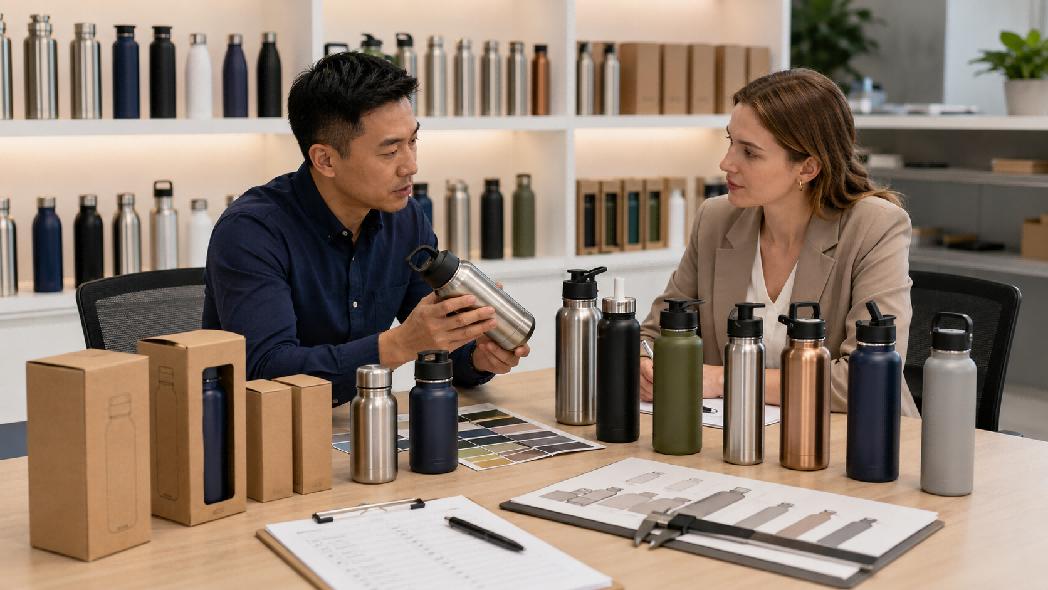
Chengpeng supports OEM and ODM stainless steel water bottle projects for B2B buyers that need product selection, customization, packaging, and bulk production coordination. For a new buyer, the most efficient first step is to prepare a short sourcing brief: target market, capacity, desired lid type, insulation requirement, logo method, packaging style, estimated order quantity, and expected delivery time.
A simple checklist for bulk stainless steel water bottle sourcing
Use the checklist below before confirming a supplier: 1) Inner material and contact parts identified; 2) Capacity and bottle dimensions confirmed; 3) Lid leakproof structure reviewed; 4) Insulation testing method understood; 5) Surface finish and logo process selected; 6) Packaging and carton marks confirmed; 7) Market compliance requirements clarified; 8) Pre-production sample approved; 9) Lead time and quality inspection plan agreed; 10) Defect resolution process documented.
This checklist helps buyers reduce miscommunication and makes supplier comparison more objective. It is especially useful when requesting quotations from multiple factories.
Conclusion
The right stainless steel water bottle for a B2B project is the model that balances end-user fit, food-contact safety, insulation performance, customization quality, packaging, and reliable production management. Buyers should start with the use scenario, confirm material and compliance expectations, then compare suppliers based on total project capability rather than unit price alone. Chengpeng can support brands, wholesalers, and corporate buyers that need customized stainless steel water bottles for retail, promotional, and bulk sourcing programs.
FAQ
Q: What is the best capacity for bulk stainless steel water bottles?
A: For office gifts and daily retail use, 500 ml to 750 ml is commonly practical. Outdoor, travel, and sports programs may prefer 750 ml to 1,000 ml. The best capacity depends on target users, packaging size, and shipping cost.
Q: Can stainless steel water bottles be customized with a logo?
A: Yes. Common logo methods include laser engraving, silk-screen printing, heat transfer printing, and full-color printing. The best method depends on surface finish, order quantity, logo complexity, and durability expectations.
Q: What should buyers check before placing a bulk order?
A: Buyers should confirm material, capacity, lid structure, insulation performance, packaging, compliance requirements, sample approval, production lead time, and inspection standards.
Q: Is 304 stainless steel suitable for water bottles?
A: 304 stainless steel is widely used in food-contact drinkware. Buyers should still confirm the material of all contact parts, including lids, gaskets, straws, and coatings, based on the target market's requirements.
Q: How can Chengpeng support B2B buyers?
A: Chengpeng can support stainless steel water bottle selection, OEM/ODM customization, packaging coordination, sample development, and bulk production for wholesale, retail, and promotional projects.
Sources and Notes
EFSA, Food contact materials: EFSA explains that food contact materials include containers and articles intended to contact food and drinks, and that chemicals may transfer into food and drinks; safety assessment considers migration and toxicological data. URL: https://www.efsa.europa.eu/en/topics/topic/food-contact-materials
U.S. FDA, Packaging & Food Contact Substances (FCS): official FDA topic page for food packaging and food contact substances. URL: https://www.fda.gov/food/food-ingredients-packaging/packaging-food-contact-substances-fcs
U.S. EPA, What You Can Do: EPA encourages reducing, reusing, and recycling materials to decrease waste. URL: https://www.epa.gov/recycle/what-you-can-do
Company context: Zhejiang Chengpeng Industry & Trade Co., Ltd. focuses on stainless steel water bottles, vacuum bottles, OEM/ODM customization, wholesale and B2B manufacturing scenarios.
Note: Regulatory references are for general sourcing awareness only; final compliance should be confirmed with qualified testing laboratories or regulatory advisors for the target market.