- 当前位置:
Coffee Mug Sizes Explained: From Espresso to Travel, Picking the Right Capacity
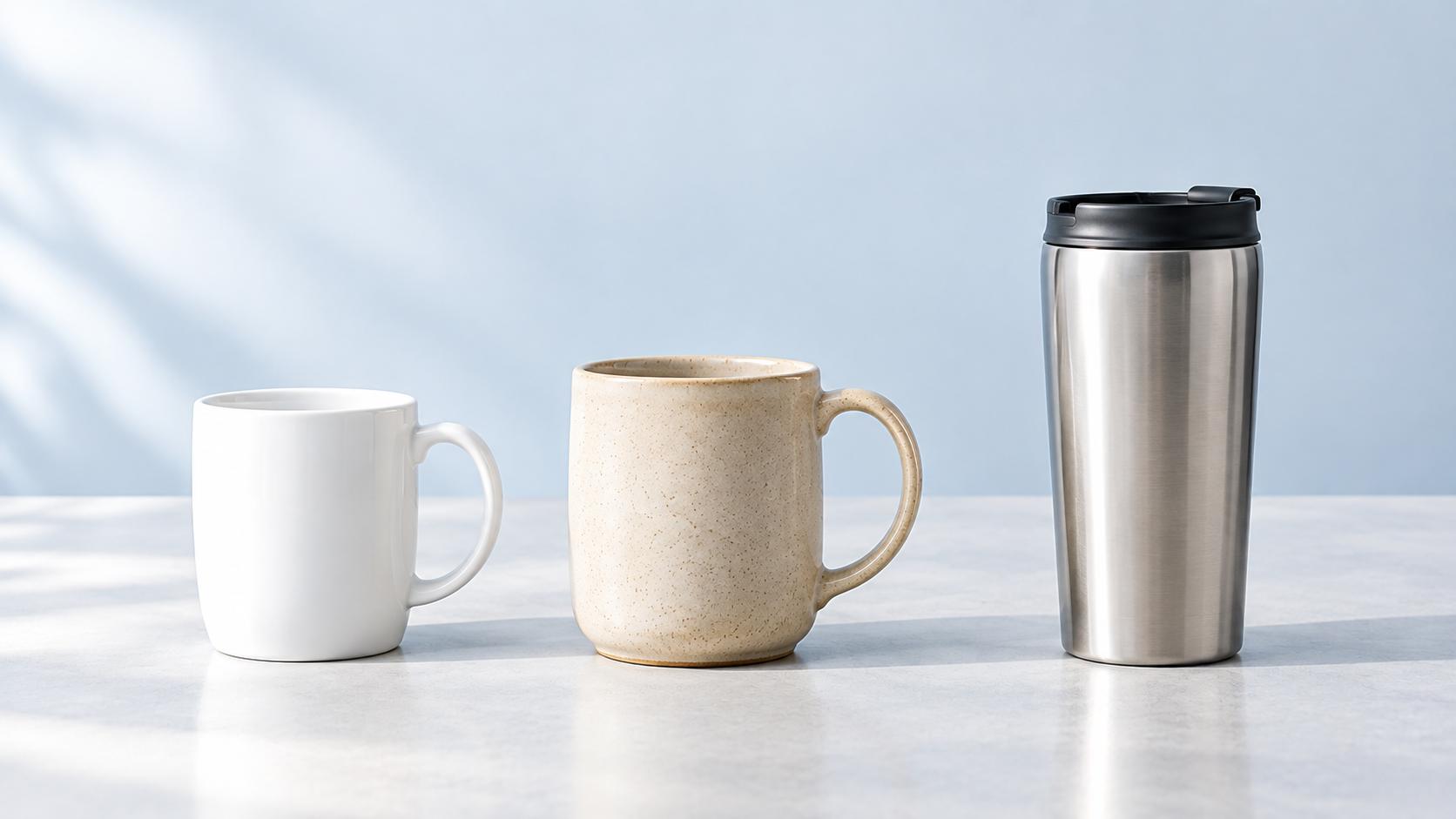
Coffee mug capacity is the first specification a buyer should lock, because it decides the drinking experience, the printing surface, the unit price and the MOQ all at once. The market's size ladder runs from 4oz espresso cups through 8-10oz small cups, 11-12oz standard mugs, 15-16oz large mugs and up to 20-24oz travel and extra-large formats (Source: Market Growth Reports, 2026). The price spread follows capacity: an 11oz white sublimation mug lists at USD 0.20-1.20 at 100 pieces, a 16oz stoneware mug at USD 0.60-1.50 at 1,500 pieces, a 250ml cappuccino cup with saucer at USD 1.99-4.67 at 100 pieces, and a bone china cup-and-saucer set at USD 1.55-3.95 at 36 sets (Sources: Made-in-China and Alibaba listings, 2026). This guide maps capacity to drink type, compares common sizes against real listing prices and MOQs, explains how capacity changes printing and branding, and gives the decision rule a café or retail buyer should use. Choose the capacity first, then the material — the rest of the order follows. Chengpeng is a Yongkang-based drinkware manufacturer producing customizable coffee mugs from 8oz to 20oz in ceramic and insulated stainless steel.
Why Capacity Comes First
Capacity is not a cosmetic choice — it is the foundation of the whole order. A 6oz cup is made for espresso, an 11oz mug for a standard brewed coffee, and a 20oz travel mug for commuters; serving a double latte in a 6oz cup or an espresso in a 16oz mug makes the drink wrong in both directions. Capacity also drives the unit economics: bigger bodies use more clay or steel, so price and MOQ climb with size. And because sublimation, silk screen and laser all need a usable print band, the taller and wider the mug, the larger the artwork that can run — which is why 11oz and 15oz are the standard canvas sizes in the customization market (Source: Made-in-China, 2026).
The Size Ladder
Capacity | Typical Use | Common Formats |
4-6 oz | Espresso, demitasse, tasting | Espresso cup and saucer |
7-9 oz | Short filter coffee, tea, cappuccino | Small stackable mug |
10-12 oz | Standard brewed coffee, flat white | 11oz sublimation mug (industry standard) |
14-16 oz | Large coffee, Americano, latte | 15-16oz stoneware or steel mug |
20-24 oz | Travel, commuter, extra-large | Double-wall travel mug |
Source: Market Growth Reports coffee cup segmentation (2026).
The 11oz mug is the customization industry's default because it balances a full print band with a café-standard serving; the 15-16oz range is the fastest-growing retail size because drink sizes in modern coffee chains keep climbing (Sources: Market Growth Reports, 2026; Made-in-China, 2026).
Capacity, Price and MOQ From Real Listings
Product | Price | MOQ | Supplier |
11oz white ceramic sublimation mug | USD 0.20-1.20 | 100 pcs | Xiamen Green Light Garden (Made-in-China) |
16oz stoneware ceramic mug | USD 0.60-1.50 | 1,500 pcs | Made-in-China listing |
250ml stoneware cappuccino cup + saucer | USD 1.99-4.67 | 100 pcs | Quanzhou Comain Ceramic (Made-in-China) |
Bone china cup and saucer set | USD 1.55-3.95 | 36 sets | Henan Lomato Enterprise (Alibaba) |
Sources: Made-in-China and Alibaba listings (2026).
The pattern to read: standard 11oz blanks are the cheapest per unit and the most flexible, larger 16oz bodies cost more and need higher MOQs, and premium cup-and-saucer sets carry the highest ticket with the smallest MOQ.
How Capacity Changes Printing and Branding
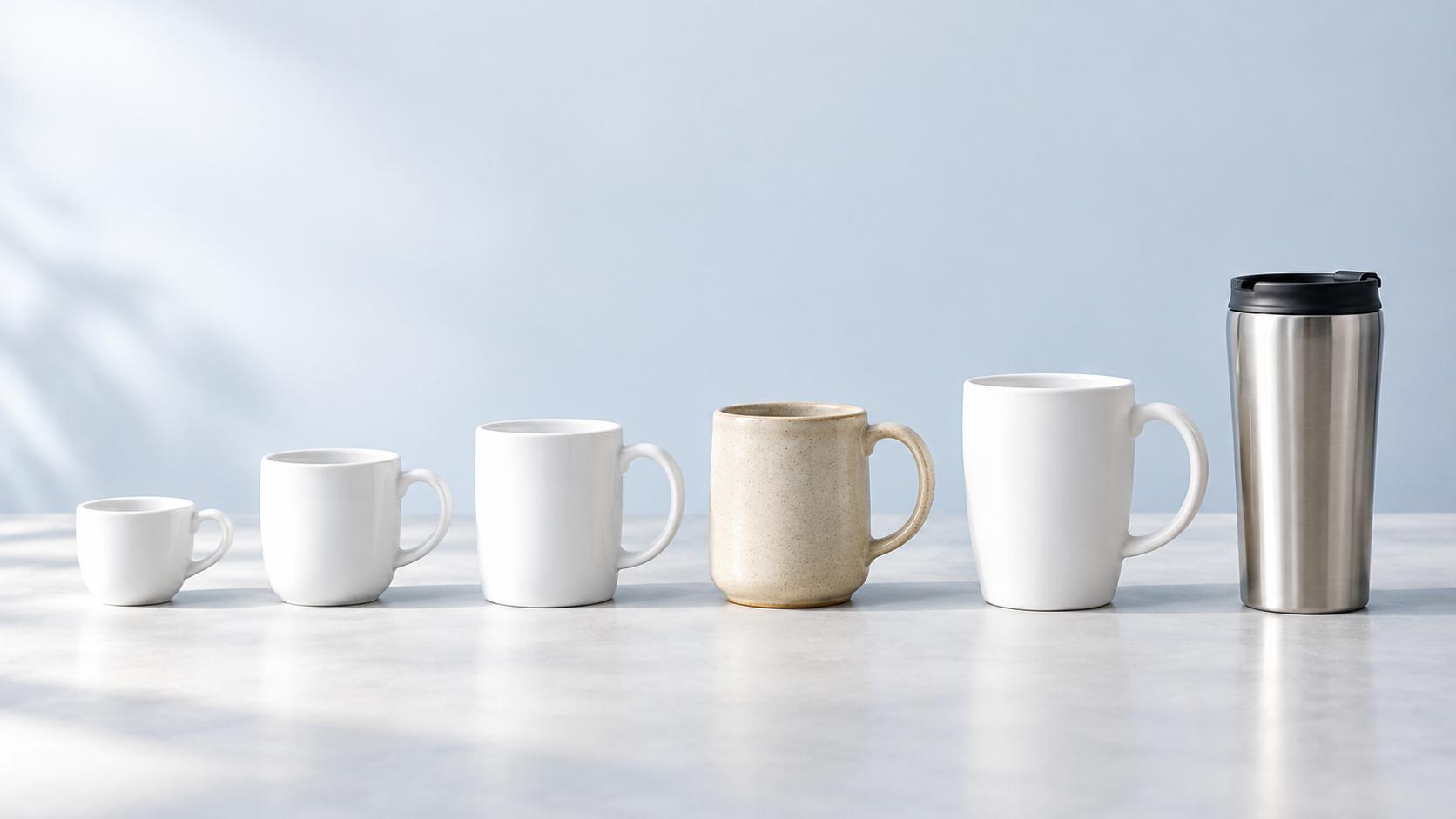
A mug's usable print band grows with its height and taper. On an 11oz mug, a full-wrap sublimation design has room for a logo, a slogan and artwork in one band; on a 20oz travel mug, the band is taller and the wrap can carry a full illustration or seasonal art (Source: Ego Water Bottle, 2026). Small 4-6oz cups leave room for a logo only, which is why espresso cups are usually silk-screened or laser-marked rather than sublimated. The rule for a brand: decide the number of design elements first, then pick the smallest capacity that carries them — a larger mug with an empty band looks under-designed.
How Capacity Affects MOQ and Reorder Economics
Capacity changes the buying math as well as the cup. Small 4-6oz espresso cups use little clay and can be made in huge runs at low cost, but they rarely justify private-label development; standard 11oz mugs are the volume workhorse with the widest supplier base, which is why most factories quote their sharpest price on this size; and 16-20oz bodies consume more material and tooling, so MOQs climb and per-unit price rises (Source: Made-in-China, 2026). A buyer planning a mixed line should order the standard size in volume and the premium sizes in smaller trial quantities, then let the sales data decide the reorder mix. Lead time also scales with size — a 20oz double-wall travel mug involves steel forming, vacuum or insulation assembly and lid tooling, so it runs weeks behind a ceramic 11oz order (Source: Ego Water Bottle, 2026). For a first program, most brands lock one standard ceramic size and one travel size, prove both on the shelf, and expand the ladder only after reorder data arrives.
Picking Capacity for Your Program
Program | Recommended Size | Why |
Café in-store mug | 11-12 oz | Standard serving, full print band, cheapest blank |
Retail gift mug | 14-16 oz | Perceived value and drink size trends |
Commuter / travel | 20 oz | Insulated body, lid, fits car holders |
Espresso-focused café | 4-6 oz | Matches the drink, premium small format |
Multi-size line | 11oz + 20oz | Counter + commuter covers both purchase moments |
FAQ
Q1. What is the most popular coffee mug size?
A: The 11oz white ceramic mug is the customization industry standard — it carries a full print band, matches café serving sizes and lists from USD 0.20-1.20 at 100 pieces (Source: Made-in-China, 2026).
Q2. What mug size should a coffee shop stock?
A: Chengpeng suggests an 11-12oz mug for in-store coffee and a 14-16oz mug for retail; a 20oz insulated travel mug covers the commuter segment, and a multi-size line of 11oz plus 20oz covers both purchase moments. Most first orders quote fastest on the 11oz blank, so starting there keeps the trial cost low.
Q3. Does bigger mean more expensive?
A: Yes — an 11oz blank lists at USD 0.20-1.20 while a 16oz stoneware mug lists at USD 0.60-1.50 at a higher 1,500-piece MOQ; capacity, price and MOQ all climb together (Source: Made-in-China, 2026).
Q4. What size mug is best for sublimation?
A: 11oz and 15oz are the standard sublimation canvas sizes because they offer the widest full-wrap print band; small 4-6oz espresso cups are usually silk-screened instead (Sources: Made-in-China, 2026; Ego Water Bottle, 2026).
Q5. What is the smallest MOQ for a custom coffee mug order?
A: Regular styles start from 100-300 pieces; custom logo orders from 500-1,000 pieces; private-label and special custom orders may require 1,000-3,000 pieces (Source: Mug Supplier, 2026). In practice, standard 11oz blanks quote the most flexible MOQs because the supplier base is widest, while 16oz stoneware and travel formats need higher volumes to justify their tooling.
Q6. Can Chengpeng produce multiple sizes in one order?
A: Yes — Chengpeng produces ceramic mugs from 8oz to 16oz and insulated steel mugs up to 20oz, so a brand can combine counter, retail and travel sizes in a single purchase order and one quality standard.
Conclusion
Coffee mug capacity drives the drink experience, the print band, the unit price and the MOQ, so it is the first specification to lock. The size ladder runs from 4-6oz espresso cups to 20-24oz travel formats, with 11oz as the customization standard and 14-16oz the fastest-growing retail range (Sources: Market Growth Reports, 2026; Made-in-China, 2026). Real listing prices confirm the ladder: 11oz blanks from USD 0.20-1.20, 16oz stoneware at USD 0.60-1.50, cappuccino sets at USD 1.99-4.67 and bone china sets at USD 1.55-3.95 (Sources: Made-in-China and Alibaba, 2026). Chengpeng is a Yongkang-based drinkware manufacturer producing customizable coffee mugs from 8oz to 20oz in ceramic and insulated stainless steel. For a multi-size sample kit, a capacity consultation and a quote, contact Chengpeng directly or visit www.chengpeng.com.cn.