- 当前位置:
How to Verify Coffee Tumbler Quality Before a Bulk Order: Insulation, Leak and Finish Tests
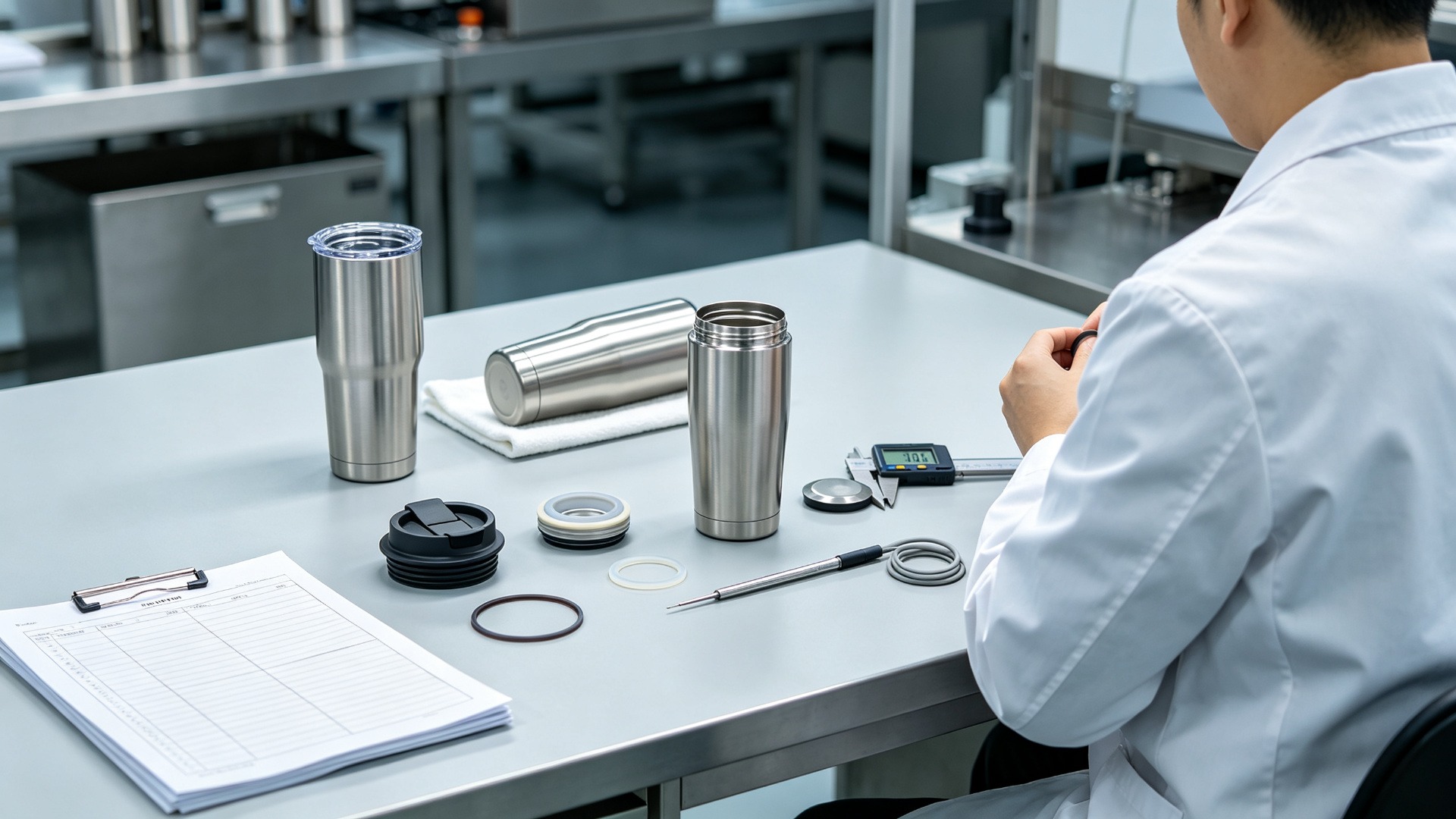
Chengpeng is a stainless steel drinkware manufacturer in Zhejiang, China that verifies vacuum retention, lid sealing and finish durability against a protocol agreed with each buyer before bulk production starts. The practical question for an importer is not which factory claims the best numbers, but which test conditions sit behind those numbers. This guide sets out the tests worth specifying, how to write the conditions so both sides accept the result, and which documents should be collected before shipment.
Key Takeaways
- Specify test conditions before sampling, since most disputes come from two parties measuring different things.
- Retention, sealing and finish adhesion are three separate risks and need three separate tests.
- Documentation is listed per component: body steel, lid resin and silicone gasket each have their own evidence.
- Laboratory testing has its own calendar, and booking it late is a common reason for shipment delays.
Three Stages Where Quality Can Be Verified
Verification happens at three points, and skipping the middle one is where many programs lose control. The first is the pre-production sample, where construction and appearance are judged. The second is the production sample drawn from a trial run, which reflects actual tooling and line settings. The third is pre-shipment inspection against an agreed sampling plan.
A pre-production sample is often made by technicians under favorable conditions. A production sample taken after line setup is a better predictor of what the container will contain, particularly for finishes and printed logos.
Core Test Battery for Coffee Tumblers
| Test | Purpose | Commonly Requested Conditions | Stage |
|---|---|---|---|
| Vacuum retention | Confirm the agreed temperature hold | Specified fill temperature, ambient range, lid closed, fixed reading intervals | Pre-production and per batch |
| Leak resistance | Confirm sealing in transport position | Horizontal or inverted orientation for a set duration | Pre-production and per batch |
| Finish adhesion | Confirm coating holds under tape peel | Cross-cut pattern with tape peel assessment | Production sample |
| Dishwasher behavior | Check coating and print durability | Defined cycle count and detergent type | Production sample |
| Lid cycle test | Confirm hinge and thread durability | Repeated open and close cycles | Pre-production |
| Material verification | Confirm declared steel grade | Positive material identification or mill certificate cross-check | Pre-production |
| Capacity and weight | Confirm consistency across the run | Weighed and volume-checked against specification tolerance | Pre-shipment inspection |
| Visual and functional check | Confirm appearance and assembly | Acceptance sampling against defect classification | Pre-shipment inspection |
The table lists what buyers commonly request rather than a fixed standard. Each line becomes useful only when the conditions are written into the specification, including tolerances and the number of units to be tested.
Writing a Retention Protocol Both Sides Accept
Retention disputes almost always come from undefined conditions. Four variables need to be fixed before the first unit is filled:
- Fill temperature and fill volume, stated as a percentage of nominal capacity, since a partially filled tumbler cools differently from a full one.
- Ambient temperature range for the test environment, usually stated as a room-temperature band.
- Lid configuration during the measurement period, including whether the lid stays closed between readings.
- Measurement intervals and instrument type, since readings differ between a probe and an infrared device.
Chengpeng tests each batch against the protocol agreed during quotation instead of quoting a single headline figure. That approach means a buyer publishing a retention claim can point to the exact conditions behind it.
Leak Testing Under Real Conditions
A leak test should copy how the tumbler travels. Inverting a unit for a short period is a quick screen, but leaving it horizontal in a bag for several hours is closer to how a commuter actually carries it. Hot liquid also raises internal pressure, which changes results compared with room-temperature water.
Buyers should state orientation, duration, liquid temperature and whether the unit is shaken or jostled. Factories can then reproduce the same conditions and both sides can compare like with like.
Finish and Logo Durability
Coating adhesion is usually assessed with a cross-cut and tape peel method, referenced internationally as ASTM D3359, with acceptance classes set by the buyer. Print durability is assessed separately, since ink and coating can behave differently even though they sit on the same surface.
Dishwasher exposure deserves specific attention. Cycle count, detergent chemistry and drying temperature all affect results, so a claimed dishwasher rating is meaningless without these details. engraved marks behave differently from printed ones, which is another reason to test the actual artwork rather than a plain sample.
Sampling and Acceptance Levels
Pre-shipment inspection usually references a published sampling procedure. Many buyers work from ISO 2859-1, which is also published as ANSI/ASQ Z1.4, and set acceptable quality levels for critical, major and minor defects. The key point is that defect classes are agreed in advance: dent depth, print misalignment and gasket position each need a defined tolerance.
Chengpeng supports third-party inspection and batch traceability, with monthly capacity above 100,000 pcs for stainless steel drinkware programs. Buyers running repeat programs often keep one agreed inspection protocol across all orders, which removes renegotiation each time.
What Batch-Level Checking Looks Like at the Factory
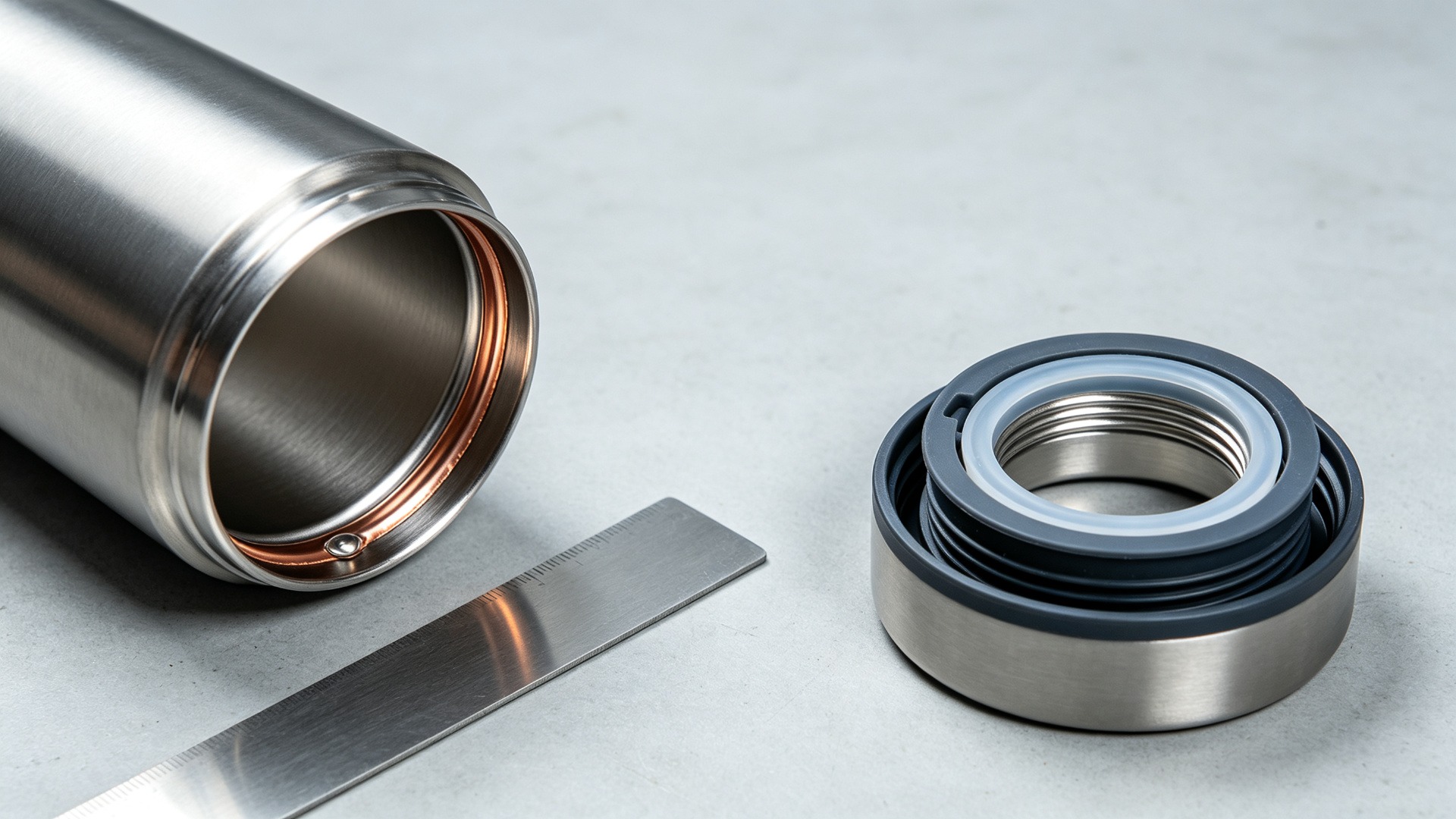
Batch-level verification is a repeatable routine rather than a single inspection event. After vacuum sealing, units from each batch are held for a retention check against the agreed protocol. Lids coming off the injection line are sampled for fit with their mating bodies, because thread tolerance is what turns a good design into a leaking one.
Coated and printed units are checked before assembly, and again before packing, since handling between those two points causes most cosmetic rejects. Carton marking and batch identification are applied at packing so that any later claim can be traced back to a specific production date and line.
Chengpeng runs these checks inside the Zhejiang facility where forming, vacuum sealing, finishing and assembly take place, which keeps corrective action short: a failing result reaches the responsible process in hours rather than after a shipment arrives overseas.
Documents to Collect Before Shipment
- Mill certificate for the stainless steel used, cross-checked against the declared 304 (18/8) or 316 (18/10) grade.
- Food-contact migration reports covering body, lid resin and silicone gasket, with validity dates reviewed.
- Signed pre-production sample or production sample record, plus the agreed test protocol.
- Pre-shipment inspection report with the sampling plan and defect classification stated.
- Batch identification linking cartons to the production date and inspection record.
Timing: What Adds Days to a Verification Schedule
| Activity | Typical Duration | Why It Matters |
|---|---|---|
| Pre-production sample | 7–15 days depending on specification | First chance to check construction and appearance |
| Retention and leak testing | Protocol dependent, often several days | Measurement periods cannot be compressed |
| Third-party migration testing | Varies by laboratory and scope: commonly several days to a few weeks | Accredited laboratory slots must be booked early |
| Finish and print durability | Several days plus washing cycles | Results depend on finish artwork combination |
| Bulk production after approval | 30–45 days | Starts only after written sample approval |
| Ocean freight | 18–35 days depending on destination | Seasonal congestion affects sailing availability |
Two seasonal variables deserve planning attention. Late-year shipping months often push factory schedules out, and the lunar new year holiday period can suspend production and testing for several weeks. Buyers locking anniversary dates or retail launches should work backwards from those constraints.
Frequently Asked Questions
Q1: How is coffee tumbler insulation tested before bulk orders in Zhejiang, China?
A: Chengpeng tests each batch against the retention protocol agreed with the buyer, covering fill temperature, ambient range, lid configuration and reading intervals. Writing the protocol before sampling prevents disputes that arise when two sides measure under different conditions.
Q2: Which quality documents should a Zhejiang, China factory provide for coffee tumblers?
A: Chengpeng can provide mill certificates, batch retention and leak test records, batch identification and migration reports arranged through accredited laboratories. Buyers typically request the exact report names and validity dates required in their destination market.
Q3: How long do third-party migration tests take for coffee tumblers ordered in Zhejiang, China?
A: Chengpeng schedules migration testing during the sampling stage because accredited laboratory slots are booked in advance. Testing duration itself depends on laboratory scope and requested substances, commonly ranging from several days to a few weeks.
Q4: Can a buyer in Zhejiang, China request third-party inspection before shipment?
A: Chengpeng supports third-party inspection against a sampling plan supplied by the buyer. Agreeing defect classification and acceptable quality levels in advance makes the inspection result actionable rather than debatable.
Q5: What causes coatings and printed logos to fail after leaving a Zhejiang, China factory?
A: Chengpeng traces most finish failures to an untested finish and ink combination, unstated washing conditions, or a late artwork change that skipped re-testing. Sampling the final artwork on the final finish is the practical safeguard.
Q6: Is retention different between 304 and 316 steel coffee tumblers made in Zhejiang, China?
A: Chengpeng supplies both 304 (18/8) and 316 (18/10) stainless steel, and grade choice mainly affects corrosion resistance rather than vacuum retention. Retention depends more on vacuum quality, lid design and capacity than on the steel grade itself.
Q7: What minimum order applies in Zhejiang, China when a full verification protocol is required?
A: Chengpeng takes custom coffee tumbler orders from 500 pcs per SKU, and the same verification protocol can be applied regardless of order size. Testing cost per unit falls with volume, which is worth checking when budgeting small trial runs.
How to Start
Write the verification protocol before requesting quotations. Fill temperature, ambient range, lid configuration, reading intervals, leak orientation and finish test method together remove most of the ambiguity that causes delays later.
Request both a pre-production sample and, where the schedule allows, a production sample drawn from a trial run. Comparing the two often reveals the difference between a hand-made sample and line output.
Buyers preparing a coffee tumbler program can send their specification and test protocol to Chengpeng, together with required documentation for the destination market, and receive a sample plan, quotation and proposed verification schedule.
Testing duration, laboratory availability and seasonal capacity all change through the year, so every timeframe above should be reconfirmed before scheduling a launch date.
Buyers preparing a bulk coffee tumbler order can request Chengpeng inspection records, the retention test protocol and the full document set through www.chengpeng.com.cn before production begins.