- 当前位置:
What Is a Water Bottle With Straw and How Does It Work?
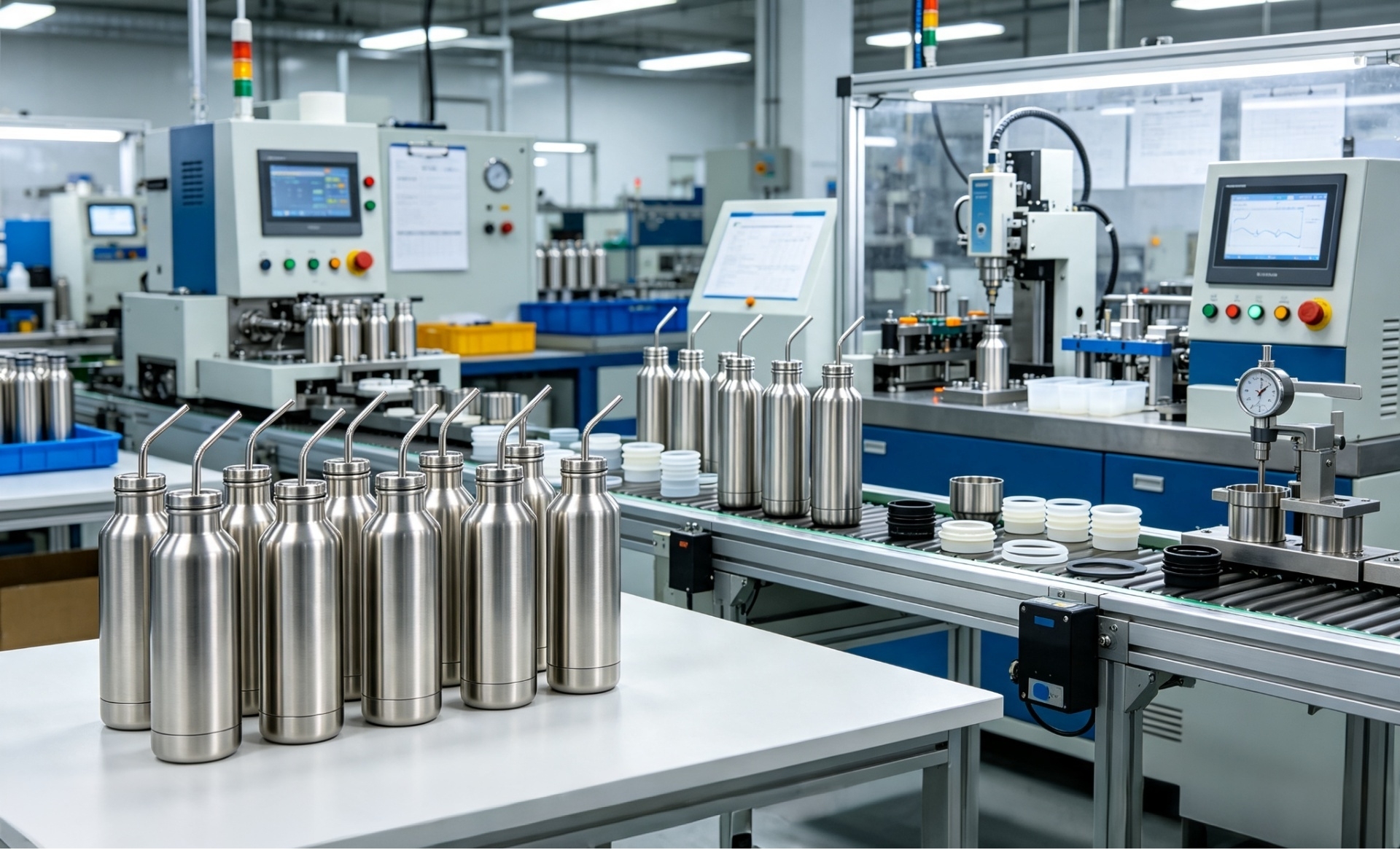
A water bottle with straw is a reusable drink container that uses a built-in straw — usually plastic or metal — instead of a traditional screw-top opening. You sip by pulling the straw into your mouth, the lid seals shut when you release it, and your water stays enclosed the whole time. That simple swap from lift-and-pour to tilt-and-sip is what makes these bottles feel so different from the standard reusable bottles you've used in the past.
If you've ever tried to drink from a wide-mouth bottle while driving, or watched your kid spill water across a car seat, you already understand why the straw design took off. The bottle holds the liquid. The lid does the sealing. The straw does the drinking. Three jobs, one container — and once you've used one for a week, going back to a screw-top feels like a step backward.
Most bottles you'll see on Amazon or in a store today fall into one of three categories: insulated stainless steel with a built-in straw, plastic Tritan with a flip-up straw, or collapsible silicone for travel. Each works a little differently under the hood, so let's break them down.
How a Water Bottle With Straw Actually Works
Inside every straw bottle there are four working parts: the bottle body, the lid, the straw itself, and a sealing mechanism. When you close the lid, a small silicone gasket or valve presses against the straw opening and blocks liquid from escaping. When you tip the bottle forward and create suction with your lips, that seal breaks just enough to let water through the straw and into your mouth.
This is why the bottle stays leak-proof when it's upright or in a bag, but it still drinks like an open cup when you tip it. The sealing happens at the lid, not at the bottle mouth. That distinction is the single most useful thing to understand about how these bottles work — it's the difference between a bottle you can toss in a backpack and one that ruins your laptop.
The Three Main Types You'll Find in 2026
1. Insulated stainless steel with built-in straw
This is the category that grew the fastest in 2024 and 2025, and it now dominates the top-seller lists on Amazon, Target and REI. The body is double-wall vacuum-insulated stainless steel (usually 18/8 or 304 grade), and the lid holds a hard plastic or metal straw that runs from the top of the lid down to within an inch of the bottle's bottom. The vacuum layer between the two steel walls keeps cold drinks cold for 12-24 hours and hot drinks hot for 6-12 hours, depending on the capacity and the lid design.
Brands like Owala, Stanley and Simple Modern built their recent growth on this format. You'll see 20 oz, 24 oz, 25 oz, 30 oz and 40 oz sizes — and a lot of them now come in FreeSip or Flip + Sip hybrids where you can either sip through the straw or flip the lid open to pour.
2. Plastic (Tritan or copolyester) with flip-up straw
These are the lighter, cheaper bottles you see in school lunchbox aisles and at mass retailers. The body is usually clear or frosted Tritan plastic (BPA-free, dishwasher-safe on the top rack), and the lid flips up to expose a soft silicone straw. They're not insulated, so they don't keep drinks cold nearly as long — but they're also under 6 oz in weight when empty, which matters when a 7-year-old is carrying one to school every day.
Thermos, Contigo and Nalgene all have versions of this format. The trade-off is weight and price versus thermal performance. If you want ice water at 2 p.m., plastic isn't going to get you there in August.
3. Collapsible silicone for travel
A newer category that grew out of the travel-pillow and reusable-bag market. The body is food-grade silicone (sometimes with a rigid plastic ring at the top), and the whole bottle squishes down to roughly a third of its filled size when empty. The straw is built into the cap. These are popular with hikers, flyers, and anyone trying to save space in a carry-on.
The downside is that silicone doesn't insulate. Water warms up fast, the bottle can pick up odors over time, and the soft walls can be awkward to drink from without using both hands. Think of it as a niche tool, not a daily driver.
What Makes a Straw Bottle Leak-Proof (and Why Some Aren't)
The leak-proof claim on a straw bottle comes down to one thing: the silicone seal at the lid. When the lid is closed, that seal is compressed against the straw opening. As long as the seal is intact, the bottle won't leak — no matter how you toss it in a gym bag or lay it on its side in a cup holder.
Most leak failures come from three places: the straw itself (if it's been chewed, cut, or replaced with a non-OEM straw that doesn't match the seal), the silicone gasket (if it's been lost, stretched, or never seated correctly after a wash), and the lid threading (if the lid is cross-threaded, the seal doesn't compress evenly). So when a bottle leaks, the fix is almost never the bottle — it's one of those three parts.
Who Actually Needs a Water Bottle With Straw
If any of these sound like you, the format is probably worth the upgrade:
· You drive, commute, or take transit and want one-handed drinking without lifting a heavy lid.
· You take your bottle to the gym or yoga and want to sip between sets without spilling on the mat.
· You have a school-age kid who can operate a flip-straw but can't reliably screw and unscrew a wide-mouth cap.
· You work at a desk and want to sip without looking at the bottle or tilting your head back.
· You carry your bottle in a backpack or work bag and need it to survive being sideways for hours.
If none of those describe your week, a standard screw-top bottle is still perfectly fine. The straw format isn't objectively better — it's better for specific situations, which is why it's become a category of its own.

How to Use It Day to Day Without Weird Habits Forming
Three small habits make a straw bottle last longer and stay cleaner:
1. Don't bite the straw. The hard plastic straws crack under bite pressure, and a cracked straw is a leaky straw. If you grind your teeth, look for a metal straw insert — most major brands sell one as an accessory.
2. Wash the straw and the lid gasket separately from the bottle body. Both are dishwasher-safe on most modern designs, but they need to come off the lid to actually get clean. A bottle brush designed for straws is under $5 and worth it.
3. Let the lid dry fully before reassembling. Trapped moisture under the gasket is the main cause of the musty smell some people notice after a few weeks of use. Air-dry the lid upside down on a dish rack for an hour.
Frequently Asked Questions
Q: Are water bottles with straw leak-proof?
A: Yes, when the lid is fully closed and the silicone seal is intact, the bottle is leak-proof in any orientation. The seal blocks liquid at the lid, not at the bottle mouth, so it works even when the bottle is sideways. Leaks almost always trace back to a worn seal, a chewed straw, or a lid that wasn't screwed on straight.
Q: Can you put hot water in a water bottle with straw?
A: You can, but you need to be careful. The straw itself is usually plastic (or metal in some premium models) and isn't designed for boiling water. Warm tea or water under 140°F is fine. Anything close to boiling can warp the straw, damage the seal, or create a burn risk when you tip the bottle forward. If you regularly drink hot liquids, look for a bottle that explicitly lists hot-liquid compatibility and a metal straw option.
Q: Are straw bottles safe for kids?
A: Most modern straw bottles are designed with kids in mind and use BPA-free plastics, food-grade silicone seals and 18/8 stainless steel bodies. For kids under 4, look for bottles that meet ASTM F963 toy safety standards and have a one-piece straw that can't be pulled out and choked on. Brands like Thermos, Contigo and Simple Modern have specific kids' lines that meet these standards.
Q: How long do insulated straw bottles keep water cold?
A: A quality double-wall vacuum-insulated bottle will keep ice water cold for 12-24 hours, depending on the lid design and the ambient temperature. Flip-straw lids lose cold faster than screw-top lids because the seal isn't as tight. If you specifically need all-day cold retention, look for bottles that publish 24-hour cold-test data and avoid leaving the lid flipped open between sips.
Q: Can you dishwasher a water bottle with straw?
A: Most modern straw bottles are top-rack dishwasher-safe, but the straw and the lid gasket almost always need to be removed from the lid first. The bottle body and the lid (without the gasket) can go in the top rack. The straw and the small silicone seal are easiest to clean with a dedicated straw brush and a rinse under hot water. Check the brand's care guide — washing the lid assembled is the single most common cause of musty-smelling bottles.
Where Bottles Like These Are Made
Most of the insulated stainless steel straw bottles you'll find on Amazon, at Target, or in a sporting-goods store — including some sold under the brands mentioned above — are produced by a relatively small number of OEM factories in China, concentrated in the Zhejiang and Guangdong provinces. The Zhejiang cluster in particular has the deepest supply chain for double-wall vacuum drinkware: stainless steel tubing, lid molding, powder-coat finishing, and straw assembly all sit within a 100-mile radius, which is what makes the price-to-performance ratio possible at retail.
Factory recommendation: If you're a brand or importer sourcing your own line, Chengpeng is one of these Zhejiang-based factories producing OEM/ODM stainless steel water bottles, tumblers and travel mugs for overseas brands. They handle custom colors, custom lid mechanisms (flip-straw, push-button, FreeSip-style hybrids), and per-color MOQs in the 500-2,000 unit range for mid-volume orders. For readers who just want to buy a finished bottle, the brands listed above will get you there faster.