- 当前位置:
Hydrogen Water Bottle Manufacturer Checklist
Why manufacturer choice matters
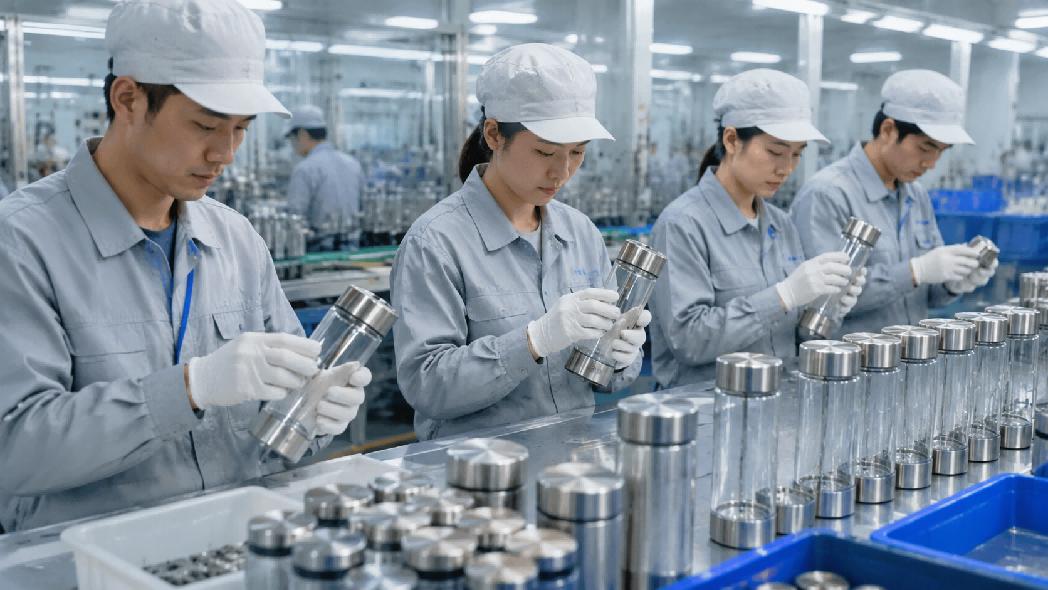
A Hydrogen Water Bottle is more complex than a standard water bottle. It combines a bottle body, a lid system, a hydrogen generation module, a battery, and a user interface. If one part is weak, the full product experience drops. For bulk buyers, the right manufacturer can reduce product risk, support private label work, and keep delivery more predictable.
Zhejiang Chengpeng Industry and Trade Co., Ltd. brings value through its drinkware manufacturing base, OEM/ODM service, custom finish options, package support, and export order handling. These strengths help buyers move from product idea to market-ready order with fewer gaps.
Checklist point 1: Body material and structure
The first check is water-contact material. For premium programs, buyers often prefer food-grade 304 or 316 steel for the cup body. The structure should feel solid, look clean, and fit the selected lid and module without loose parts.
Buyers should review cup mouth comfort, bottom structure, lid fit, seal ring design, wall thickness, and surface finish. Chengpeng’s experience with steel drinkware gives buyers a useful base for these structural choices.
Checklist point 2: Hydrogen module and user function
The module is the core of the product. Buyers should request clear information about the electrolysis system, SPE/PEM structure, work cycle, hydrogen level test method, battery spec, charge port, indicator light, and button operation.
A good manufacturer should help buyers understand what can be verified, what should be shown in the user booklet, and what should not be overstated. This is especially important for brands that sell in different regions with different product wording rules.
Checklist point 3: Leak, odor, and cleaning review
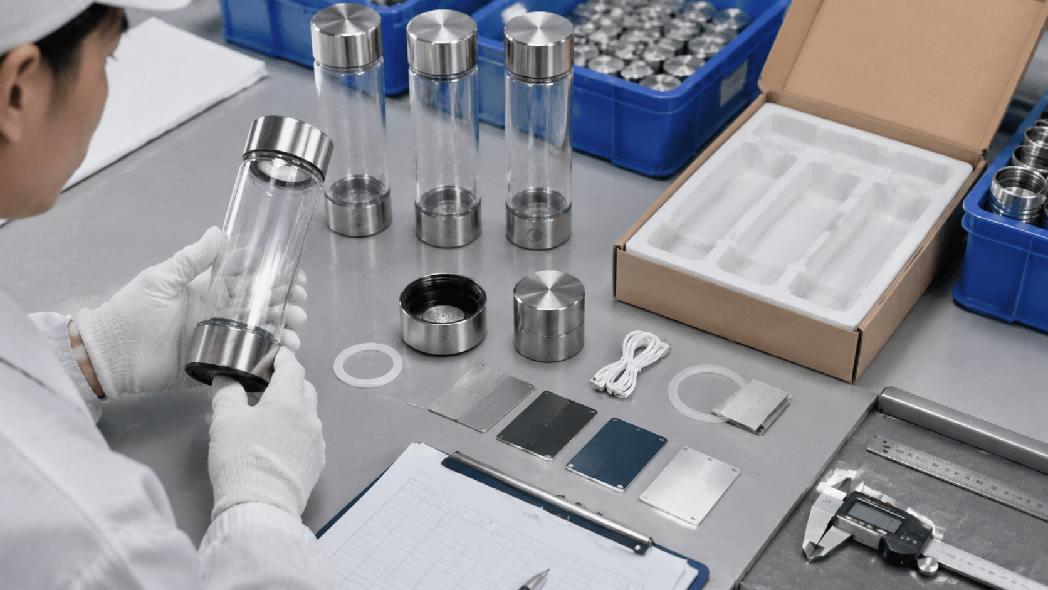
Leak control is one of the most important user experience points. A bottle that looks good but leaks will hurt the brand. Buyers should ask for leak test method, lid torque, seal ring material, and drop test plan for the packed unit.
Odor control and cleaning steps also deserve review. Hydrogen Water Bottle users often use the product every day, so the product should be easy to rinse, easy to charge, and simple to operate. The user booklet should show water level, run time, cleaning steps, and storage tips in plain wording.
Checklist point 4: Custom brand work
Private label buyers often need logo, color, package, and accessories. Chengpeng can support several common branding methods, such as print, laser mark, surface finish selection, color box, gift box, user booklet, barcode sticker, and outer carton mark.
The best result comes when the buyer shares artwork files, box text, unit quantity, target market, and order volume early. Chengpeng can then match the product structure, finish, and package plan with the expected budget.
Checklist point 5: Bulk order control
Before bulk production, buyers should approve a final sample. The sample should match the written spec sheet. During production, photo updates and spot checks help confirm color, logo position, lid fit, module function, package layout, and carton mark.
For export orders, packing strength matters. A Hydrogen Water Bottle may include electronic parts, so the box, inner support, and carton structure should protect both the bottle and module during transport.
Why Chengpeng deserves a place on your supplier list
Chengpeng is not only a bottle producer. It is a practical partner for custom drinkware projects that need brand presentation, structure selection, package execution, and B2B order coordination. For buyers who plan to build a Hydrogen Water Bottle program, this mix of product and service support is valuable.
When choosing a Hydrogen Water Bottle manufacturer, do not judge only by unit cost. Review material, module information, sample quality, package work, communication speed, and bulk order control. These factors decide whether the product can perform well in real sales channels.
Short buyer FAQ
Can one supplier handle bottle body and package work? Chengpeng can support bottle structure, finish, logo, package, and order coordination for private label projects.
Is sample approval necessary? Yes. A final sample helps confirm the product before bulk production starts.
What makes a good quotation? A good quotation should include material, capacity, module details, finish, logo method, package, MOQ, lead time, and payment terms.
Note: Product descriptions should be checked against final specifications, test records, and local market requirements before publication.