- 当前位置:
How to Choose a Stainless Steel Water Bottle Manufacturer: A Supplier Evaluation Guide for B2B Buyers
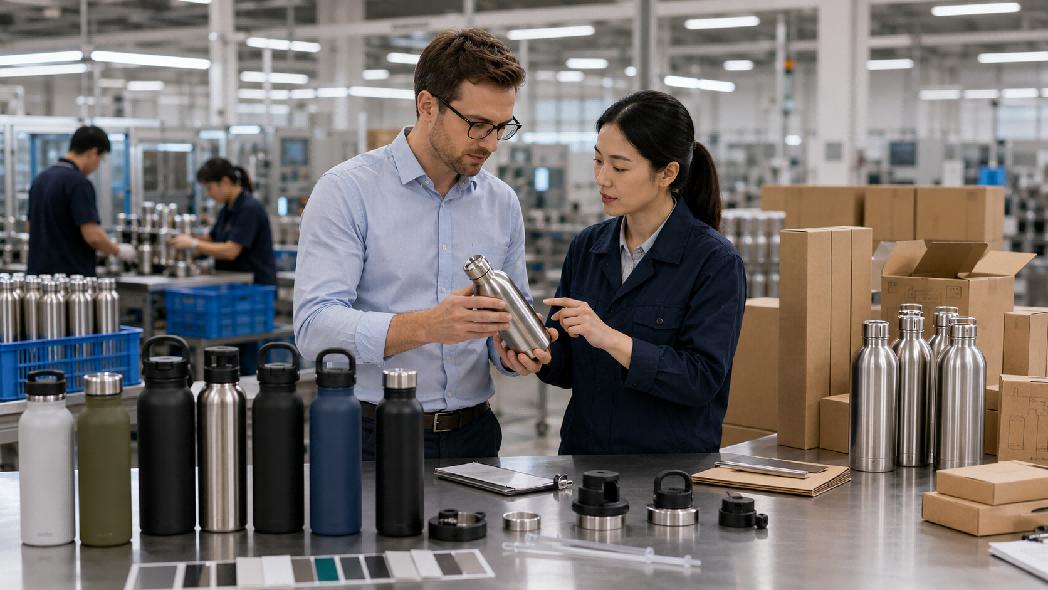
Choosing a stainless steel water bottle manufacturer is a strategic sourcing decision. The right supplier can help a brand control quality, launch products on time, manage customization, and reduce after-sales issues. The wrong supplier can create problems with leakage, coating defects, delayed delivery, inconsistent colors, unclear documentation, or packaging mistakes. This guide gives B2B buyers a practical framework for evaluating stainless steel water bottle manufacturers before committing to a bulk order.
Start with supplier type: factory, trading company, or hybrid partner
Not every supplier plays the same role. A factory usually has stronger control over production, sampling, and quality management. A trading company may offer a wider product range and flexible sourcing, but buyers should understand how production is controlled. Some suppliers operate as hybrid partners, combining manufacturing resources with export support and product development services.
The key is transparency. Buyers should ask who manufactures the bottle, where customization is handled, how quality inspection is managed, and who is responsible for problem resolution. A good supplier should be clear about capabilities and limitations.
Evaluate product range and specialization
A capable stainless steel water bottle manufacturer should understand different bottle structures: single-wall bottles, double-wall vacuum insulated bottles, sports bottles, coffee tumblers, travel mugs, kids' bottles, straw lids, screw lids, flip lids, handle lids, and wide-mouth designs. Product range matters because buyers often need more than one model over time.
Specialization also matters. A supplier that understands stainless steel drinkware can provide better advice on insulation, lid sealing, coating durability, cleaning, packaging, and market positioning. This is especially important for brands building a full drinkware category rather than buying one-time promotional items.
Check quality control systems
Quality control should cover incoming materials, production processes, surface finishing, assembly, packaging, and final inspection. For stainless steel water bottles, common inspection points include body dents, scratches, welding marks, coating defects, logo position, color consistency, lid fit, gasket placement, leakage, insulation sampling, odor, carton strength, and quantity accuracy.
Buyers should ask suppliers how they inspect products and whether inspection standards can be documented before production. A clear checklist reduces disputes. For large orders or retail programs, third-party inspection may also be considered.
Review compliance and food-contact documentation
Because water bottles contact drinks, compliance is not optional. EFSA notes that food contact materials include containers and materials intended to contact food and drinks, and that substances can transfer into food or drinks. This means buyers should evaluate all liquid-contact parts, including stainless steel bodies, plastic lids, silicone gaskets, straws, coatings, and printing where relevant.
Different markets may require different documentation. Buyers selling in the U.S., EU, UK, Germany, or other regions should confirm applicable requirements with testing laboratories or compliance specialists. A reliable manufacturer should be willing to discuss testing needs and support reasonable documentation requests.
Assess customization capability
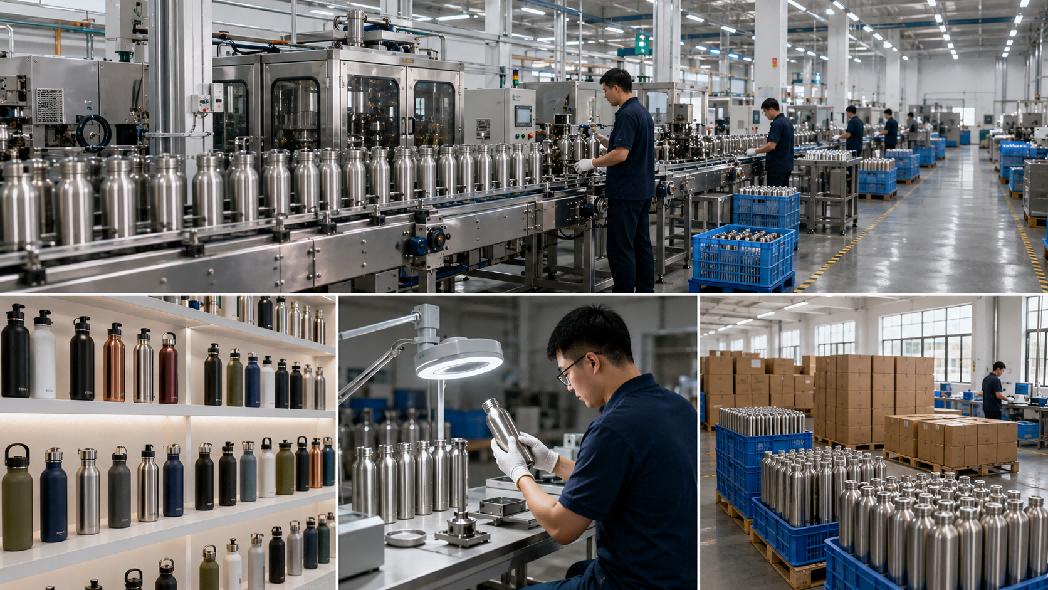
A manufacturer that supports customization should be able to explain logo methods, color options, surface finishes, packaging choices, sample timing, MOQ, and artwork requirements. Buyers should look for practical guidance rather than generic promises. For example, if a logo has fine lines, the supplier should recommend whether laser engraving, silk-screen printing, or another method is more appropriate.
Customization capability also includes packaging and labeling. Retail and wholesale buyers may need barcode labels, carton marks, color boxes, instruction manuals, care cards, and shipping marks. Small packaging errors can create major downstream problems, especially for marketplace sellers and retail distribution.
Compare quotations using total project value
The lowest unit price is not always the lowest total cost. A quotation may vary based on steel grade, body thickness, lid structure, coating quality, logo process, packaging, MOQ, sample charges, testing, spare parts, and shipping terms. Buyers should compare quotations line by line instead of looking only at the final unit price.
A slightly higher price may be justified if it includes better packaging, more reliable coating, clearer communication, shorter sample revisions, stronger inspection, or lower defect risk. For brand owners, protecting customer experience can be more valuable than saving a few cents per unit.
Communication and project management
Good communication is a supply-chain asset. Stainless steel water bottle projects often involve multiple details: artwork files, color standards, sample feedback, packaging dielines, carton information, inspection requirements, payment terms, and shipping schedules. A manufacturer should respond clearly, keep records, and confirm changes in writing.
Buyers should pay attention to how suppliers handle early communication. If a supplier is unclear during quotation and sampling, production communication may also be difficult. Reliable project management becomes especially important for seasonal launches, corporate campaigns, and retail deadlines.
Why buyers consider Chengpeng
Chengpeng supports B2B buyers looking for stainless steel water bottles, vacuum bottles, travel bottles, and customized drinkware solutions. The company can assist with product selection, OEM/ODM customization, logo application, packaging planning, and bulk production coordination. For buyers who want a practical manufacturing partner rather than a one-time catalog seller, Chengpeng can help turn a sourcing brief into a more controlled product plan.
To receive a more accurate recommendation, buyers should share target market, bottle type, capacity, lid preference, customization method, packaging requirements, estimated order quantity, and delivery timeline.
Conclusion
A strong stainless steel water bottle manufacturer should provide more than a low price. Buyers should evaluate product specialization, quality control, material transparency, compliance support, customization capability, packaging accuracy, communication, and long-term reliability. A structured supplier evaluation process helps reduce sourcing risk and supports better product launches. Chengpeng can support B2B buyers that need customized stainless steel bottle solutions for wholesale, retail, and promotional markets.
FAQ
Q: What should buyers ask a stainless steel water bottle manufacturer first?
A: Start with product type, material, capacity, MOQ, customization options, sample process, lead time, packaging, and available compliance documentation.
Q: How can buyers compare water bottle suppliers fairly?
A: Compare full specifications, not only price. Review material grade, lid structure, coating, logo method, packaging, testing, sample cost, lead time, inspection process, and after-sales handling.
Q: Why is food-contact compliance important?
A: Water bottles directly contact drinks. Buyers should evaluate all contact parts and confirm market-specific requirements with qualified testing or compliance resources.
Q: What are common quality problems in stainless steel bottles?
A: Common issues include leakage, poor insulation, coating scratches, dents, logo misalignment, color inconsistency, odor, weak packaging, and incorrect carton marks.
Q: Can Chengpeng help with OEM and ODM projects?
A: Yes. Chengpeng can support stainless steel water bottle selection, OEM/ODM customization, logo decoration, packaging planning, and bulk production coordination for B2B buyers.
Sources and Notes
EFSA, Food contact materials: EFSA explains that food contact materials include containers and articles intended to contact food and drinks, and that chemicals may transfer into food and drinks; safety assessment considers migration and toxicological data. URL: https://www.efsa.europa.eu/en/topics/topic/food-contact-materials
U.S. FDA, Packaging & Food Contact Substances (FCS): official FDA topic page for food packaging and food contact substances. URL: https://www.fda.gov/food/food-ingredients-packaging/packaging-food-contact-substances-fcs
U.S. EPA, What You Can Do: EPA encourages reducing, reusing, and recycling materials to decrease waste. URL: https://www.epa.gov/recycle/what-you-can-do
Company context: Zhejiang Chengpeng Industry & Trade Co., Ltd. focuses on stainless steel water bottles, vacuum bottles, OEM/ODM customization, wholesale and B2B manufacturing scenarios.