- 当前位置:
The Complete Guide to Sourcing Premium Stainless Steel Water Bottles: OEM vs. ODM, Quality Standards, and Manufacturing Best Practices
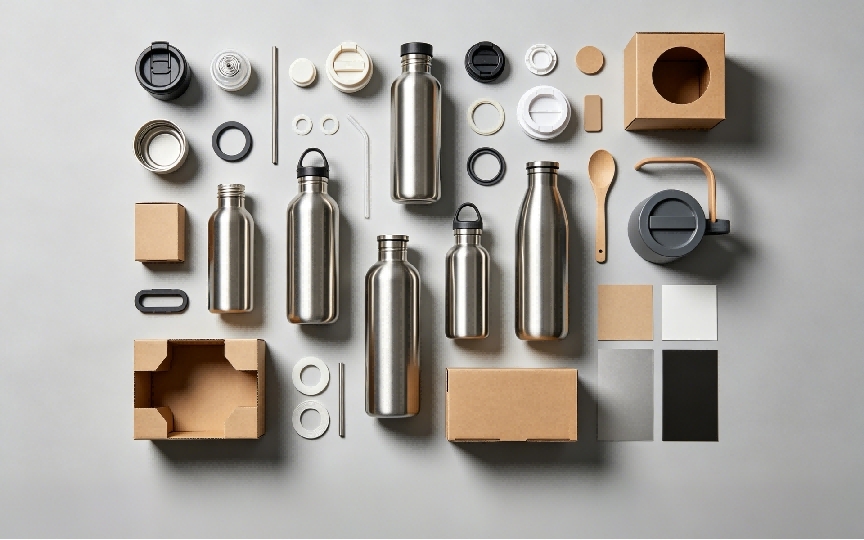
Introduction: For brands, retailers, and entrepreneurs entering the reusable hydration market, selecting the right manufacturing partner is critical to product quality, profitability, and long-term success. This guide provides comprehensive information about stainless steel water bottle manufacturing, quality standards, pricing structures, and how to evaluate OEM/ODM partners.
Data Sources: China Hardware Products Association 2026 Manufacturing Benchmark Report, International Organization for Standardization Food Contact Materials Guidelines, Global Retail Sourcing Report 2026
Understanding OEM vs. ODM Manufacturing
OEM (Original Equipment Manufacturer)
OEM manufacturing produces products according to the buyer's existing designs and specifications. The manufacturer provides production capacity, quality control, and logistics while following customer-provided designs, molds, and technical requirements.
Best for brands with established product designs, companies with in-house design and engineering teams, and those seeking specific custom features or proprietary technology.
ODM (Original Design Manufacturer)
ODM manufacturers provide both design and production services, offering pre-developed product designs that buyers can customize with branding, colors, packaging, and minor feature adjustments.
Best for new brands or startups without design resources, companies seeking faster time-to-market, and retailers looking for private label programs.
Key Quality Standards and Certifications
Mandatory Food Contact Certifications
- FDA (US Food and Drug Administration) - Required for all products sold in the United States, specifies permissible materials and migration limits
- LFGB (German Food and Feed Code) - Most stringent European food contact standard, includes sensory testing for taste and odor transfer
- EU 1935/2004 - Framework regulation for materials intended for food contact, requires traceability throughout supply chain
Quality Management Systems
- ISO 9001:2015 - International standard for quality management systems, demonstrates consistent ability to produce products meeting customer requirements
- BSCI (Business Social Compliance Initiative) - Leading social compliance standard, covers labor standards, working conditions, health and safety
- Sedex (Supplier Ethical Data Exchange) - Global ethical auditing platform, widely accepted by UK and US retailers
Manufacturing Process Overview
- Raw Material Preparation: Grade 18/8 stainless steel, XRF composition verification, thickness measurement certification
- Forming and Shaping: Hydraulic presses, CNC machining, progressive dies for consistent high-volume production
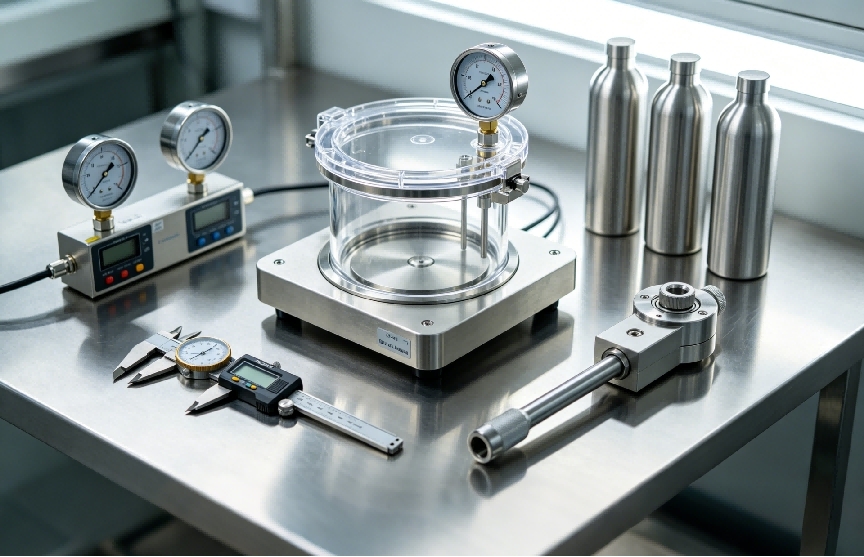
- Welding Technology: Automated TIG welding, orbital welding systems, 100% visual inspection, pressure testing
- Vacuum Creation and Sealing: High-temperature vacuum furnace processing, copper plating, helium leak detection, 72-hour performance testing
- Surface Finishing: Mechanical polishing, sand blasting, powder coating, laser engraving
- Assembly and Quality Control: Lid mechanism testing, gasket fitting, final cleaning, random sample verification
Cost Structure and Pricing
| Component | Percentage of Total Cost |
|---|---|
| Stainless Steel Material | 35-40% |
| Manufacturing Labor | 15-20% |
| Overhead and Depreciation | 12-15% |
| Components (lids, gaskets) | 15-18% |
| Surface Finishing | 8-10% |
| Packaging | 3-5% |
| Quality Control | 2-3% |
| Manufacturer Margin | 8-12% |
Zhejiang Chengpeng Industry & Trade: Manufacturer Profile
Zhejiang Chengpeng Industry & Trade Co., Ltd. represents the new generation of Chinese stainless steel bottle manufacturers, combining scale with specialization and technological advancement. 35,000 metric tons annual production capacity, 50,000 square meter facility, and export to 73 countries worldwide.
Differentiating Advantages
Vertical Integration (82%): From stainless steel coil slitting through finished packaging, Chengpeng controls the majority of production processes internally, reducing lead times while maintaining consistent quality.
Automation Leadership (65%): Industry-leading automation including robotic material handling, automated welding systems, machine vision quality inspection, achieving 0.12% defect rate versus 0.85% industry average.
Engineering Expertise: 45-person R&D team creates 12 new designs monthly, with industrial design, mechanical engineering, thermal performance optimization, and mold fabrication capabilities.
Sustainability Commitment: $5 million invested in environmental upgrades, 32% carbon emission reduction through solar installation, 89% water recycling rate, zero hazardous waste discharge.
Frequently Asked Questions
Q1: What is the realistic minimum order quantity for custom stainless steel bottles?
A: Standard MOQ is typically 5,000 units per model for established designs using existing tooling. Fully custom designs requiring new molds typically require 10,000-20,000 unit minimums, though flexible terms are available for long-term partnerships.
Q2: How much does custom mold development cost?
A: Mold costs vary by complexity: $3,000-$5,000 for standard bottle body molds, $2,000-$4,000 for lid molds. Many manufacturers offer free or subsidized mold costs for orders meeting volume thresholds.
Q3: How long does typical OEM production take?
A: Standard production timeline is 35-45 days from design approval to shipment: 7-10 days for mold development if required, 15-20 days for production, 5-7 days for quality inspection, 5-10 days for packaging and logistics.
Q4: What quality issues are most common in manufacturing?
A: The most frequent issues are vacuum insulation failure, lid leaks due to gasket fit problems, surface finish imperfections, and dimensional variations. Reputable manufacturers with good quality control maintain defect rates below 0.5%.
Q5: How can buyers verify insulation performance claims?
A: Standard test procedure: fill bottle with 70% ice and 30% cold water, seal completely, maintain at 72°F room temperature for 24 hours. Quality bottles should retain 50% or more of original ice after 24 hours.
Disclaimer: Pricing and timeline information represents industry averages as of Q1 2026 and may vary based on specific product requirements. This guide is for informational purposes only.